Automotive Parts Washers and Cleaning Systems
Industrial Parts Cleaning Equipment for Automotive Manufacturing
Automotive manufacturers and Tier 1 suppliers need reliable cleaning processes to remove oils, coolants, grease, chips, dust, and other manufacturing contaminants before assembly, coating, plating, or finishing.
Alliance Manufacturing engineers and manufactures automotive parts washers, automotive parts cleaner machines, and automated parts cleaning systems for OEM and Tier 1 production applications. Our aqueous cleaning systems can be configured based on component geometry, production volume, contamination levels, and cleanliness requirements.
From engine and transmission components to brake parts, shafts, housings, and precision-machined components, Alliance develops cleaning







Automotive Parts and Components We Clean
Automotive parts washers can clean a wide range of components, including:
- Engine blocks, crankcases, pistons, and connecting rods
- Oil pans, pumps, manifolds, and camshafts
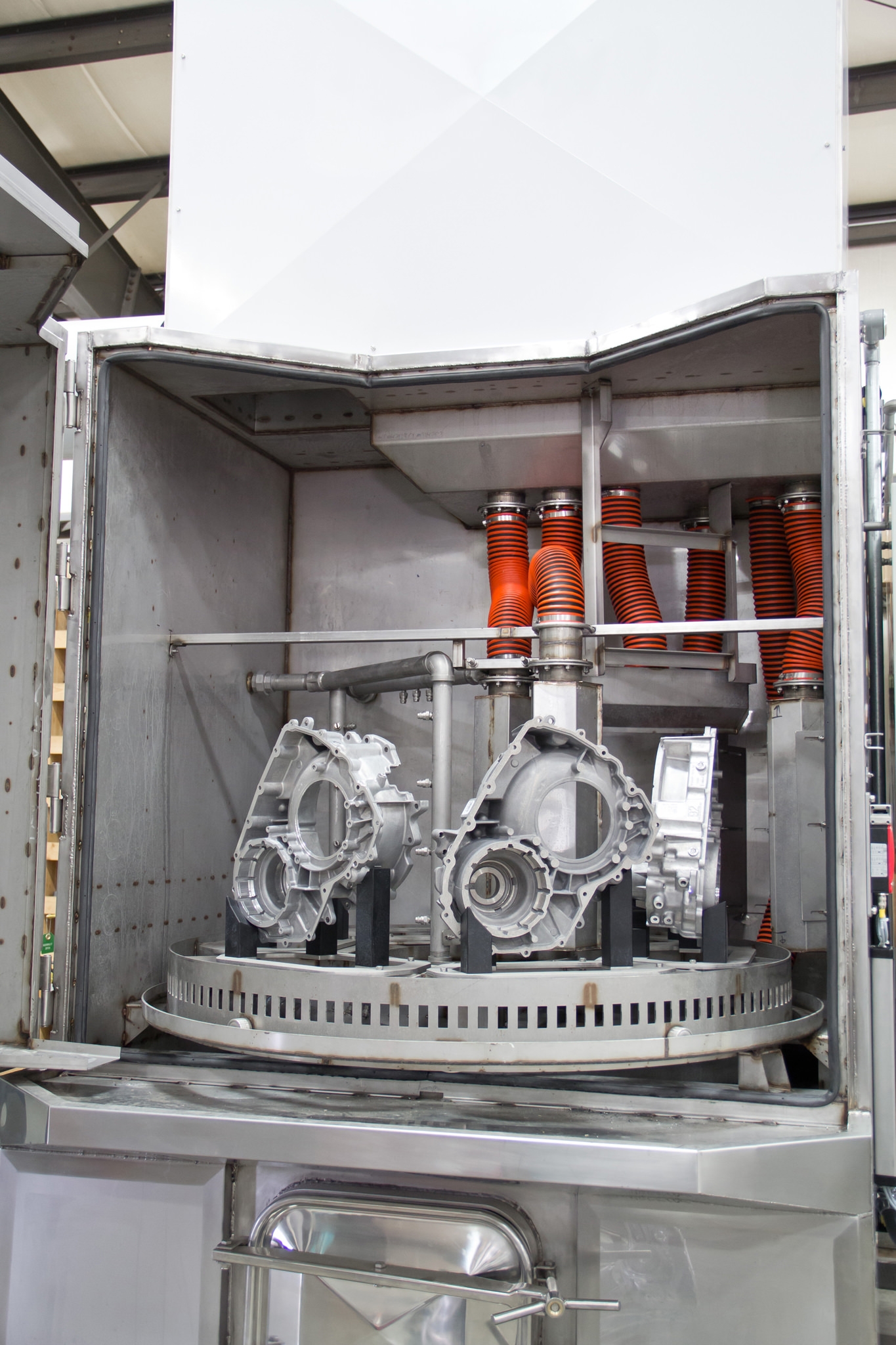
- Transmission and drivetrain components
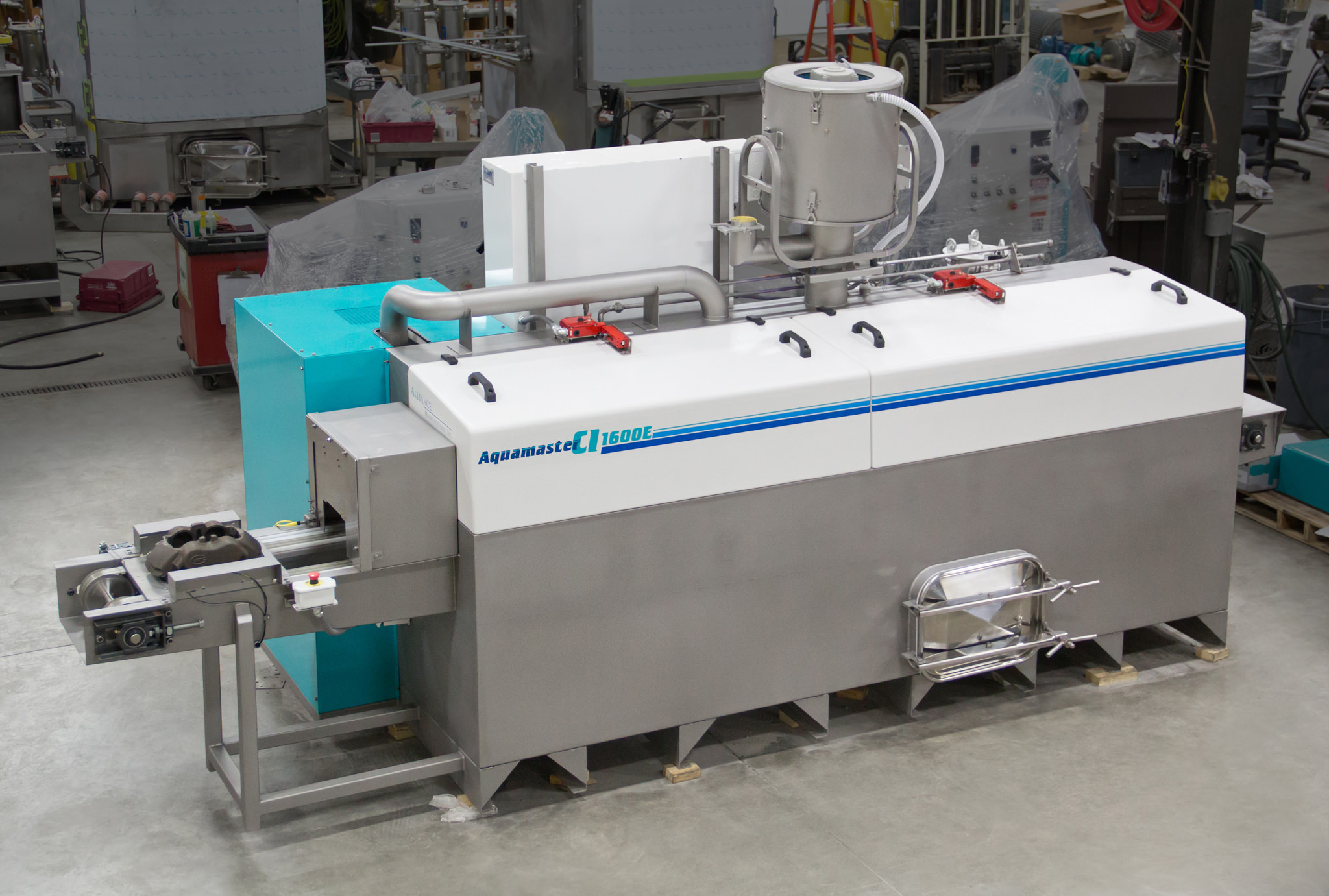
- Brake cylinders, calipers, rotors, and clutch components
- Shafts, gears, bearings, and housings
- Exhaust, steering, and suspension components
- Shock tubes, struts, trays, and production containers
Many components include blind holes, internal passages, and cavities. Washer configuration, spray pressure, fixturing, filtration, and drying can be engineered to address these challenging areas.
Types of Automotive Parts Washers
The ideal automotive parts washer depends on the component, contamination, production rate, available space, and required automation.
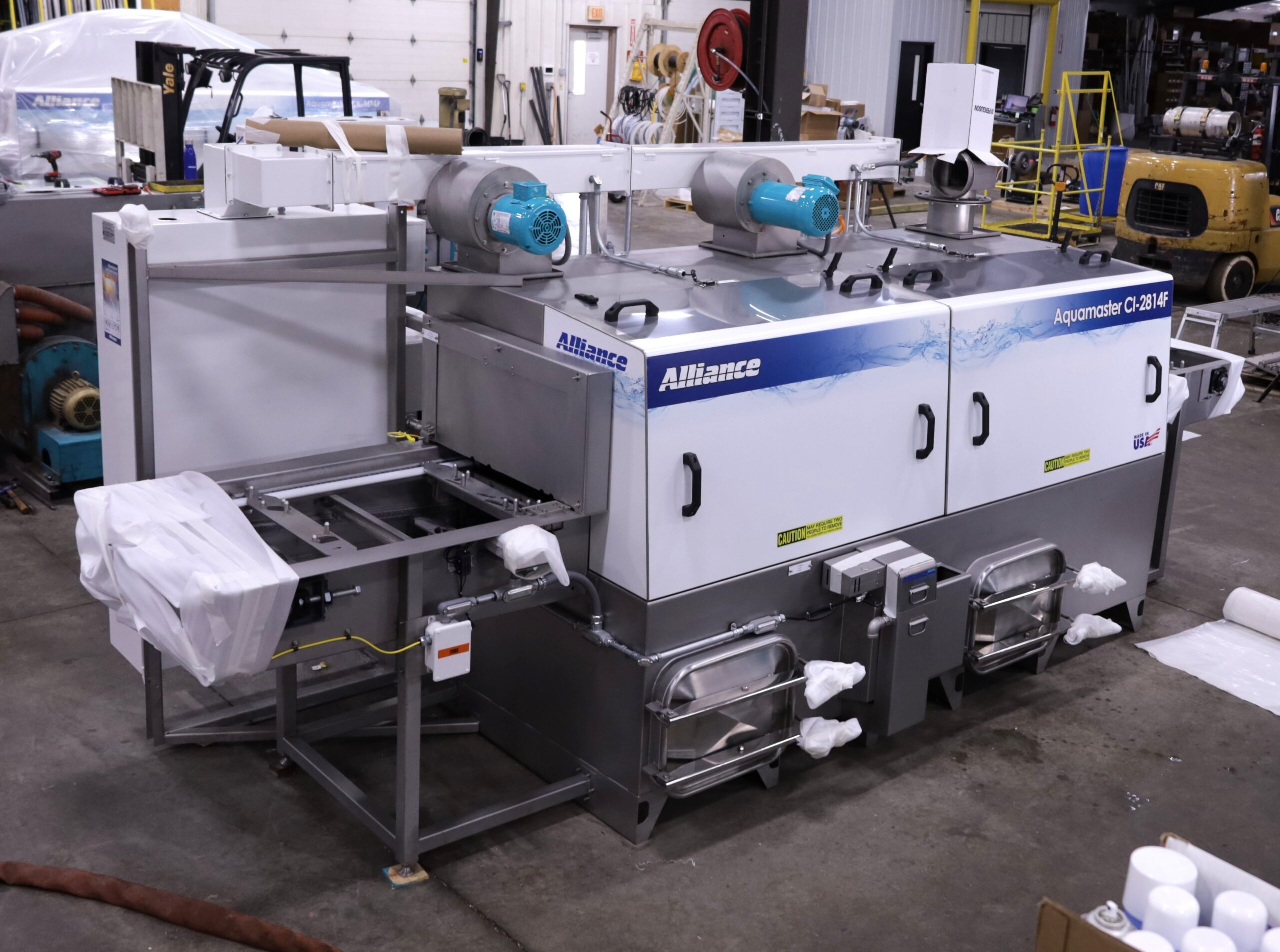
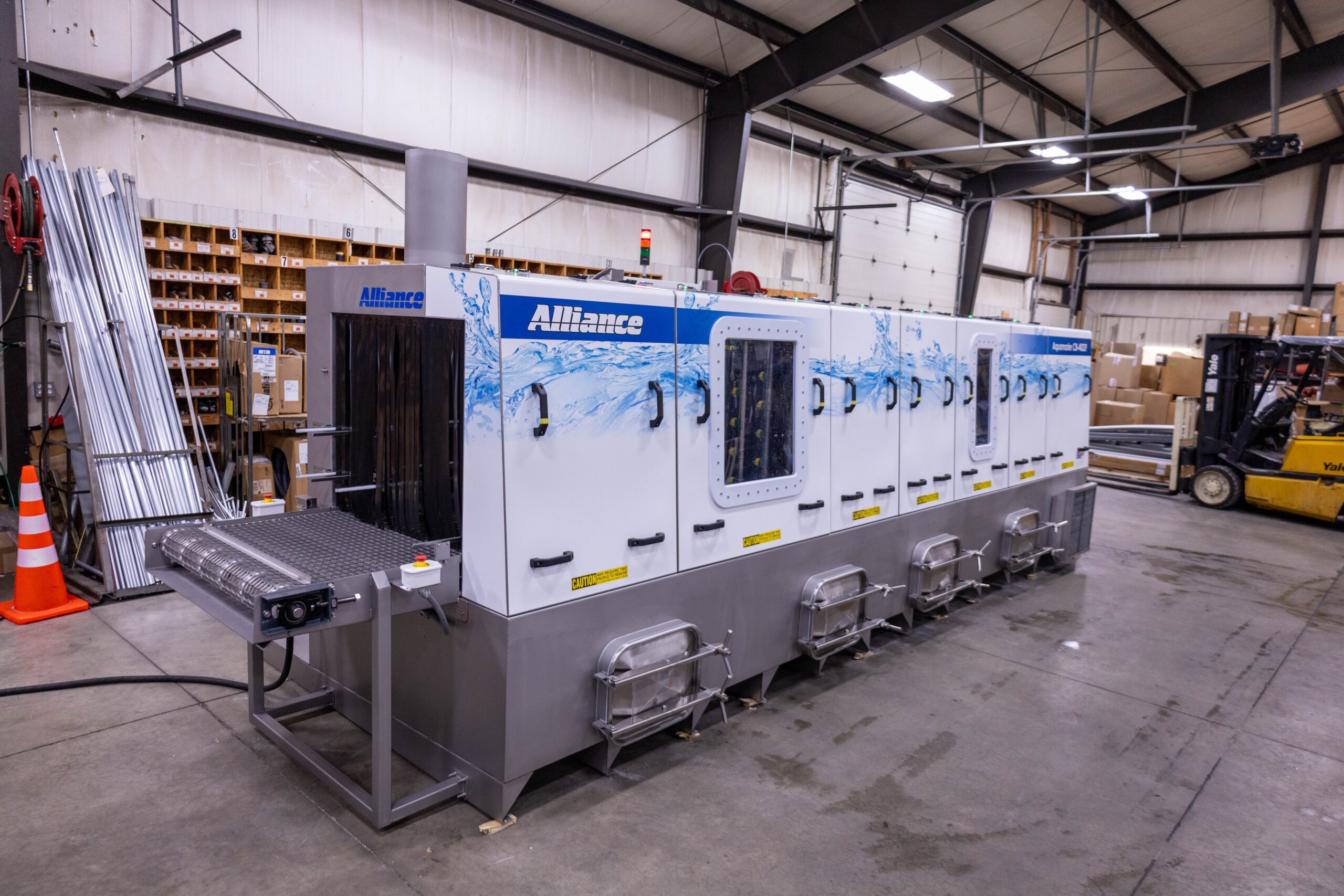
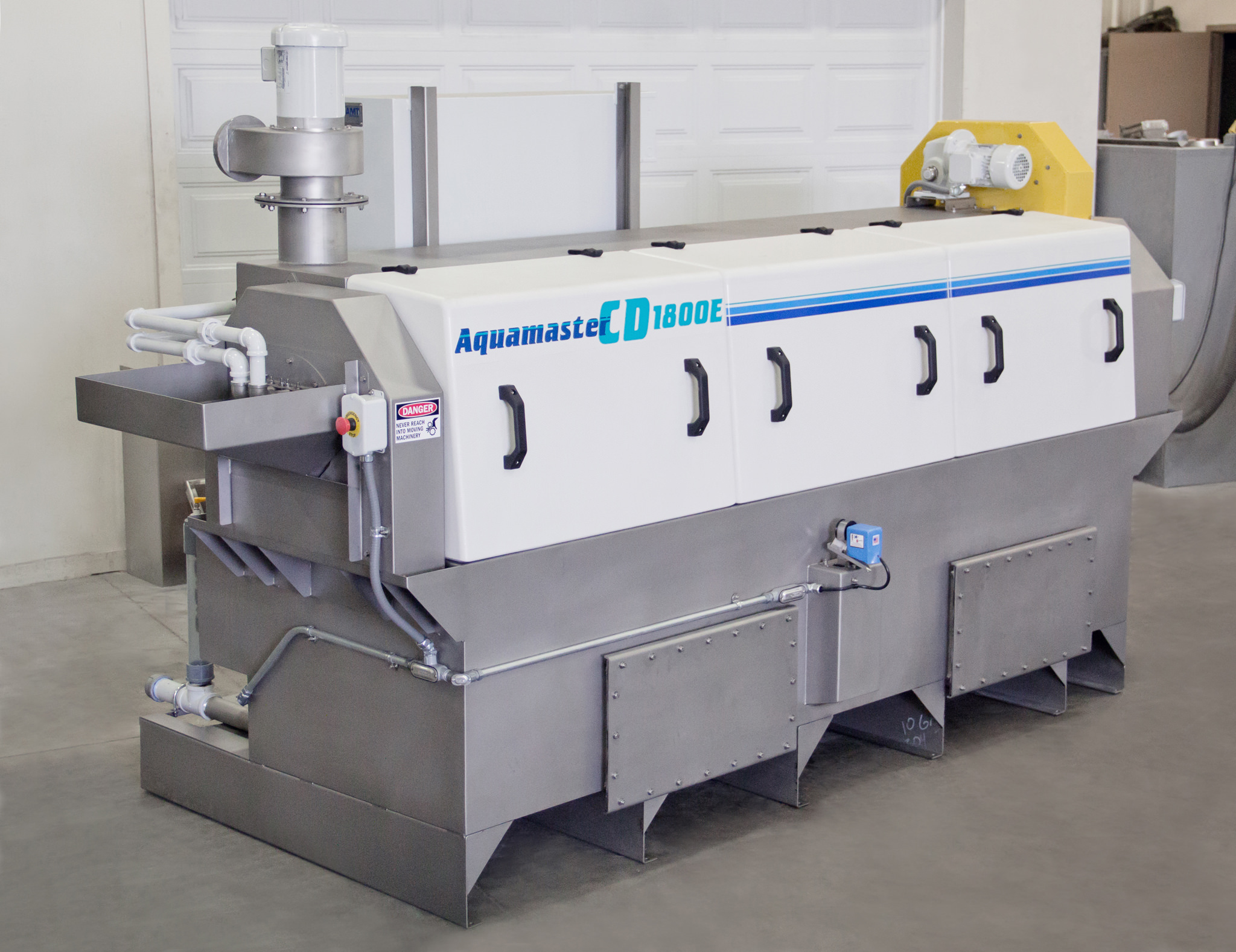
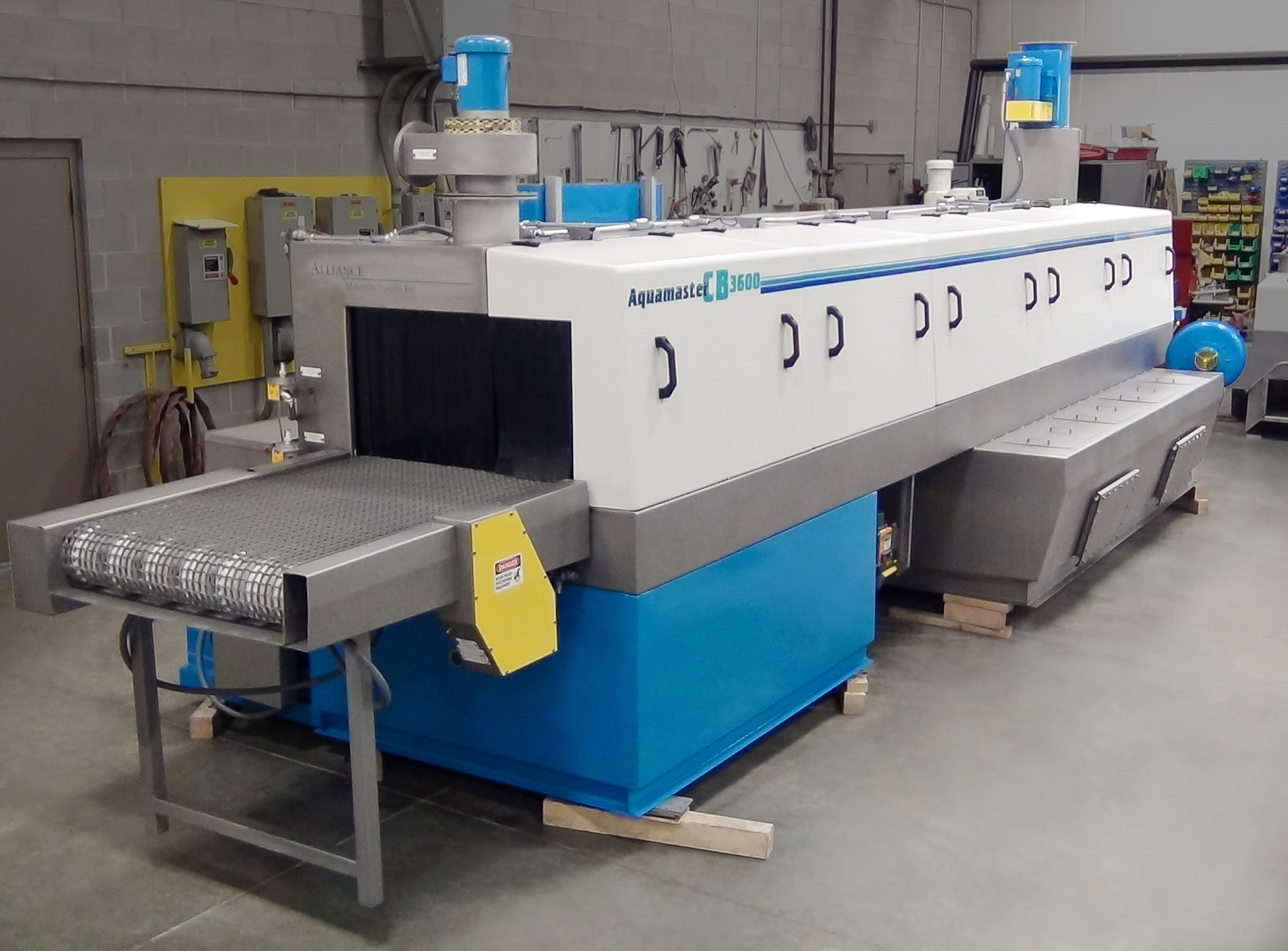
Conveyor Parts Washers
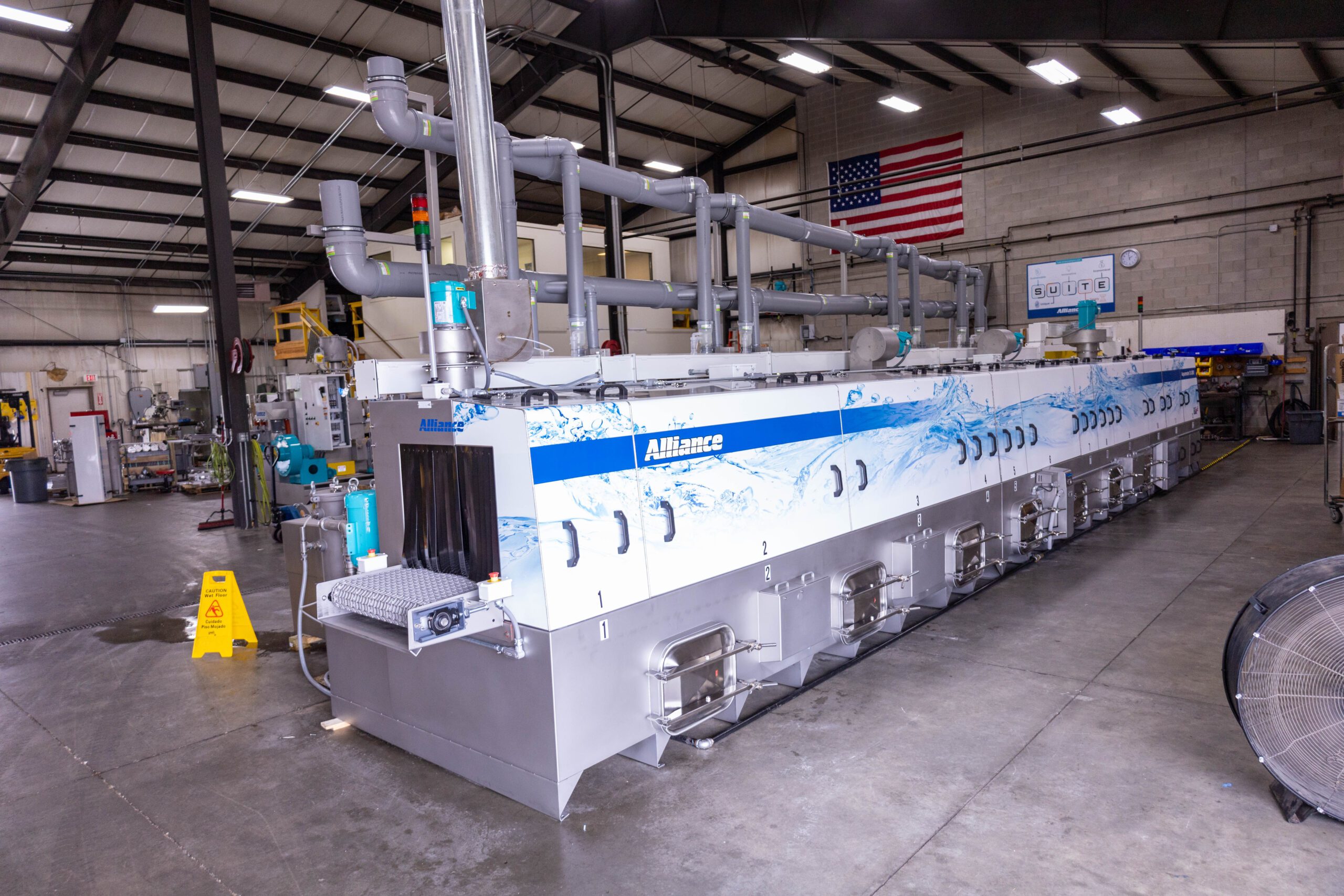
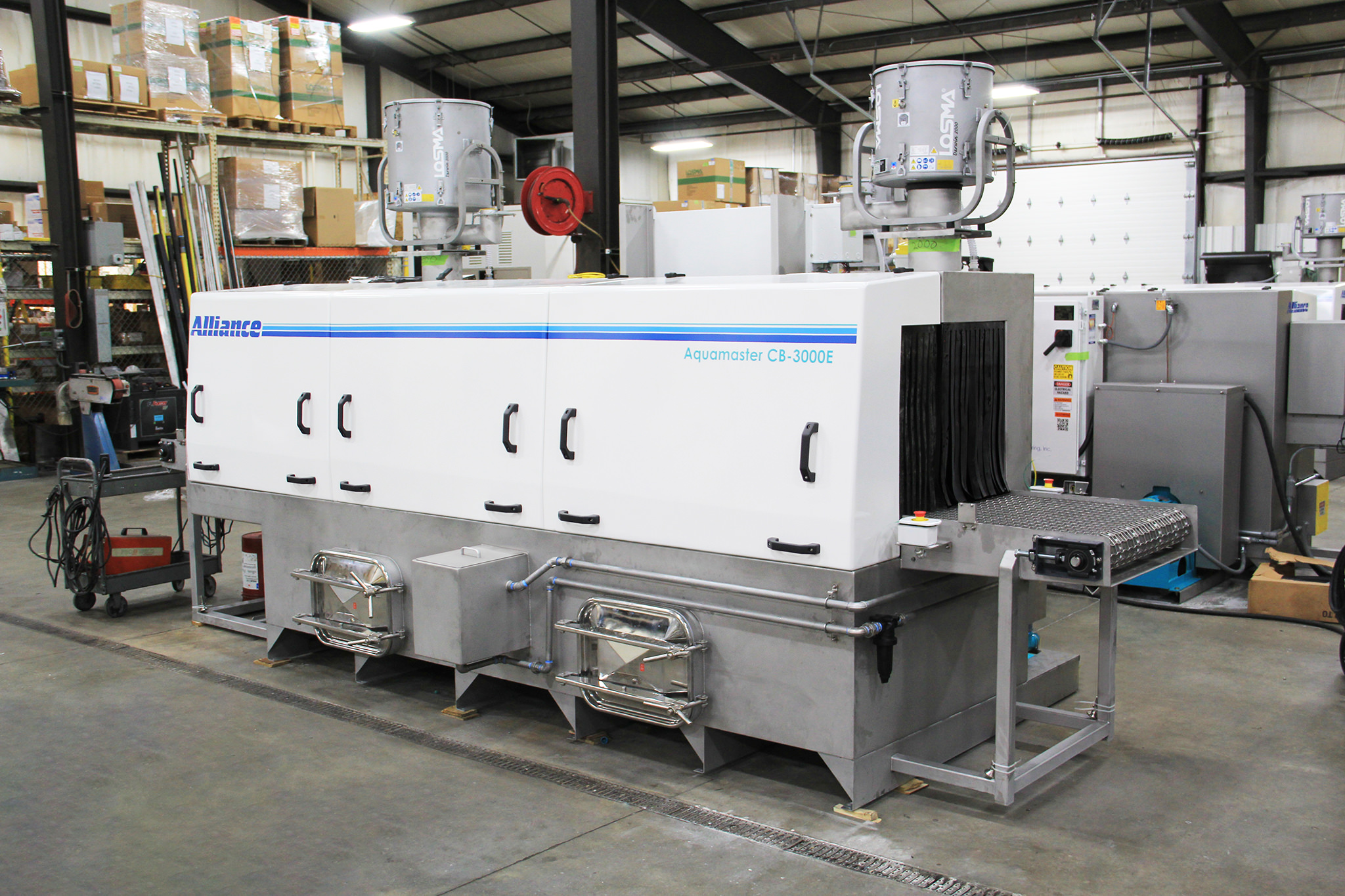
Conveyorized systems provide continuous, repeatable production cleaning. Parts move through controlled wash, rinse, and drying stages using belt, chain, indexing, dip, drum, or monorail configurations.
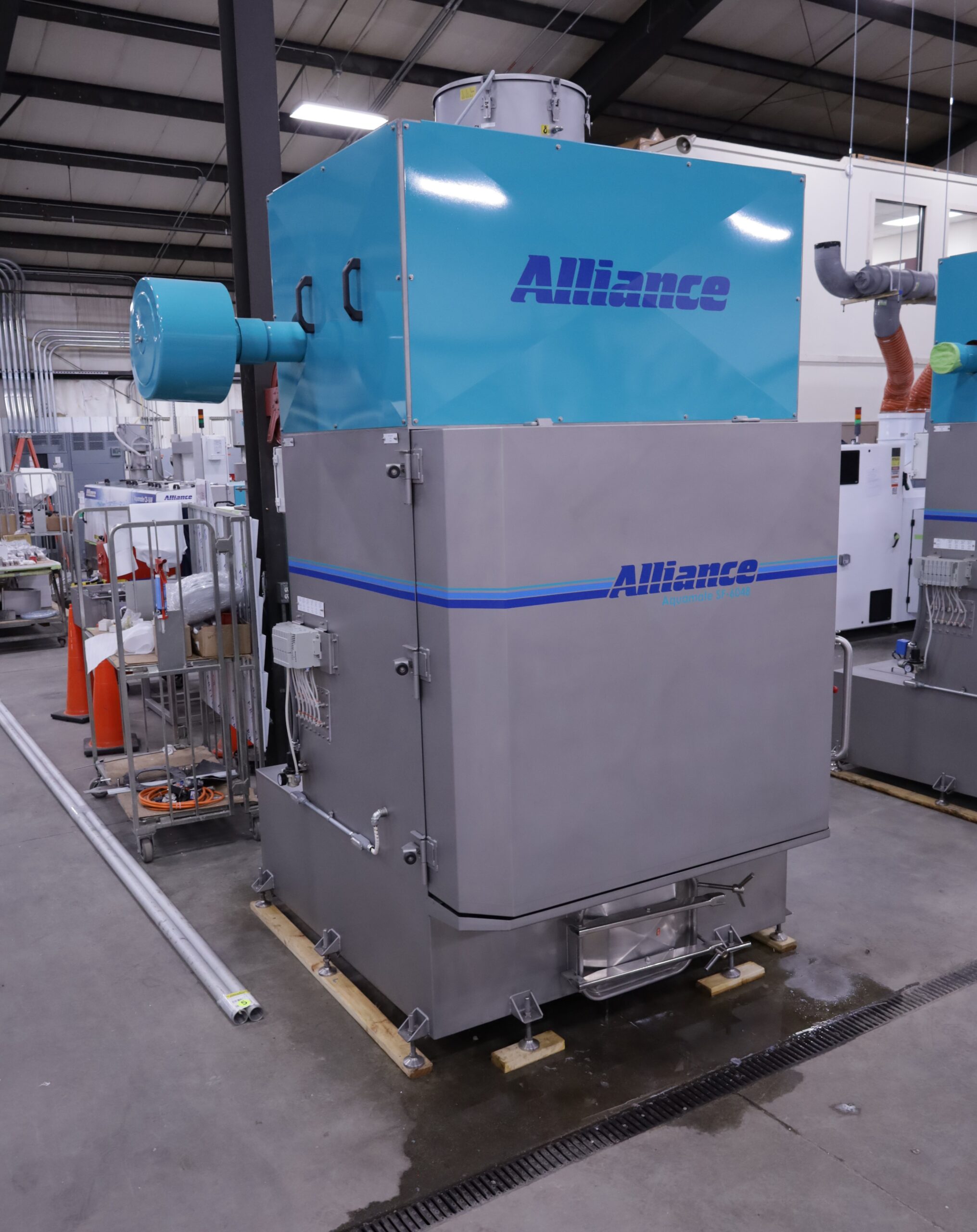
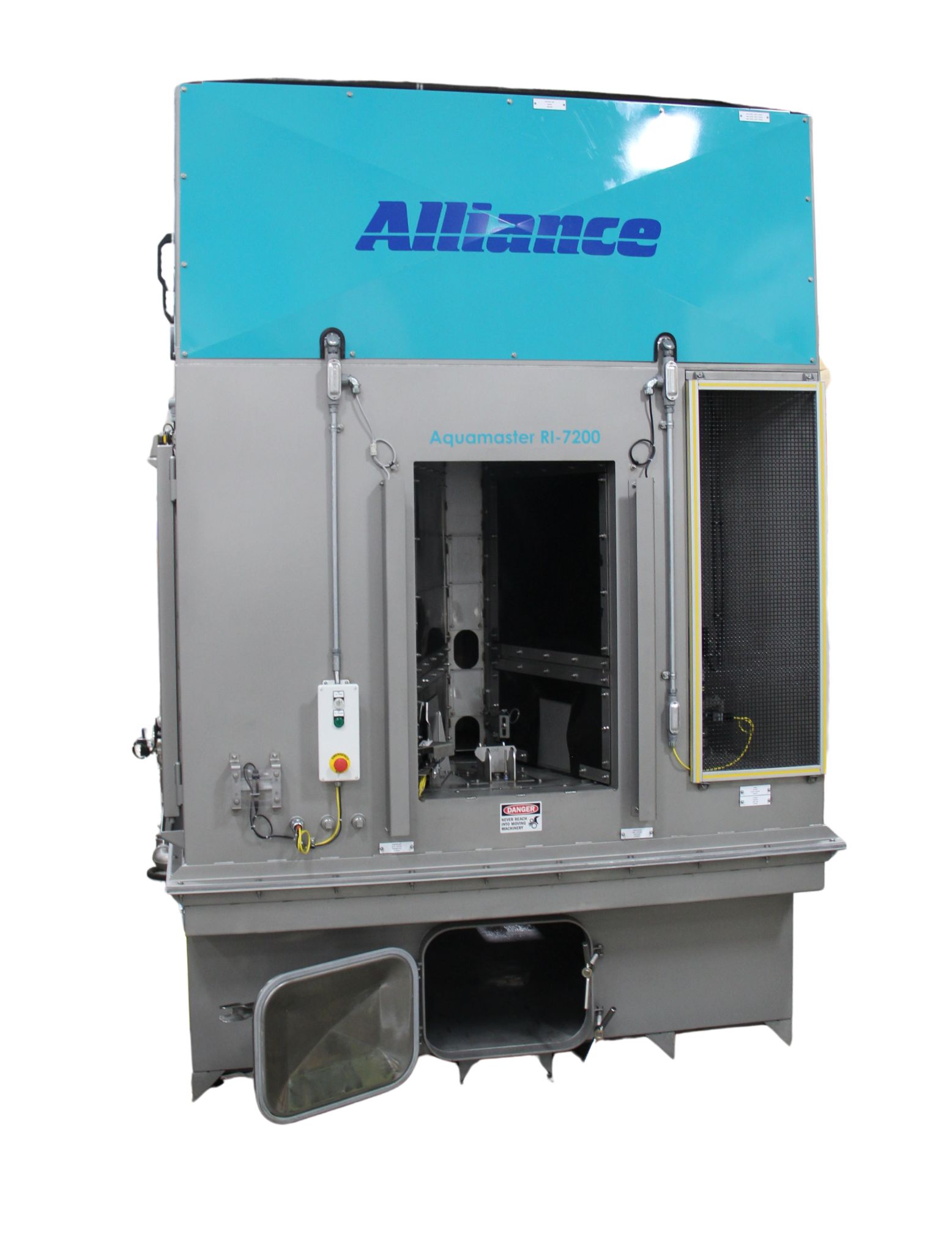
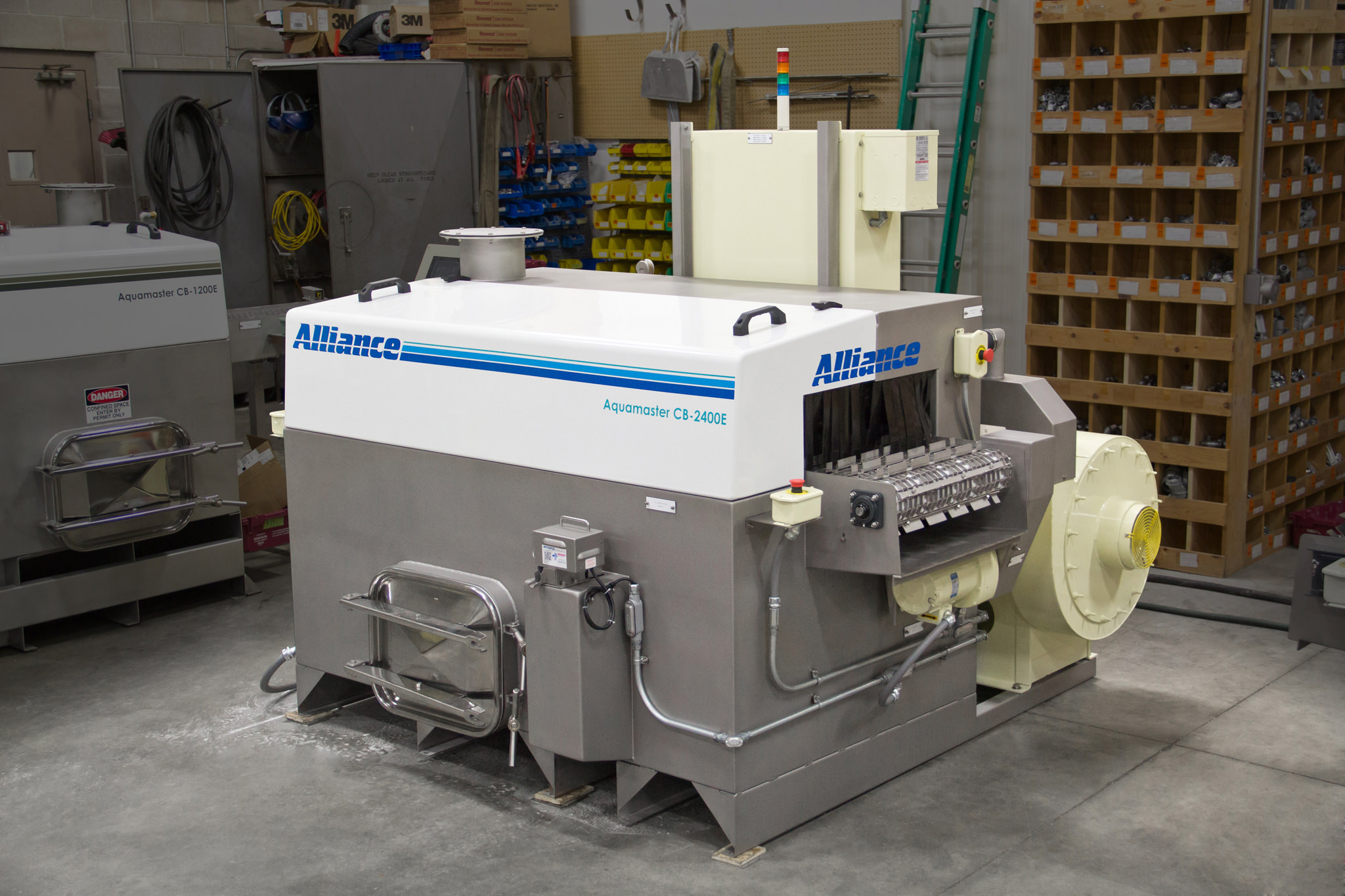
Cabinet Parts Washers
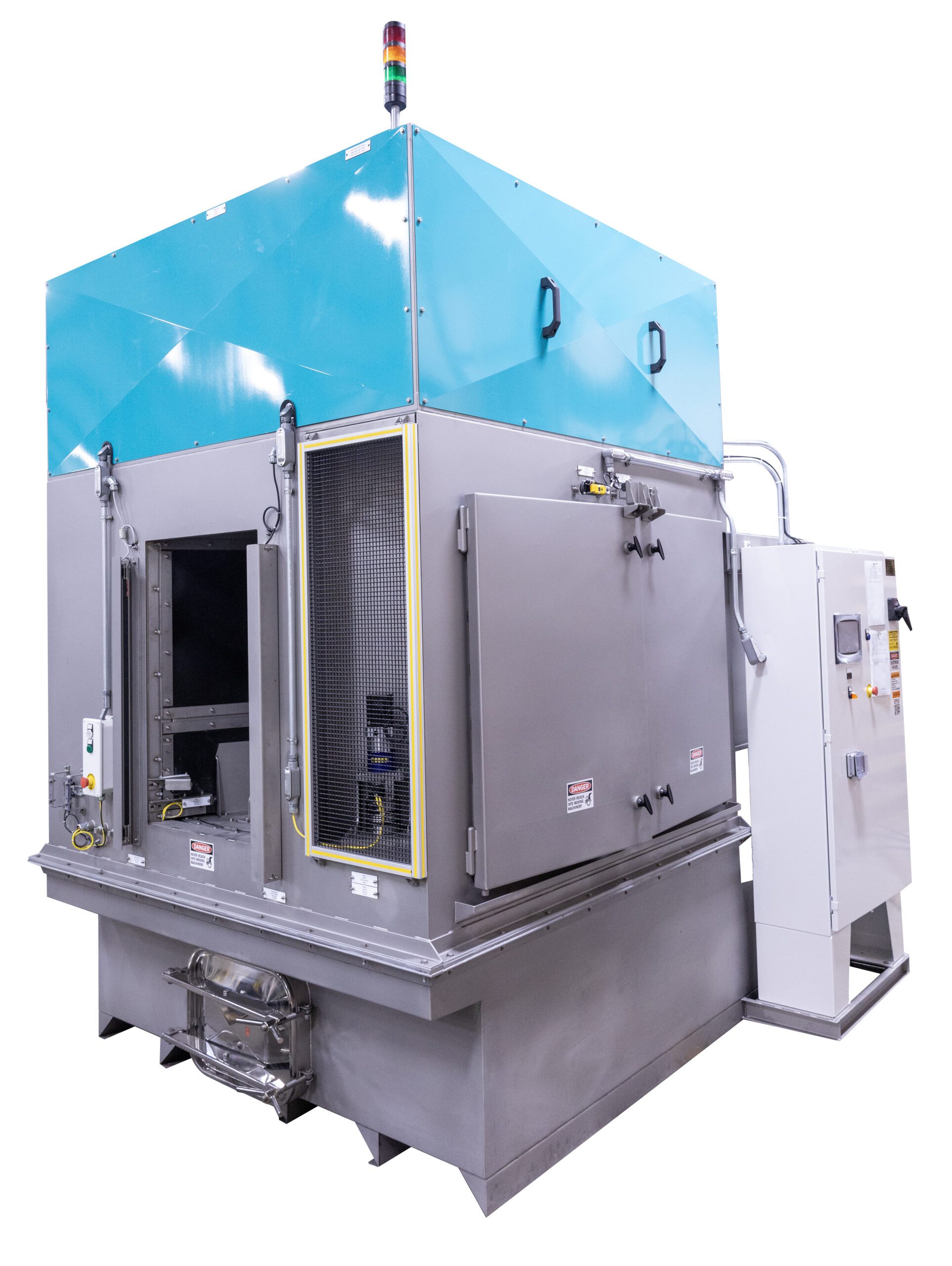
Cabinet systems are suited for batch cleaning of larger, heavier, or variable-size components. Parts are loaded into the cabinet and processed through controlled spray wash, rinse, and drying cycles.
Rotary and Indexing Parts Washers
Rotary and indexing systems provide controlled positioning through multiple cleaning stages. They are useful when specific surfaces, cavities, or passages require targeted cleaning.
Custom Automotive Cleaning Systems
High-volume applications may require specialized fixturing, multiple cleaning stages, filtration, automated loading and unloading, or integration with existing production equipment. Alliance can engineer systems around these requirements.
Aqueous Automotive Parts Cleaning
Alliance specializes in aqueous parts washers using water-based cleaning solutions combined with heat, spray pressure, agitation, filtration, rinsing, and controlled drying.
Aqueous cleaning provides an automated alternative to manual cleaning while allowing manufacturers to control process variables such as temperature, cycle time, spray pressure, filtration, and drying. Cleaning chemistry and process configuration depend on the material and contaminants involved.
Engine Component Cleaning
Engine components can accumulate cutting oils, coolants, grease, chips, and other manufacturing residue. Automated systems can clean:
- Engine blocks and crankcases
- Pistons and connecting rods
- Oil pans and manifolds
- Camshafts, pumps, and housings
Complex components may require targeted spray patterns, specialized fixtures, indexing, or air blow-off to clean cavities and internal features.
Transmission and Drivetrain Cleaning
Transmission and drivetrain components often contain machining oils, lubricants, metal chips, and production residue that must be removed before assembly or remanufacturing.
Depending on component size, geometry, and production volume, an auto parts cleaning machine may use conveyorized, cabinet, rotary, or indexing processing.
Brake Component Cleaning
Brake components such as calipers, cylinders, rotors, and other hardware may require removal of oils, machining residue, and particulate. Systems can be configured with appropriate spray coverage, fixturing, filtration, rinsing, and drying for consistent processing.
Cabinet vs. Conveyor Parts Washers
Cabinet washers are generally suitable when:
- Parts are processed in batches
- Component sizes vary
- Production volumes are moderate
- Flexible loading is required
Conveyor washers are generally suitable when:
- Parts are processed continuously
- Production volumes are higher
- Repeatable cleaning cycles are required
- Integration with a production line is needed
Rotary or indexing systems may be suitable for applications requiring greater automation or controlled part positioning.
Automotive Parts Washer Maintenance
Routine maintenance helps maintain cleaning performance and equipment uptime. Key activities include:
- Monitoring wash solution and chemistry concentration
- Cleaning filters and removing oil or sludge
- Inspecting spray nozzles and headers
- Checking pumps, conveyors, rinse, and drying systems
- Monitoring wash temperature
Alliance designs systems with accessible process zones, removable spray components, filtration systems, and tank access to simplify maintenance.
How to Choose an Automotive Parts Washer
Consider:
- Part characteristics – Size, weight, material, geometry, and internal passages.
- Contamination – Oils, coolants, grease, chips, carbon, adhesives, and other soils.
- Production volume – Batch or continuous processing.
- Cleanliness requirements – What must be removed and how cleanliness will be verified.
- Cleaning stages – Wash, rinse, filtration, rust inhibition, and drying.
- Automation – Loading, unloading, indexing, and production-line integration.
- Maintenance – Access to tanks, filters, pumps, and spray components.
Alliance also operates a cleanliness testing laboratory using gravimetric testing, microscopic particle measurement, and Dyne testing to help determine the appropriate cleaning system.
Automotive Parts Washer Applications
Alliance has engineered cleaning systems for:
- Crankcase halves
- Automotive steel parts
- Remanufactured automatic transmissions
- Aluminum crankcases
- Cast aluminum lower blocks
- Cast iron brake calipers
- Shock tubes
- Automotive engine components
These applications demonstrate how automated cleaning systems can be configured for different materials, contaminants, component geometries, and production requirements.
Need help determining the right cleaning system for your automotive application?