Alternative Energy Parts Cleaning Systems
Industrial Cleaning Systems for Renewable Energy Manufacturing
Manufacturing components for solar, wind and hydroelectric energy systems requires consistent, repeatable cleaning processes. Oils, lubricants, machining debris, particulate and other manufacturing contaminants can interfere with assembly, coating, bonding, inspection or final product quality.
Alliance Manufacturing designs and builds industrial parts washers and custom cleaning systems for alternative and renewable energy manufacturing applications. Systems can be configured for aqueous washing, rinsing, blowoff and controlled drying based on the part, contamination, cleanliness requirements and production rate.
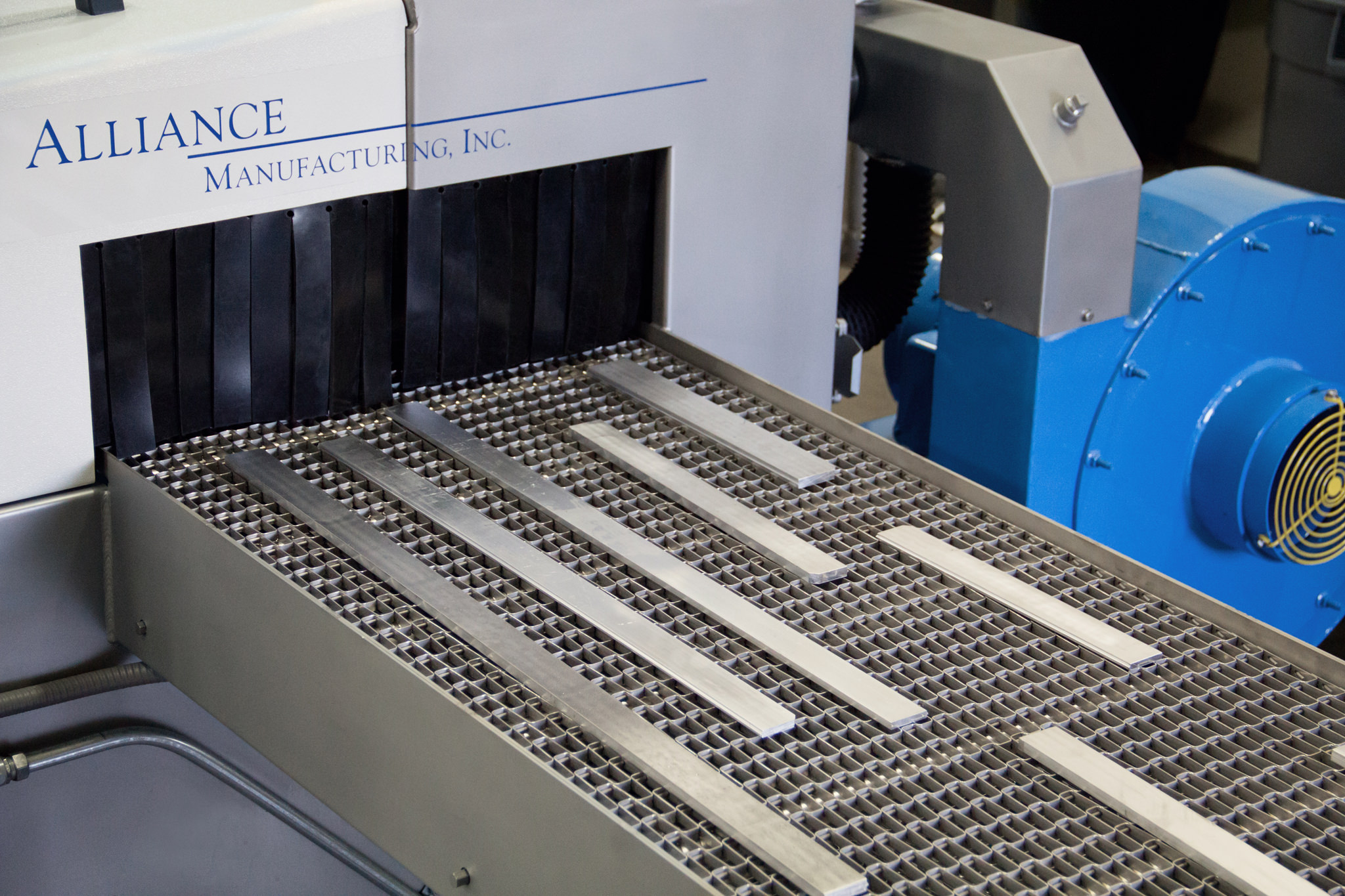
Alliance has experience cleaning renewable energy components including highly polished solar reflectors, aluminum sheets and bars, turbine-related components and other manufactured parts.


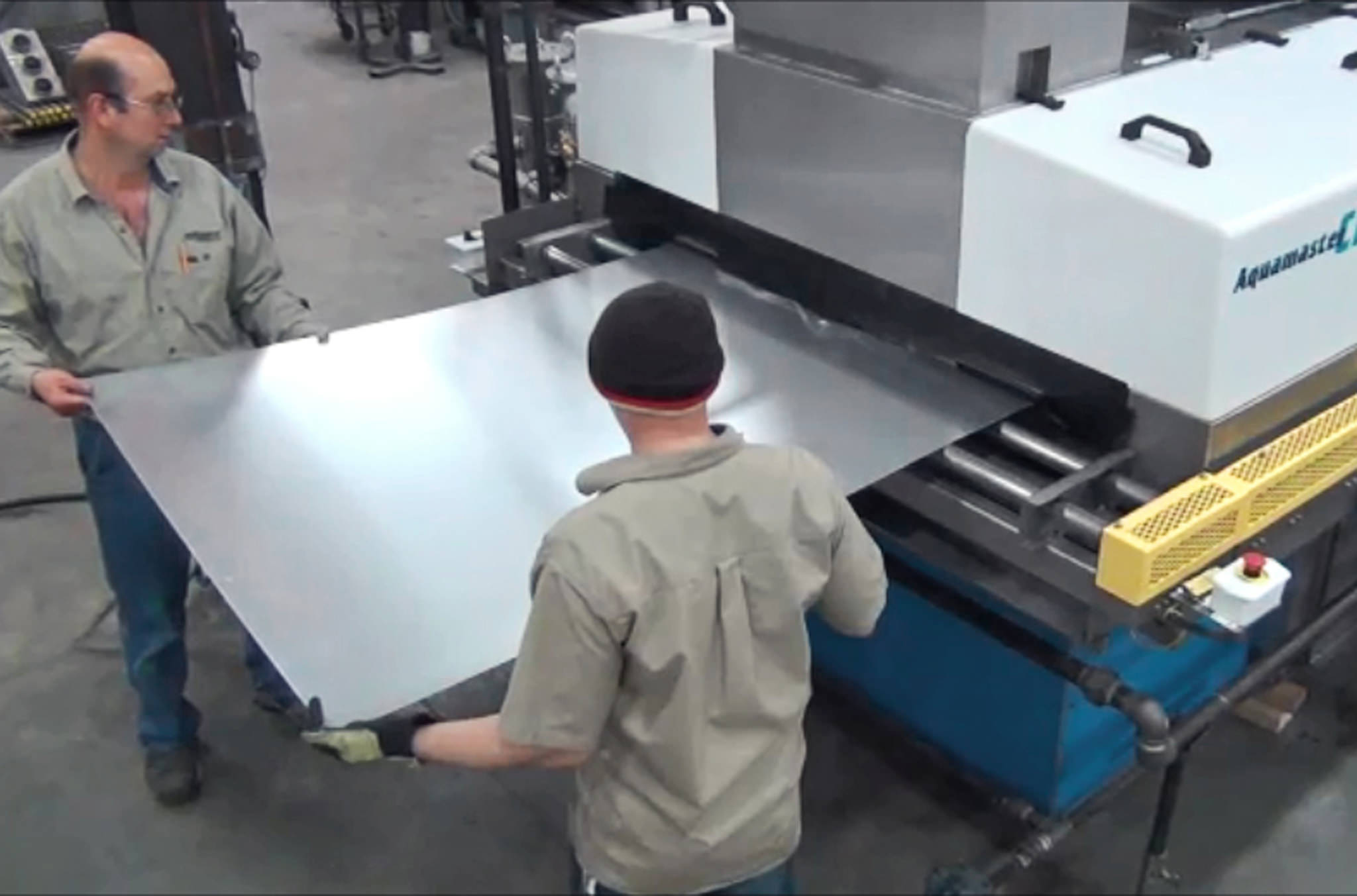
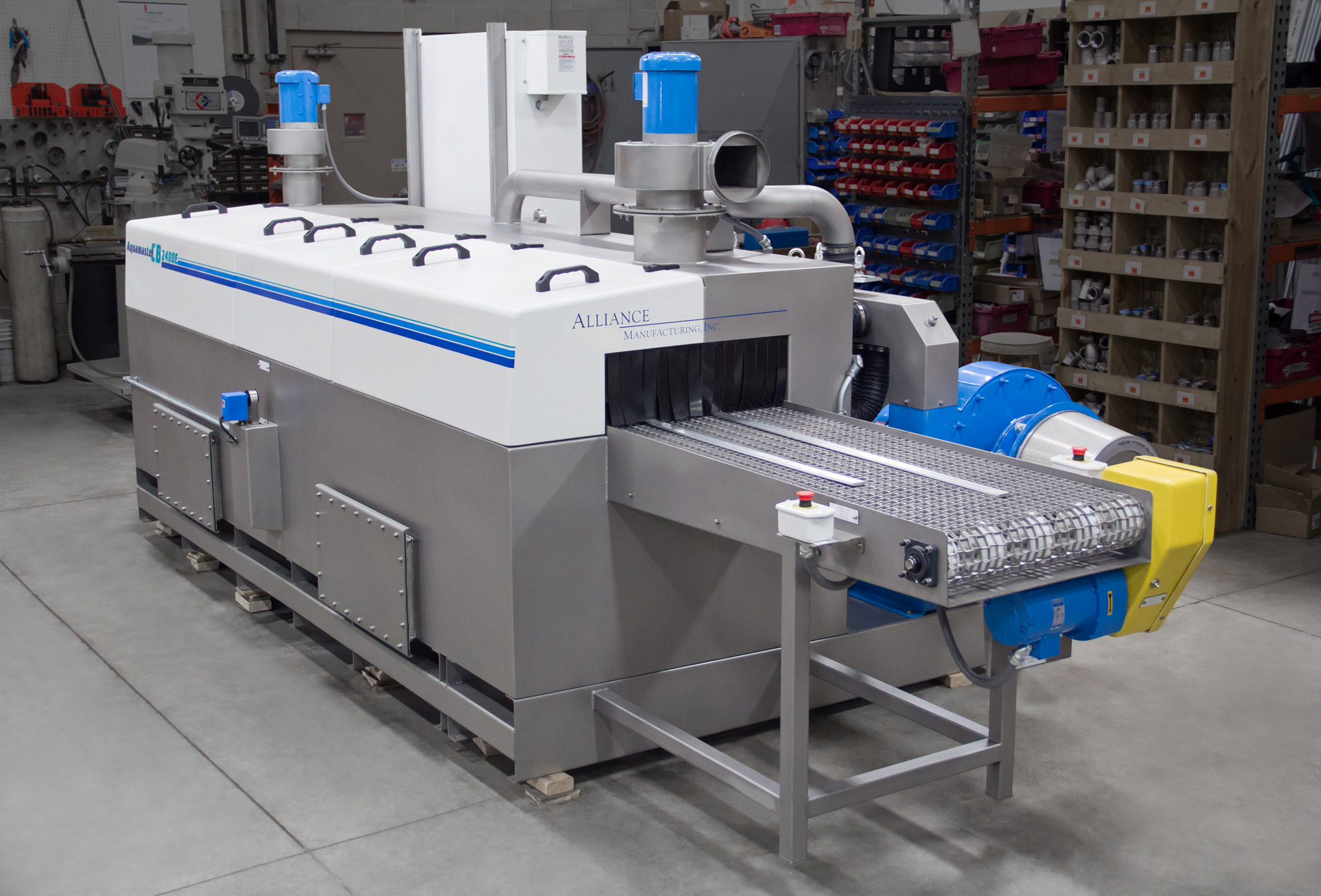
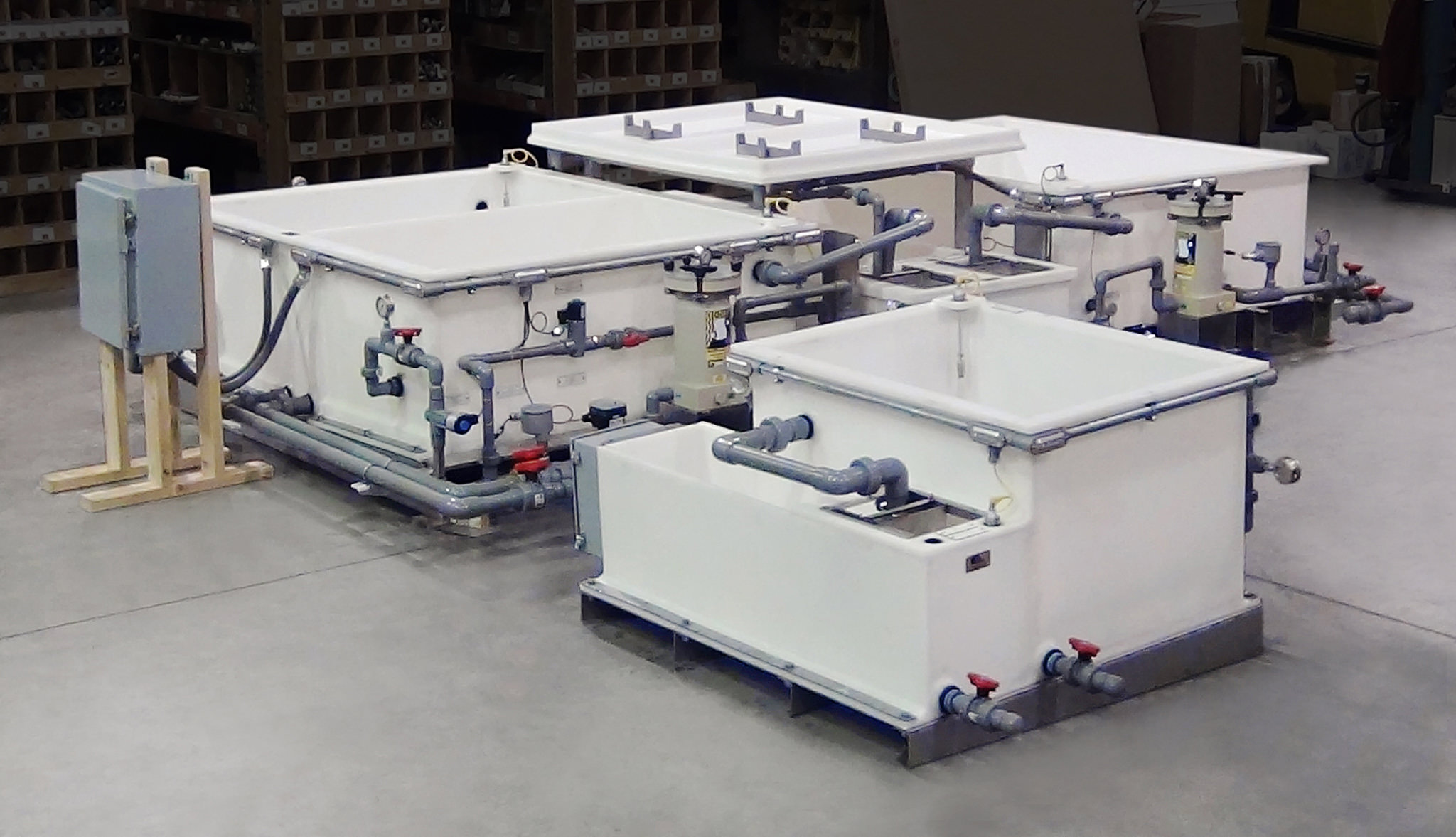


Renewable Energy Component Cleaning Applications
Renewable energy manufacturing involves a wide range of components, materials and production processes. The right cleaning system depends on the component and what it must be ready for after cleaning.
Solar Component Cleaning
Solar manufacturing can involve aluminum reflectors, structural components, frames and other precision-manufactured parts. These components may carry forming oils, lubricants, mill oils, particulate or other manufacturing residues.
Solar component cleaning may require:
- Removal of oils, lubricants and manufacturing residues
- Cleaning of aluminum and other metal surfaces
- Spot-free rinsing
- Complete drying before subsequent processing
- Consistent cleaning at production volumes
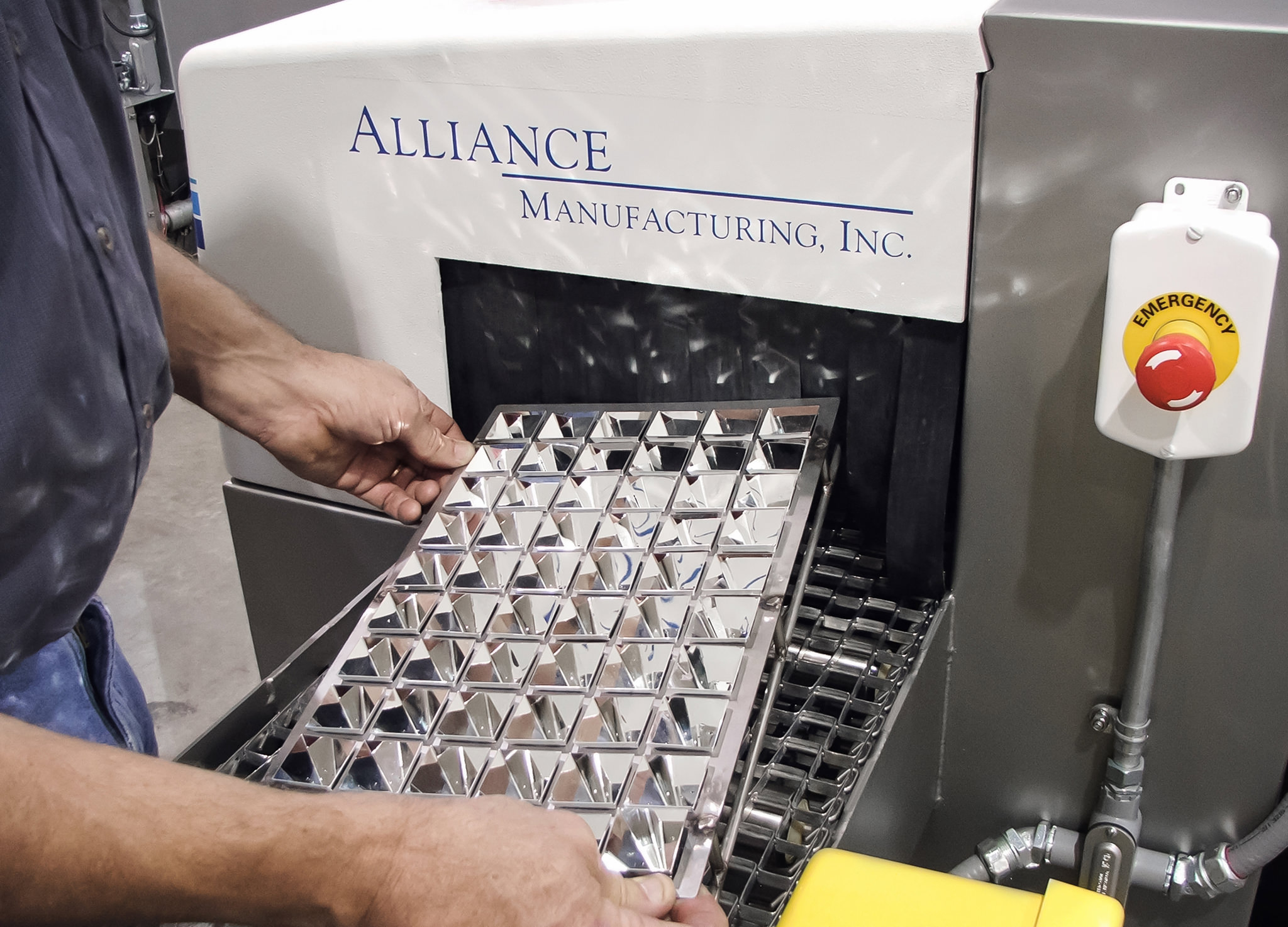
Alliance has engineered conveyorized cleaning systems for highly polished aluminum solar-panel focusing reflectors contaminated with vanishing oil. The system incorporated washing, multiple rinse stages and heated blowoff to produce visually clean, spot-free and completely dry reflectors.
Wind Turbine Component Cleaning
Wind energy manufacturing involves large and complex metal components, machined parts, housings and other turbine components. Turbine parts cleaning may need to remove machining oils, coolants, lubricants, chips and particulate from difficult-to-reach surfaces.
Depending on component size, geometry and production requirements, wind energy components can be cleaned using conveyorized, batch, indexing or custom-engineered systems.
Hydroelectric Component Cleaning
Hydroelectric equipment includes large machined and fabricated components that may require cleaning before assembly, coating, inspection or storage.
Hydroelectric component cleaning can involve removing machining oils, lubricants, metal chips and particulate while providing appropriate rinsing and drying. Equipment is often engineered around the component’s size, geometry and required production rate.
Contamination & Material Considerations
Common contaminants found on renewable energy components include:
- Machining and forming oils
- Coolants and lubricants
- Mill oils
- Metal chips and particulate
- Dust and manufacturing debris
- Process residues
Material compatibility is also important when selecting a cleaning process. Aluminum, carbon steel, stainless steel and highly finished surfaces may require different cleaning chemistry and process parameters.
Alliance evaluates factors including:
- Part material and surface finish
- Part dimensions and weight
- Contaminant type
- Part geometry and orientation
- Required cleanliness and dryness
- Production volume
- Downstream processing requirements
Aqueous Cleaning & Drying
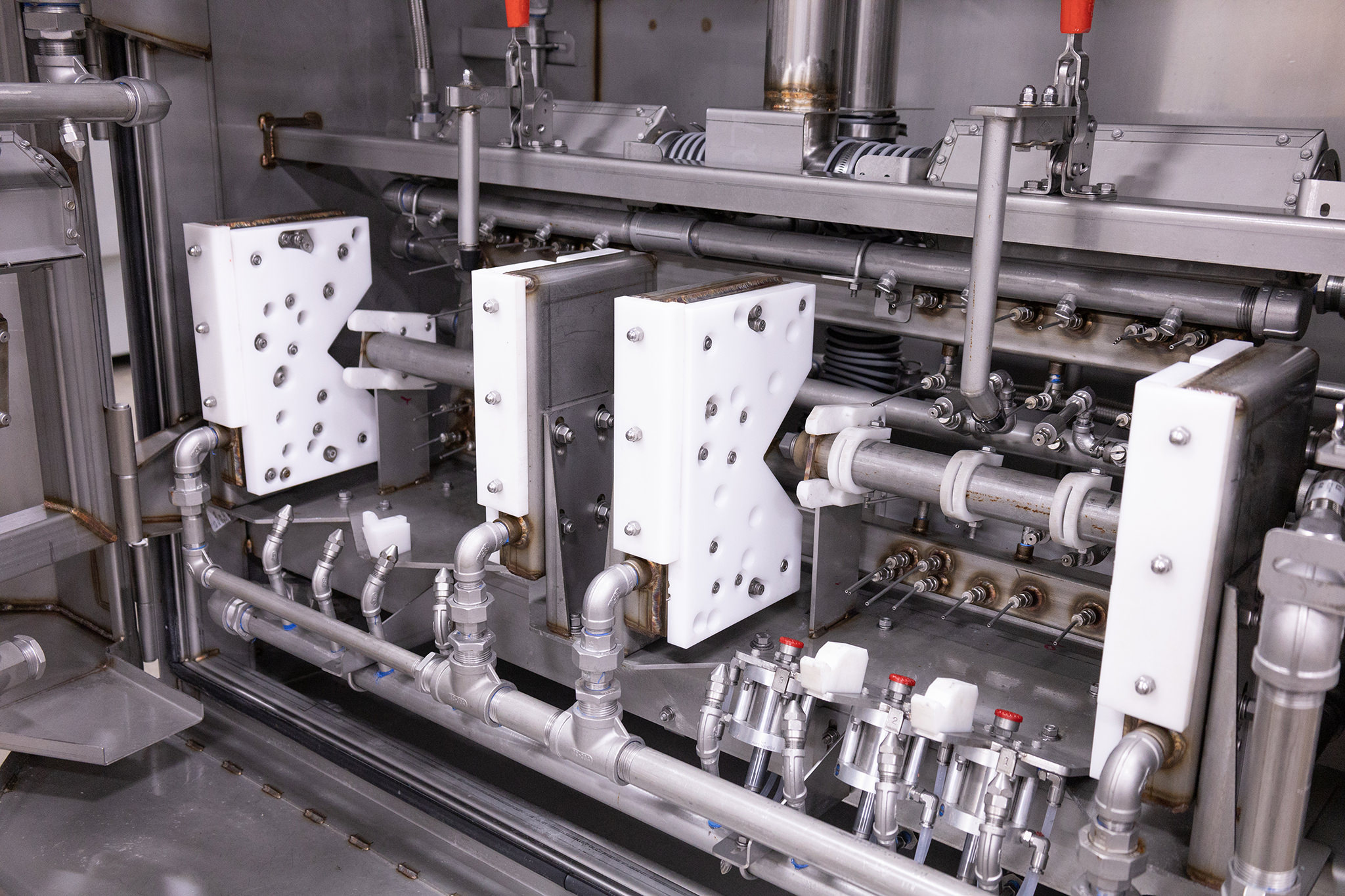
Aqueous parts washing uses water-based cleaning solutions combined with temperature, chemistry, mechanical action and process time to remove manufacturing contamination.
A renewable energy parts washer may incorporate several stages:
Wash → Rinse → Final Rinse → Blowoff → Drying
For applications requiring a spot-free finish, final-rinse water quality and rinse management become important considerations. Drying requirements should also be established early in the equipment-selection process.
Depending on the application, Alliance systems can incorporate heated blowoff, high-velocity air knives, targeted compressed-air drying and custom part positioning.
Complex geometries, cavities and recessed surfaces may require additional drying considerations to prevent residual moisture from remaining on the component.
Selecting a Renewable Energy Parts Washer
There is no single parts washer configuration that fits every renewable energy application.
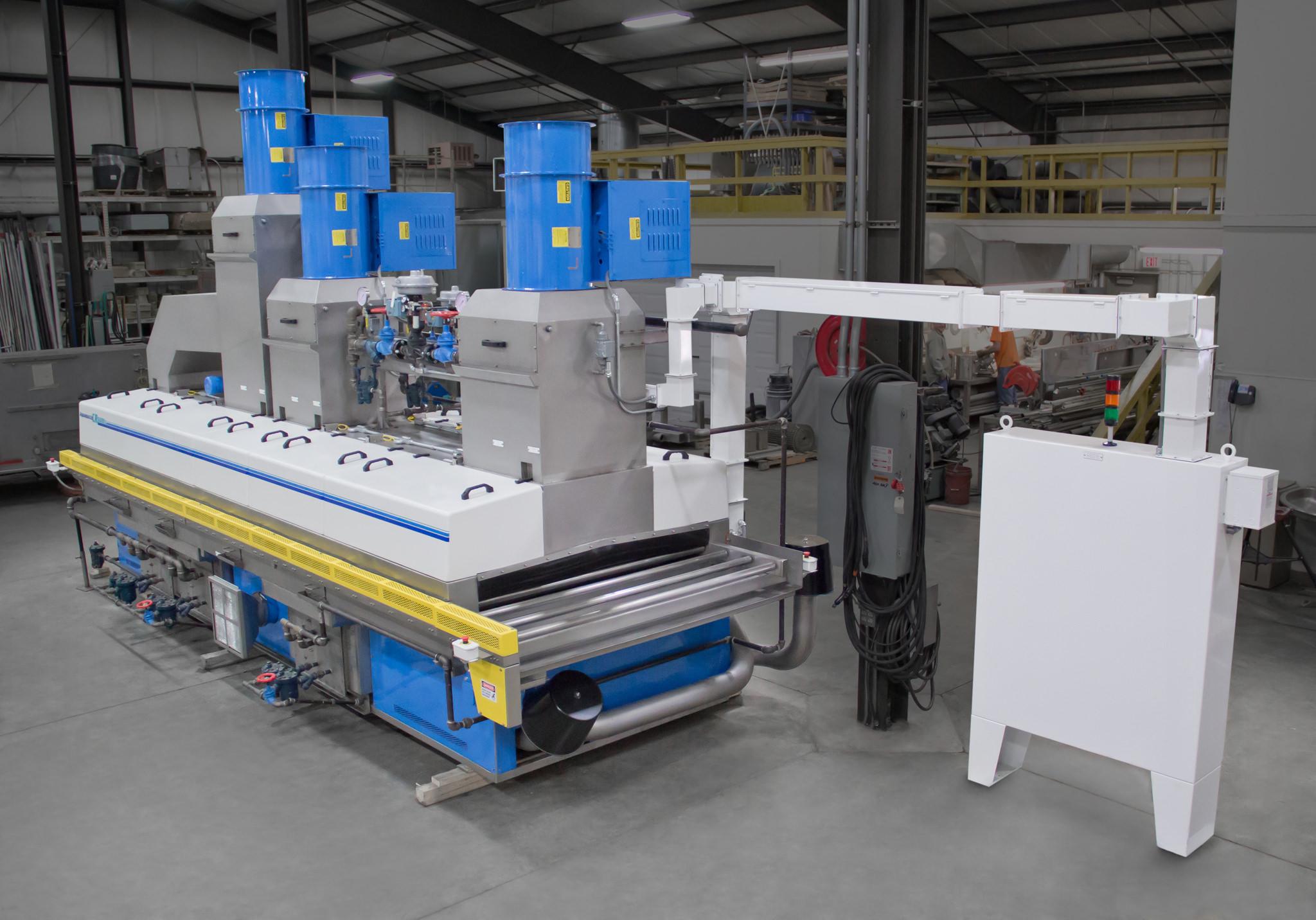
Conveyorized systems are well suited for repeatable, higher-volume production where components can move continuously through defined cleaning and drying zones.
Batch cabinet systems provide flexibility for lower-volume production, larger individual components or applications involving multiple part sizes.
Indexing systems can stop or reposition components during the cleaning cycle, allowing more targeted spray coverage.
Custom systems can be engineered for unusually large, heavy or complex components and specialized production requirements.
The equipment selection should ultimately be based on the component, contamination, cleanliness requirement, production rate and downstream process.
Cleaning Process Validation
Choosing equipment based only on production volume can result in an ineffective cleaning process. Whenever possible, the cleaning process should be evaluated using actual components and contamination.
Alliance offers parts cleaning evaluations through its cleanliness testing laboratory, including gravimetric testing, particle-size measurement and dyne testing. Customer parts can be evaluated to help determine appropriate cleaning processes and equipment configurations.
Renewable Energy Cleaning Experience
Alliance’s application experience includes cleaning solar focusing reflectors and aluminum components used in renewable energy-related manufacturing.
For example, an automated conveyorized system was developed to remove vanishing oil from highly polished aluminum solar reflectors while achieving a spot-free, completely dry result.
Alliance has also engineered systems for aluminum sheets and bars contaminated with mill oil and other manufacturing soils.