Industrial Parts Cleaning for HVAC & Plumbing Industries
HVAC and plumbing components often require consistent cleaning before assembly, coating, finishing, inspection or shipment. Machining coolant, oils, lubricants, metal chips and other manufacturing soils can interfere with downstream processes and product quality.
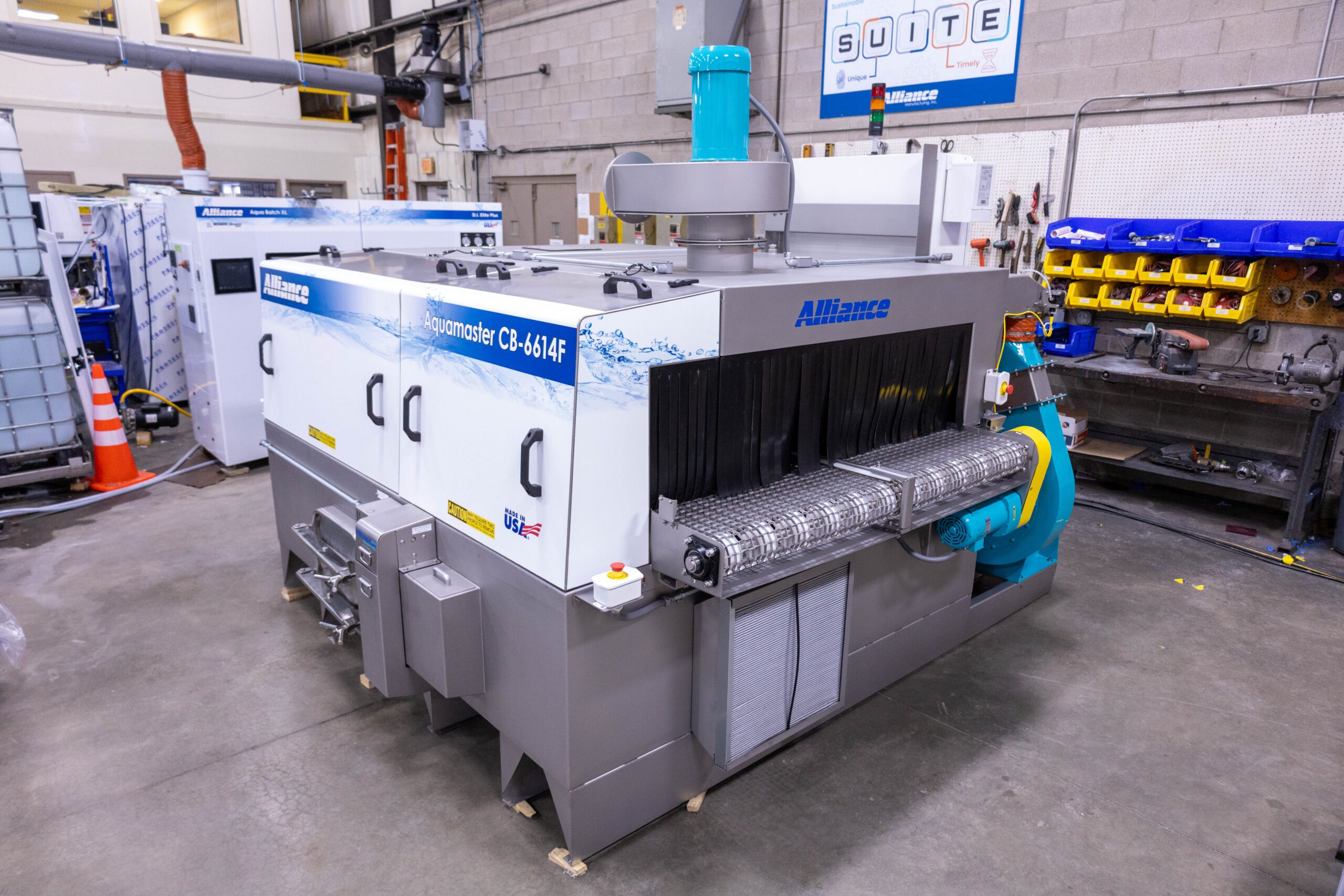
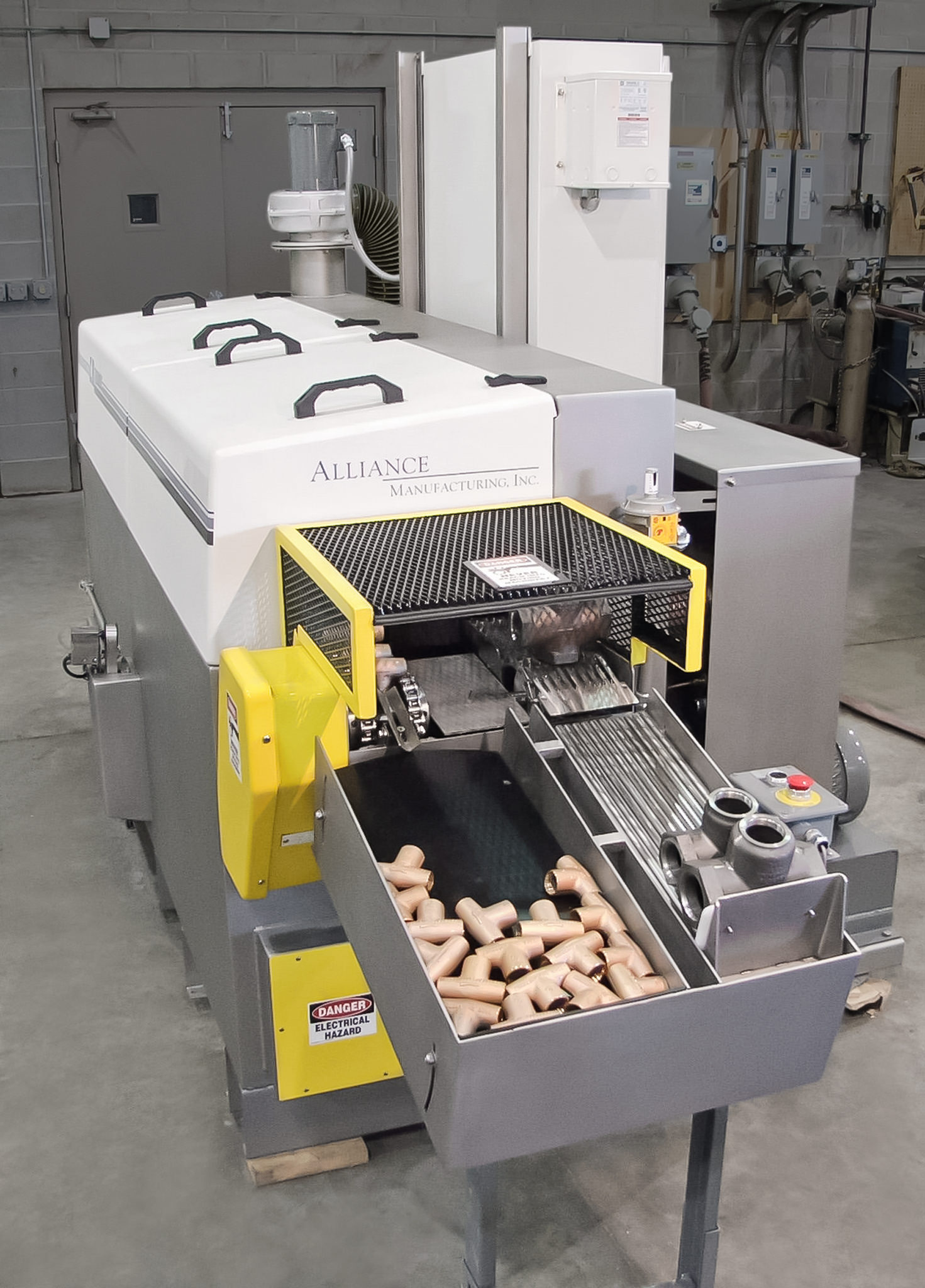
Alliance Manufacturing designs and builds industrial parts washers for HVAC and plumbing manufacturers. Systems can be configured for aqueous washing, rinsing, blowoff and drying based on the component, contamination, cleanliness requirements and production rate.
Alliance has experience cleaning HVAC and plumbing components including valve housings, valves, fittings, tubing, tanks, fire sprinkler components, pump castings and other machined parts.




HVAC & Plumbing Parts Cleaning Applications
HVAC and plumbing components vary considerably in size, material and geometry. A HVAC parts washer should be designed around the actual component and required cleaning result.
Common applications include:
- Valves and valve housings
- Brass, bronze and cast-iron fittings
- Steel and stainless-steel components
- Pipe fittings and tubing
- PVC components
- Compressor components
- Pump castings
- Furnace and HVAC ducting
- Fire sprinkler components
Valve & Valve Housing Cleaning
Valves and valve housings often contain cavities, recesses and complex surfaces that can trap machining debris and coolant.
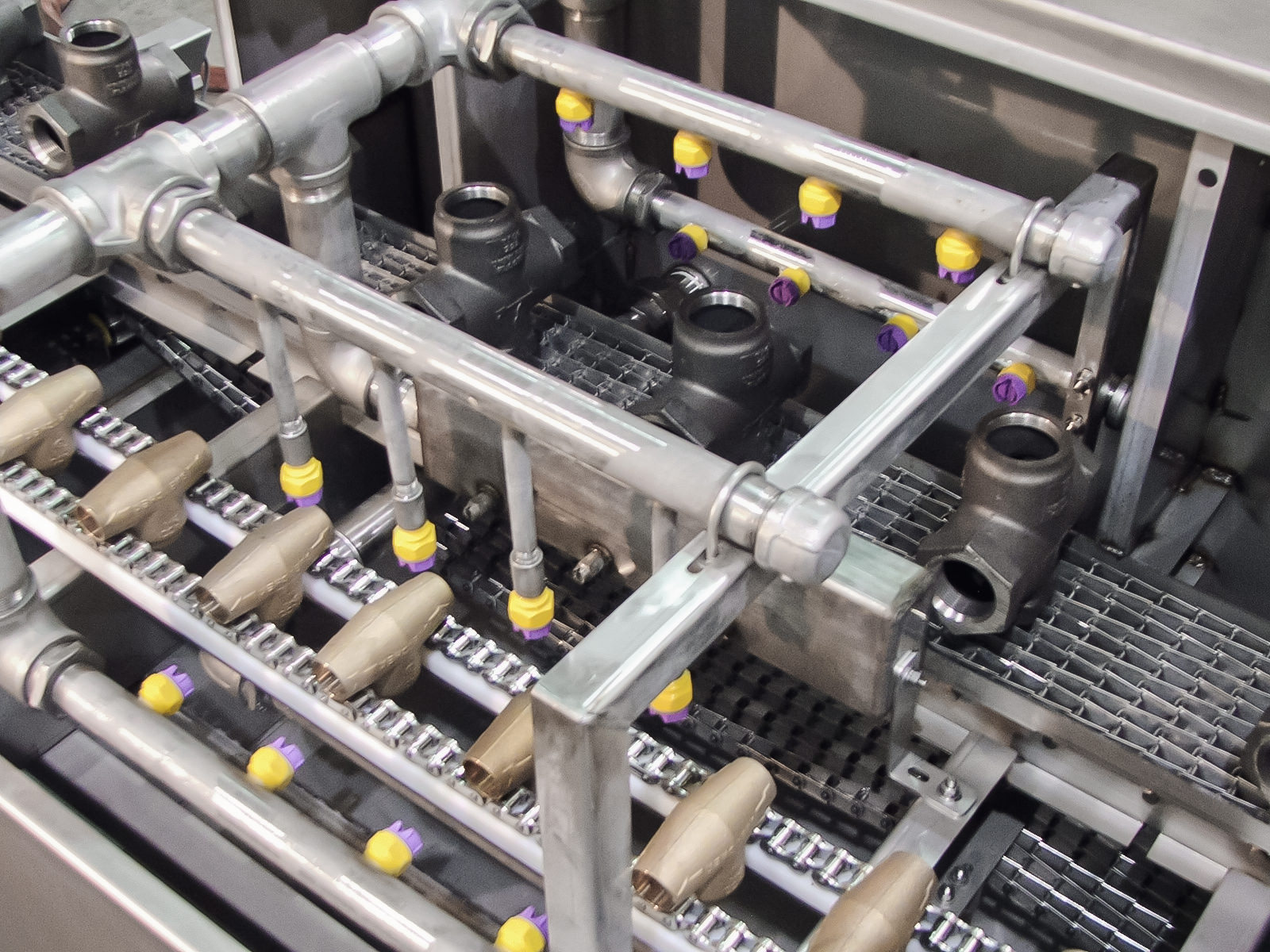
Alliance developed a conveyorized system for cleaning machined cast-iron and bronze valve housings contaminated with machine coolant and chips. The required result was a visually clean, oil-break-free surface, with residual moisture acceptable as long as the parts were dry within five minutes.
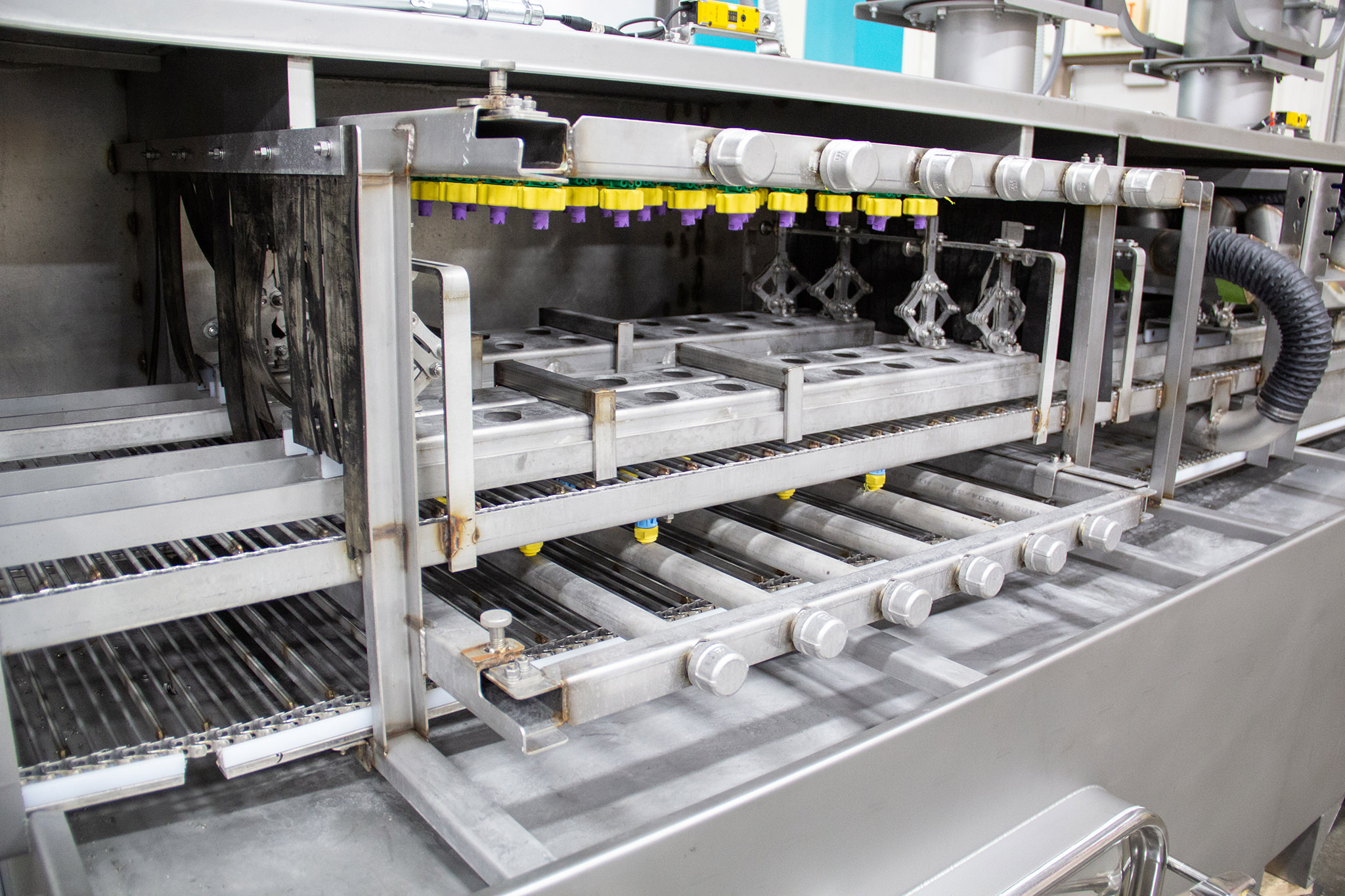
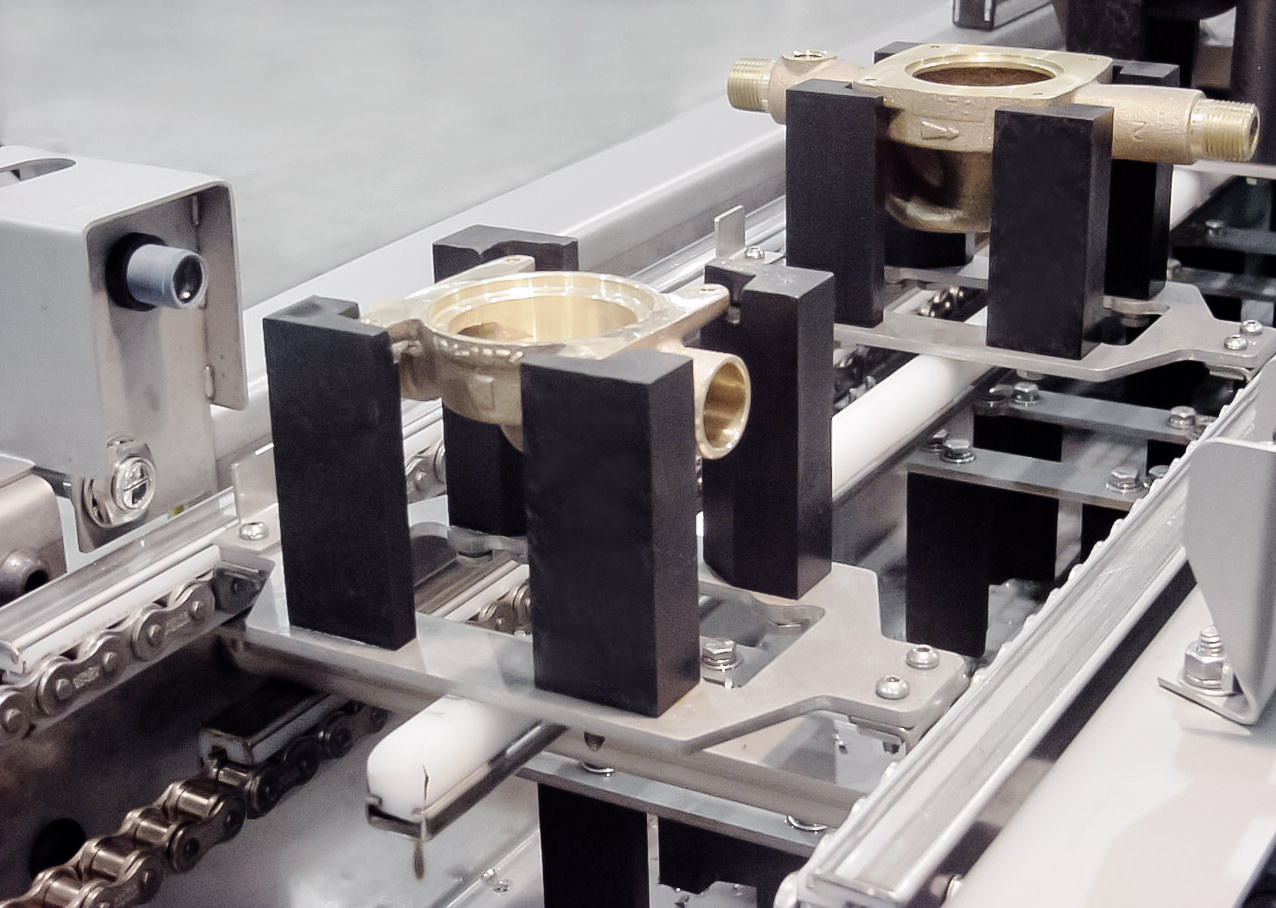
The solution used an Aquamaster CB-1800E conveyor belt washer with wash and heated blowoff zones. A dual-conveyor configuration maintained segregation between two component groups while custom guides optimized part transfer and an exit accumulator supported production flow.
Compressor & HVAC Component Cleaning
Compressor components and other machined HVAC parts may carry machining oils, coolants, chips and particulate after manufacturing.
Compressor parts cleaning can require targeted spray coverage to reach internal passages, recessed areas and complex geometries. Part orientation, nozzle placement and conveyor speed should be considered when developing the cleaning process.
Plumbing Fittings & Small Components
Brass, bronze, steel and other plumbing fittings may be produced in high volumes and require repeatable cleaning before assembly, coating or packaging.
Depending on part size and production volume, a plumbing parts washer may use conveyorized, rotary drum, indexing or batch processing.
Common HVAC & Plumbing Contaminants
Common contaminants encountered during HVAC and plumbing manufacturing include:
- Machining coolant
- Cutting and forming oils
- Lubricants and grease
- Metal chips
- Particulate and manufacturing soils
- Drawing compounds
- Residual process chemicals
The cleaning process should be matched to the actual contamination. For example, Alliance’s valve-housing application required removal of both coolant and cast-iron/bronze chips while achieving an oil-break-free surface.
Material is another important consideration. Aluminum, steel, stainless steel, brass, bronze, cast iron and plastics may require different cleaning chemistry and process parameters.
Aqueous HVAC Component Cleaning
Aqueous cleaning combines water-based chemistry, temperature, mechanical action and process time to remove manufacturing contamination.
A typical HVAC cleaning system may include:
Wash → Rinse → Blowoff → Drying
The exact configuration depends on the contaminant and required cleanliness.
For complex components, spray nozzles can be positioned to provide targeted coverage while part orientation and air knives or blowoff systems can help remove remaining cleaning solution.
Alliance also engineers cleaning systems with features such as oil skimming, filtration and chemical management when appropriate for the application.
Drying HVAC & Plumbing Components
Cleaning is only part of the process. Components may need to be sufficiently dry before assembly, coating, packaging or additional manufacturing operations.
Drying requirements can be addressed with:
- Ambient blowoff
- Heated blowoff
- High-velocity air knives
- Targeted air
- Custom part positioning
- Multiple drying zones
The required dryness should be established before selecting equipment. In Alliance’s valve-housing application, residual moisture was acceptable provided the components were dry within five minutes.
Throughput & Automation
Production volume is an important factor when selecting HVAC cleaning equipment.
Conveyorized parts washers are suited to repeatable, higher-volume production where components move continuously through defined cleaning and drying zones.
Indexing systems can stop and position components for targeted spray coverage and controlled processing. Alliance has also engineered indexing systems for machined components requiring automated loading, precise fixtures and repeatable processing at 30-second intervals.
Rotary drum and batch systems can provide flexible processing for smaller components or applications involving multiple parts at once.
Custom systems can be engineered for large, complex or unusual HVAC and plumbing components.
Selecting an HVAC Parts Washer
The right HVAC cleaning equipment depends on more than production volume. Alliance evaluates:
- Part size and weight
- Material and surface finish
- Contamination type
- Part geometry
- Required cleanliness
- Drying requirements
- Production rate
- Part handling and orientation
- Downstream processing
Testing the actual component and contamination can help establish the appropriate cleaning method before equipment is finalized.