Customer Background
The customer required an automated cleaning system for timing gear plates used in a high-volume manufacturing environment. Their process demanded reliable cleaning and drying while integrating into an automated loading and unloading setup. The system also needed to support visual cleanliness standards while handling metal chips, fines, and coolant carryover common in machining operations.
Challenge
The timing gear plates needed to be cleaned and dried within a three-minute production cycle while preventing cross-contamination between wash and rinse stages. Fine ferrous particles, coolant residue, and machining chips had to be removed consistently without interrupting automated production. Because the system would be robot-loaded and unloaded, accurate indexing, part detection, and jam protection were also critical.
Solution
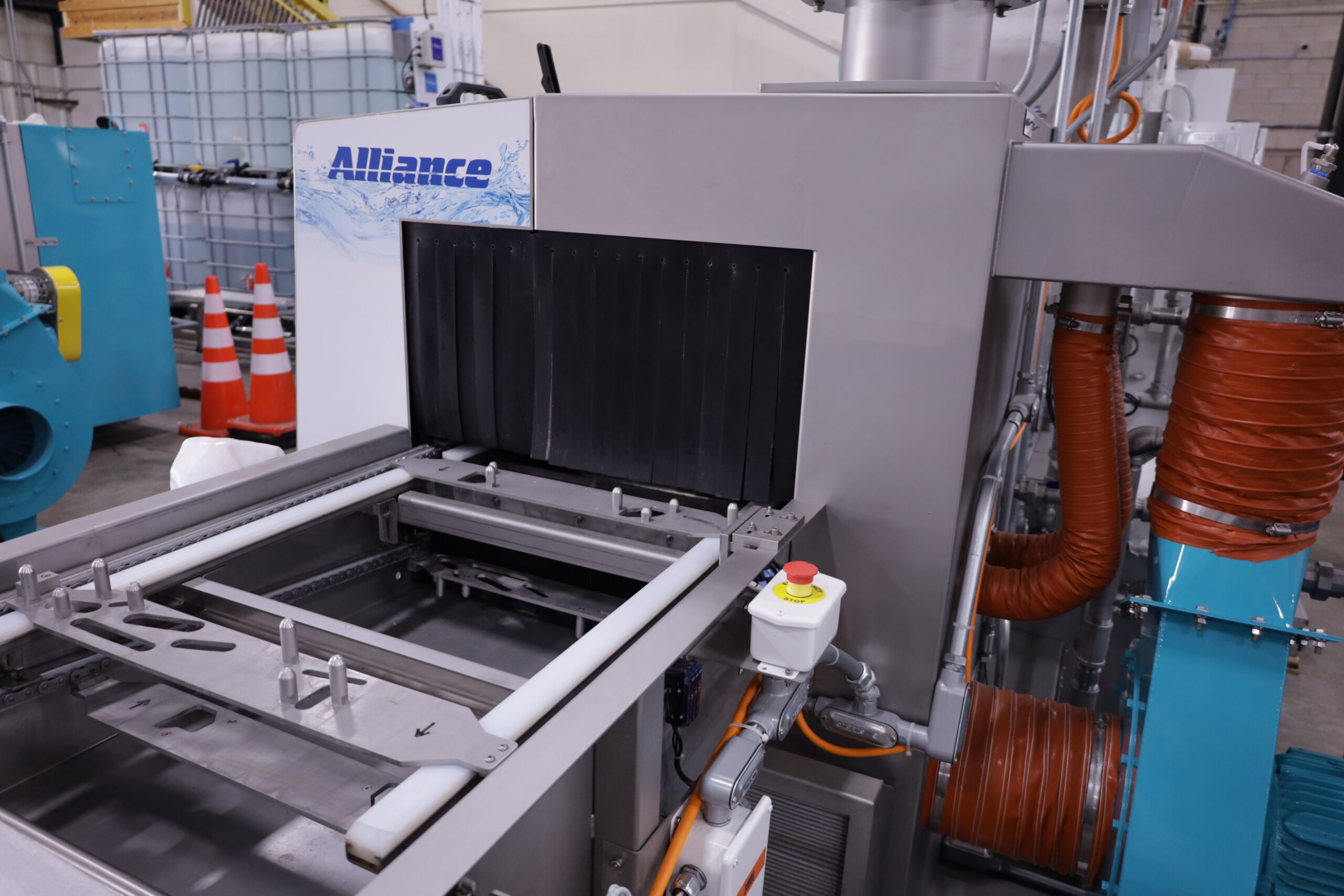
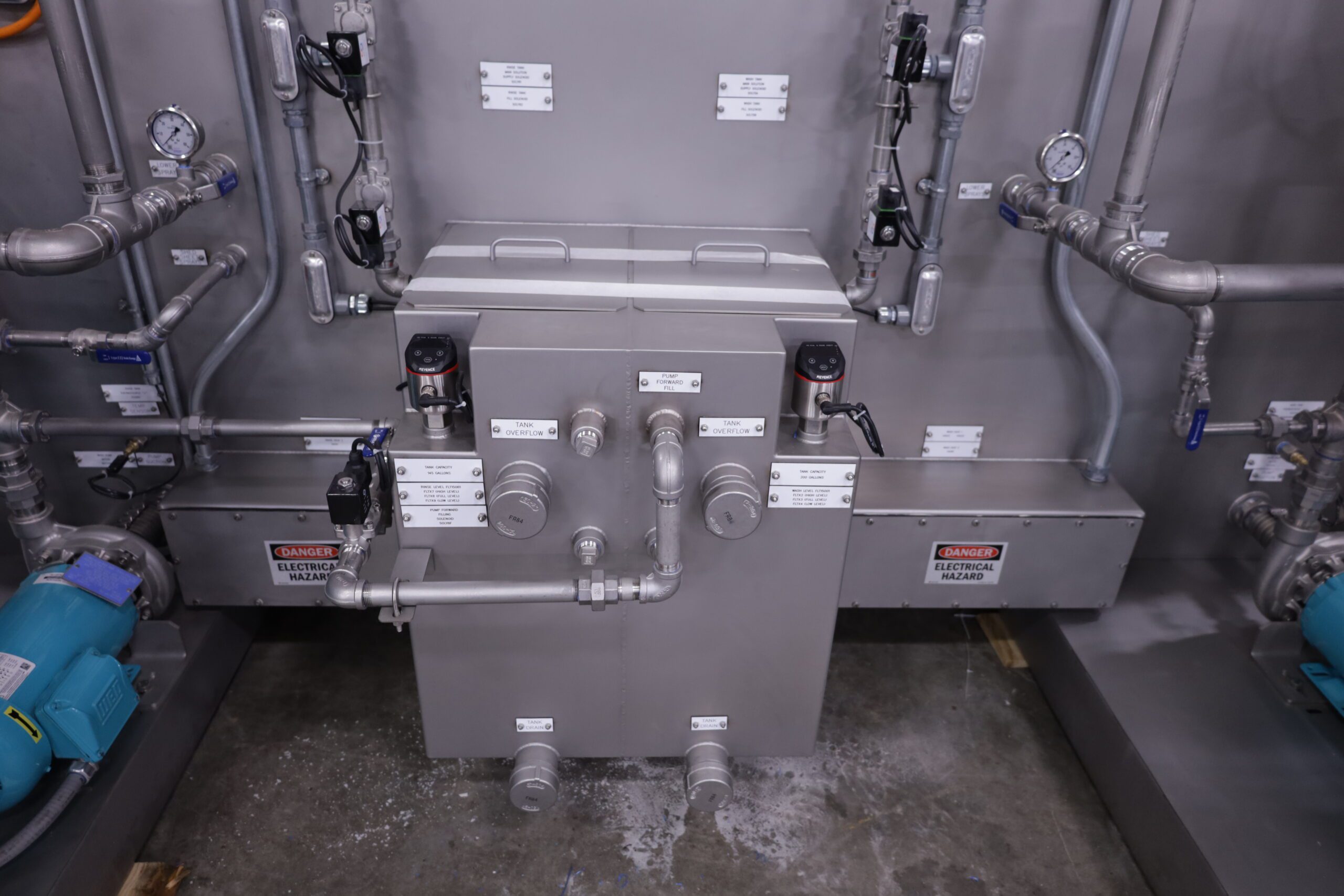
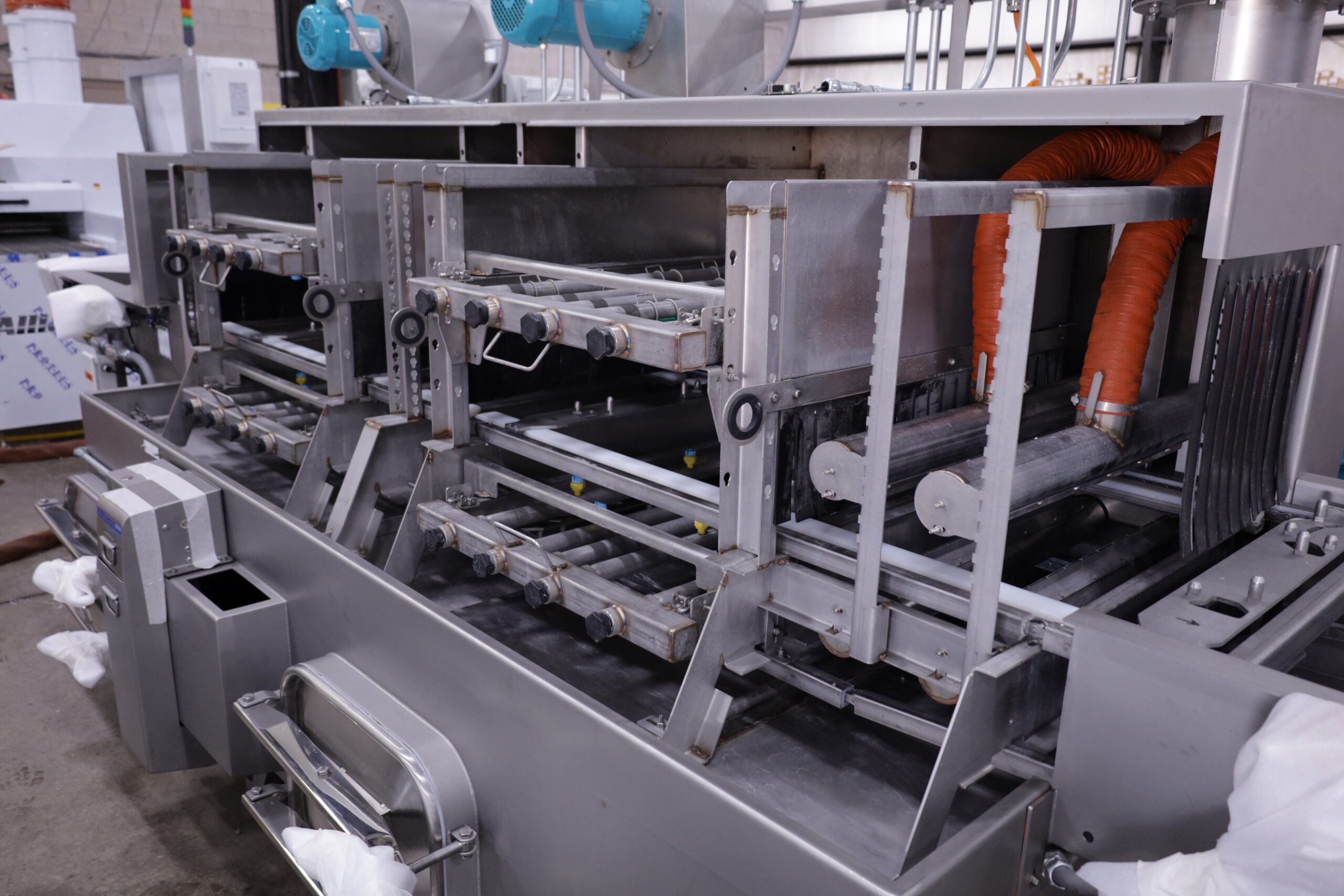
Alliance proposed an Aquamaster CI-2814F with intermediate blowoff, wash, rinse, and ambient blowoff zones. The machine uses servo-controlled indexing and stainless-steel fixtures to automatically move one timing gear plate at a time through the cleaning process. Standard features such as removable canopies, pull-out spray headers, hinged clean-out doors, adjustable air knives, and HMI/PLC controls help improve maintenance access and long-term reliability.
Cleaning Method
Parts first pass through an intermediate blowoff zone to reduce moisture carryout. Heated wash and rinse stages then remove machining chips, fines, and coolant residue using upper and lower spray nozzles. A second blowoff stage strips excess solution before the final ambient blowoff zone dries the parts for unloading.