Choosing an industrial parts washer involves more than finding equipment large enough to hold your components. The right cleaning system must consistently remove the required contamination, accommodate production volume, meet downstream cleanliness requirements and integrate effectively with your manufacturing process.
A successful industrial parts washers selection process therefore starts with the application not the machine.
Part geometry, contamination, production rate, cleanliness specifications, drying requirements and available floor space can all influence which cleaning technology is appropriate. Understanding these factors before selecting equipment can help manufacturers avoid insufficient cleaning, unnecessary operating costs and production bottlenecks.
1. Start With the Parts You Need to Clean
The first consideration in parts washer selection should be the component itself.
Document the:
- Maximum part dimensions
- Minimum and maximum part weight
- Material or alloy
- Part geometry
- Blind holes and internal passages
- Surface finish
- Areas requiring targeted cleaning
A large transmission housing, for example, presents a very different cleaning challenge than hundreds of small machined components.
Complex geometries may also require specialized nozzle positioning, rotation, indexing, immersion or other methods to reach areas that conventional spray patterns cannot adequately clean.
This is why equipment should be engineered around the part rather than attempting to make the part fit an existing cleaning process.
2. Identify the Contamination
Next, determine exactly what must be removed.
Common manufacturing contaminants include:
- Cutting oils
- Coolants
- Grease
- Metal chips
- Fine particulate
- Carbon
- Polishing compounds
- Dust and debris
Different soils respond differently to chemistry, temperature and mechanical action. Heavy oil may require a different process than fine particulate trapped inside machined passages.
The U.S. Environmental Protection Agency (EPA) notes that aqueous cleaning uses a combination of chemical and physical properties to remove contaminants and that performance can be strongly affected by cleaner formulation, concentration and temperature.
Understanding both the contaminant and substrate helps determine the appropriate industrial cleaning equipment and process parameters.
3. Define Cleanliness Requirements
“Clean” needs to be measurable.
A component that simply needs to appear visually clean has different requirements from a precision component that must satisfy a defined particulate specification before assembly.
Ask what happens immediately after cleaning. Will the part be:
- Painted or coated?
- Welded?
- Assembled?
- Leak tested?
- Packaged?
- Subjected to cleanliness testing?
Critical manufacturing applications may require control of particle size, particle count or residual contamination.
Defining the cleanliness requirement before equipment selection prevents both under-engineering and unnecessary processing.
4. Determine the Required Production Rate
Throughput often determines whether batch or continuous cleaning makes more sense.
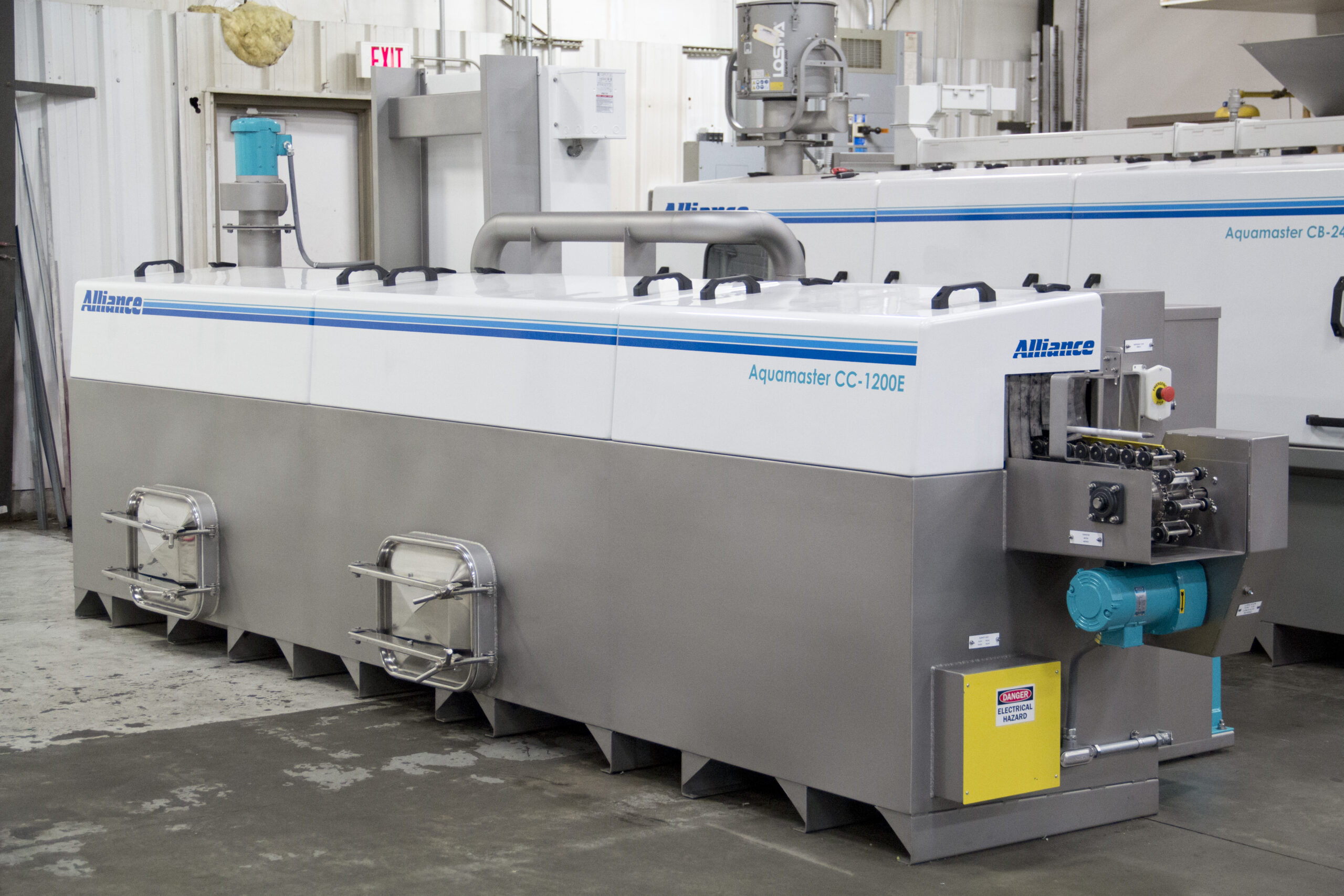
A cabinet washer may be appropriate when parts can be loaded and cleaned in batches. High-volume manufacturing may require a conveyorized system that continuously moves components through wash, rinse and drying stages.
Indexing systems can provide another option when components require controlled positioning or targeted cleaning at specific stations.
Calculate the required:
- Parts per hour
- Parts per shift
- Available cycle time
- Loading and unloading time
- Future production requirements
Do not size a system only for today’s production if significant growth is anticipated.
5. Evaluate the Cleaning Method
Several technologies can be used depending on the application.
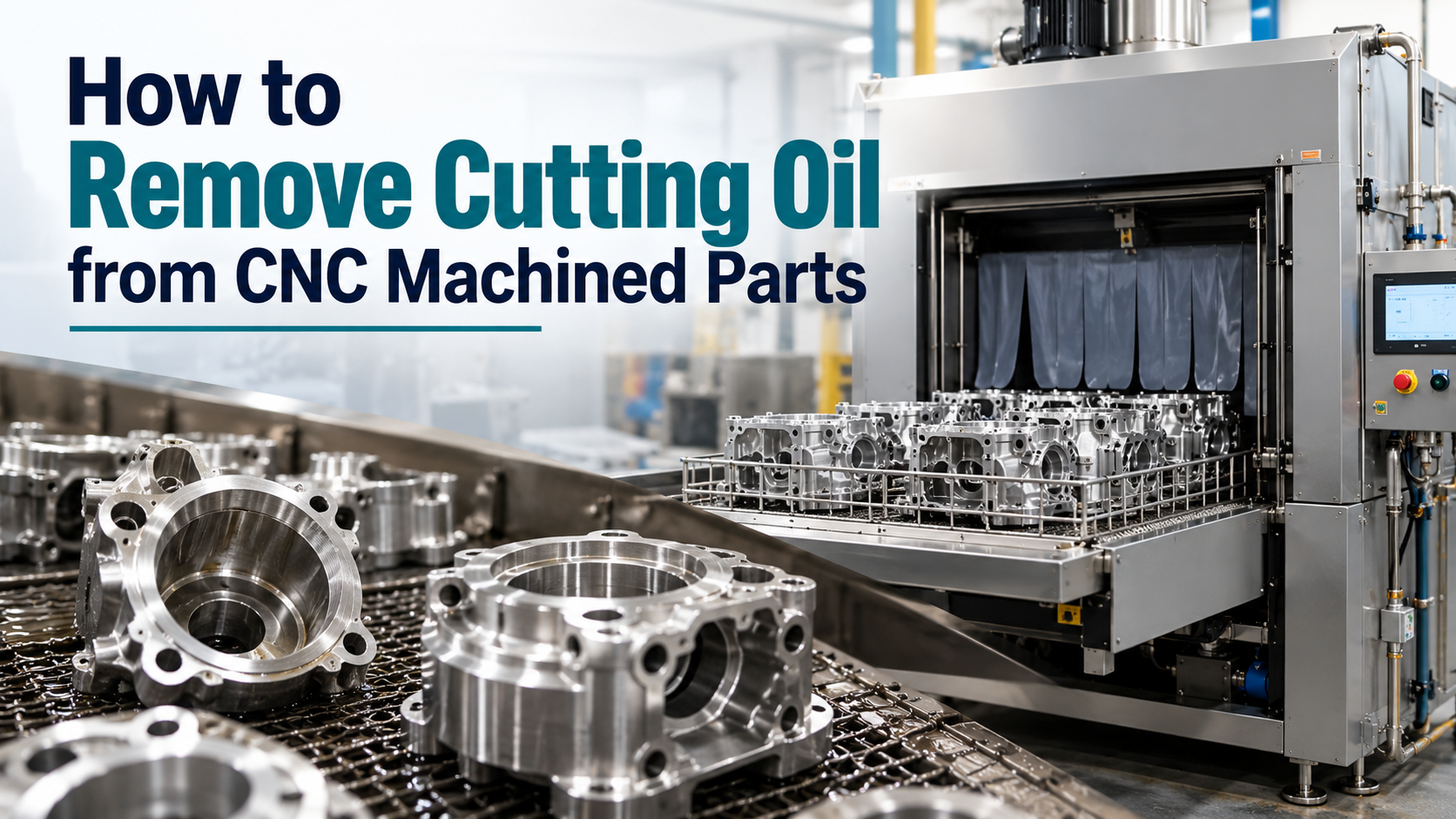
An aqueous parts washer uses water-based chemistry combined with temperature and mechanical action. Depending on the system, cleaning can involve spray impingement, immersion, agitation or combinations of these methods.
The EPA has identified spray, immersion and ultrasonic cleaning among the principal approaches to aqueous parts cleaning and notes that equipment selection should be based on the specific cleaning application.
Cabinet washers are often appropriate for batch cleaning. Conveyor systems support continuous production, while indexing and custom systems can address applications requiring precise part positioning or multiple cleaning stages.
There is no universally “best” washer type the correct technology depends on the process.
6. Consider Rinsing and Drying
Cleaning is only part of the cycle.
Residual chemistry can interfere with downstream processes, making rinsing important for many applications. Drying requirements should also be established before designing the system.
Parts with pockets, cavities or blind holes may retain water and require additional drying capability.
Consider:
- Rinse-water quality
- Number of rinse stages
- Blow-off requirements
- Heated drying
- Corrosion concerns
- Required dryness before the next operation
The EPA specifically notes that aqueous-cleaned components commonly require rinsing and that steps may be necessary to accelerate drying.
7. Consider Automation and Maintenance
Labor requirements should be included in the selection process.
Automated loading, conveyors, indexing and material-handling systems can reduce manual intervention and improve process consistency. However, increased automation should provide measurable value for the application.
Maintenance accessibility matters as well. Pumps, filters, nozzles, heaters and oil-removal equipment should be accessible for inspection and service.
Effective filtration and oil removal can help maintain bath quality and consistent cleaning performance.
Test Before Making a Final Parts Washer Selection
Whenever possible, manufacturers should test representative parts using actual contamination.
Testing can help establish the appropriate chemistry, temperature, pressure, cycle time and drying method before equipment is finalized.
EPA guidance has similarly recommended demonstrating aqueous cleaning equipment and solutions before purchasing because cleaning performance and maintenance requirements can vary among applications.
Choosing an Industrial Parts Washer as a Process
The best industrial parts washer selection begins with a clearly defined cleaning process.
Part geometry, contamination, cleanliness requirements, throughput, chemistry, rinsing, drying and automation should all be evaluated together.
Alliance Manufacturing designs industrial parts washers and automated cleaning systems around specific manufacturing requirements. From cabinet and conveyor washers to indexing and custom-engineered systems, the objective is not simply to provide a machine it is to develop a repeatable cleaning process that supports production.