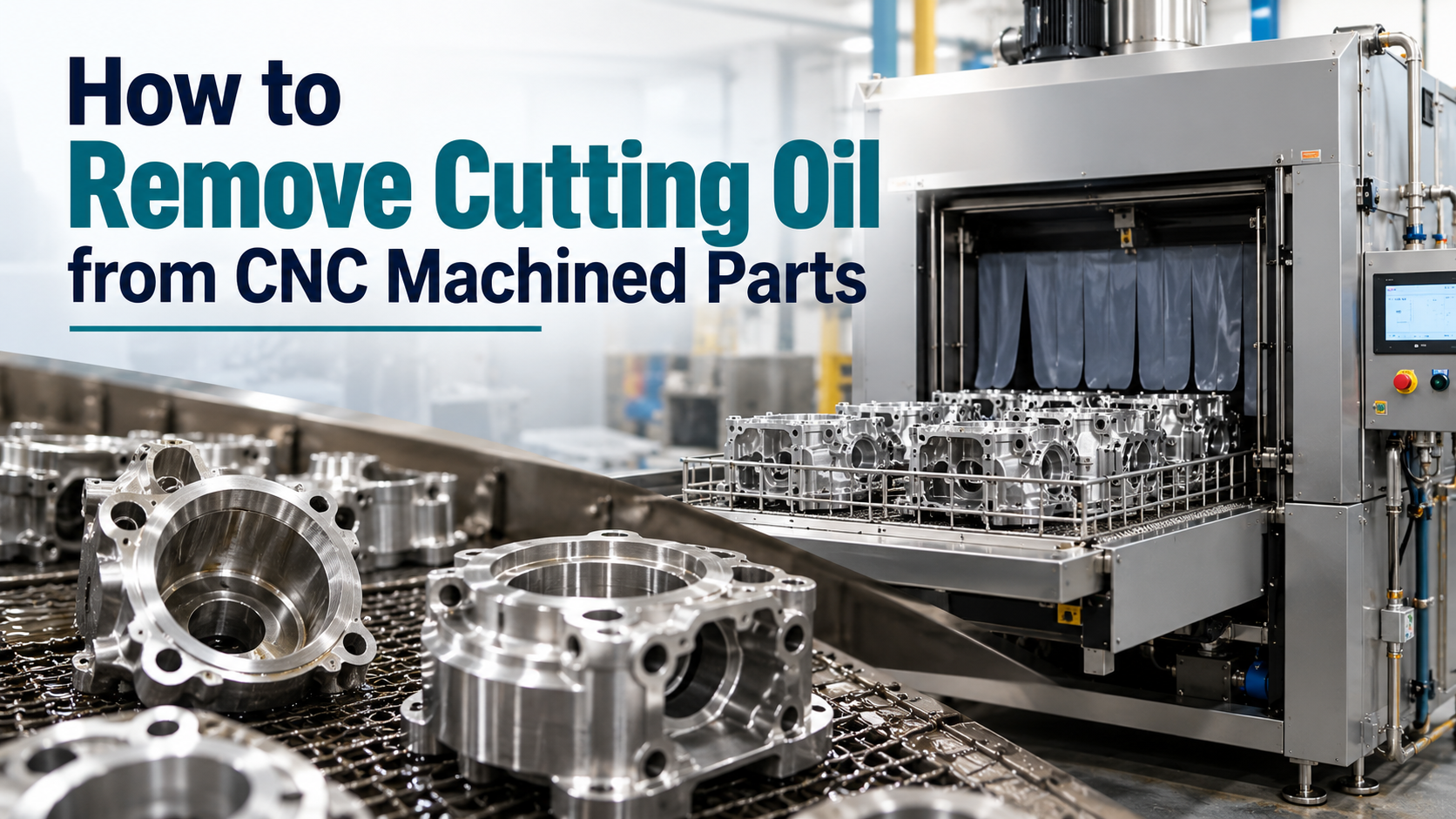
Welded parts cleaning is the process of removing oils, fabrication debris, weld residue, scale, and loose particles from welded and fabricated components so they can be inspected, finished, or assembled without defects. In most shops, an industrial parts washer handles this step. It uses controlled spray, temperature, and filtration to produce repeatable results.
Why Welded Components Need Cleaning
Metal fabrication leaves contamination at every stage. Cutting, forming, welding, and handling each add something to the part. If it isn’t removed, it shows up later as a failed inspection, a coating defect, or a field failure. Cleaning is a process-control step, not cosmetic work.
Common Contaminants in Metal Fabrication
| Contaminant | Source | Risk if left on the part |
|---|---|---|
| Oils and lubricants | Cutting fluids, stamping and forming oils, rust preventatives | Coating adhesion failure, weld porosity in later operations |
| Weld residue | Flux, smoke film, spatter | Poor paint or powder adhesion, hidden defects |
| Scale and oxides | Heat from welding, laser cutting, or plasma cutting | Coating lift, corrosion under finish |
| Particles and chips | Grinding, sawing, deburring, drilling | Abrasion, clogged passages, assembly damage |
| Handling soils | Fingerprints, shop dust | Spotting and surface inconsistency |
Heavy scale and thick slag usually need mechanical removal first, such as grinding, brushing, or blasting. Washing then removes the oils, residues, and loose particles left behind. Setting expectations for each step avoids rework.
Cleaning Before Inspection
Many inspection methods only work on a clean surface. Visual checks, dye penetrant testing, and dimensional measurement all suffer when oil or debris hides cracks, porosity, or true surface conditions. Cleaning first improves the reliability of the inspection result and reduces false rejects.
Cleaning Before Painting or Powder Coating
Finishing is where contamination costs the most. Residual oils and weld residue commonly cause:
- Fisheyes, craters, and pinholes in the finish
- Poor adhesion and early peeling
- Uneven coverage near weld seams
Aqueous (water-based) washing is widely used ahead of coating because it removes oils and particles from complex weldments and crevices. When parts are cleaned and dried consistently, the finish bonds more evenly and rework drops.
Cleaning Before Assembly
Particles left on welded frames, housings, or hydraulic and pneumatic components can wear mating surfaces or block fluid paths. Cleaning before assembly protects downstream equipment and supports customer cleanliness specifications. Where requirements are strict, measure cleanliness rather than assuming it. Gravimetric and particle-count testing are common ways to verify results.
How an Industrial Parts Washer Handles Weldment Cleaning
A well-matched washer for weldments typically provides:
- High-pressure spray with targeted nozzle placement to reach weld seams, corners, and blind areas
- Heated aqueous cleaning solutions matched to the oil and residue present
- Filtration and oil removal to keep wash solution clean longer
- Rinse and dry stages so parts move to coating or assembly without flash rust or spotting
- Fixturing or conveyor handling that fits part size, weight, and throughput
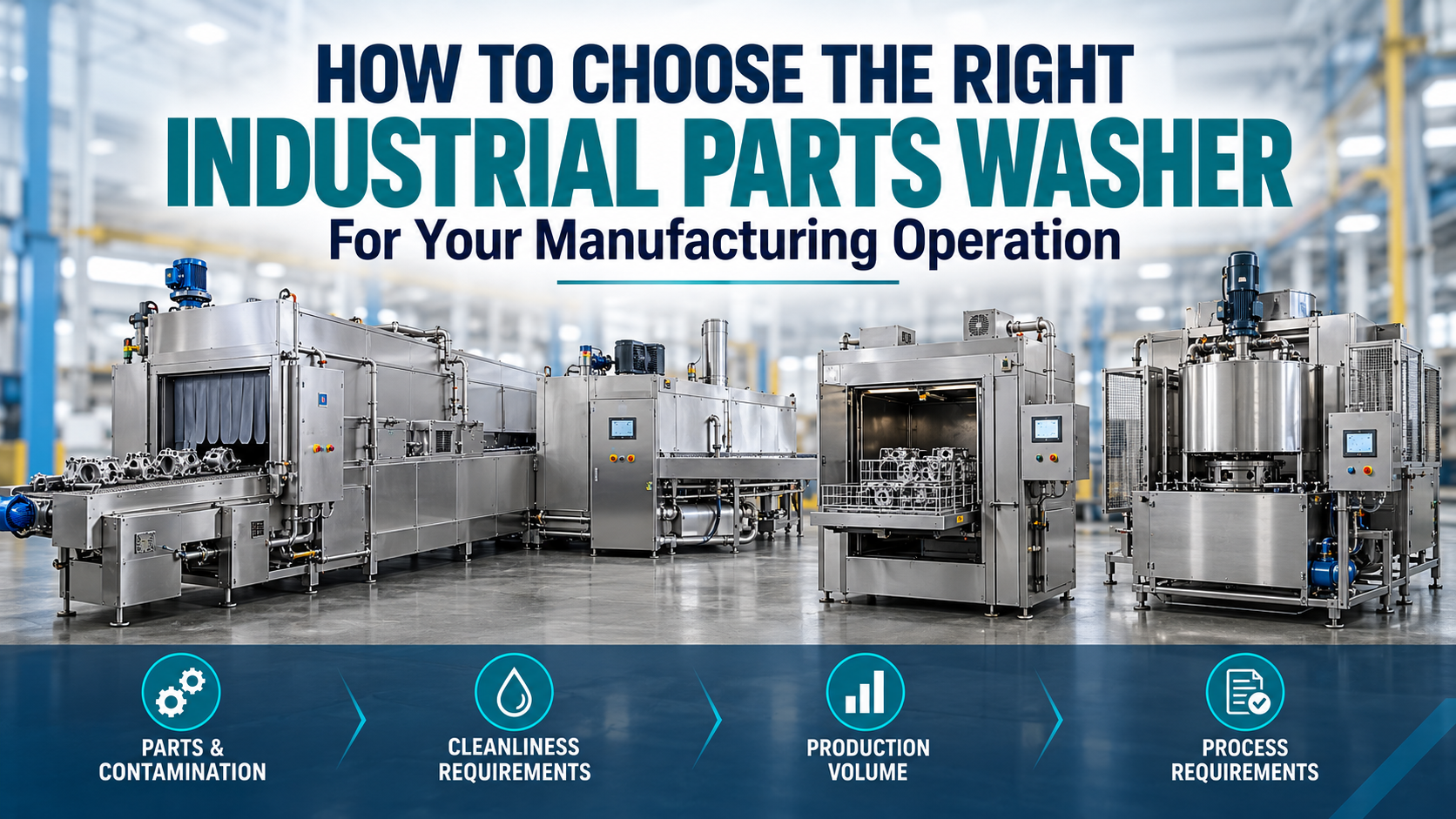
Washer type depends on the work. Conveyor washers suit continuous production, while cabinet and rotary systems fit mixed or lower-volume work. Very large weldments often call for a custom-engineered system.
Matching the Washer to Your Fabrication Process
Before choosing equipment, define these points:
- Part size, weight, and geometry, including blind holes and tight weld joints
- Contaminants present, such as oil type, residue, and particle size
- Production volume and cycle time
- Downstream requirement, whether inspection, coating, or assembly
- Cleanliness target and how it will be verified
Testing real parts is the most dependable way to confirm a process. Alliance Manufacturing, Inc. offers demonstration and testing through its test lab, so shops can see cleaning results on their own components before committing to equipment.
About Alliance Manufacturing
Alliance Manufacturing, Inc. has designed and built aqueous industrial parts washers in Fond du Lac, Wisconsin, since 1994. The company also serves as the U.S. distributor for ILSA Vacuum Degreasers, offering vacuum degreasing solutions to meet diverse industrial cleaning requirements. With more than 1,000 machines sold and in-house engineering, programming, and assembly capabilities, Alliance supports manufacturers across the automotive, agricultural, heavy equipment, aerospace, defense, marine, and other industries. Product options include conveyor parts washers, cabinet parts washers, custom engineered washers, and oil removal systems.