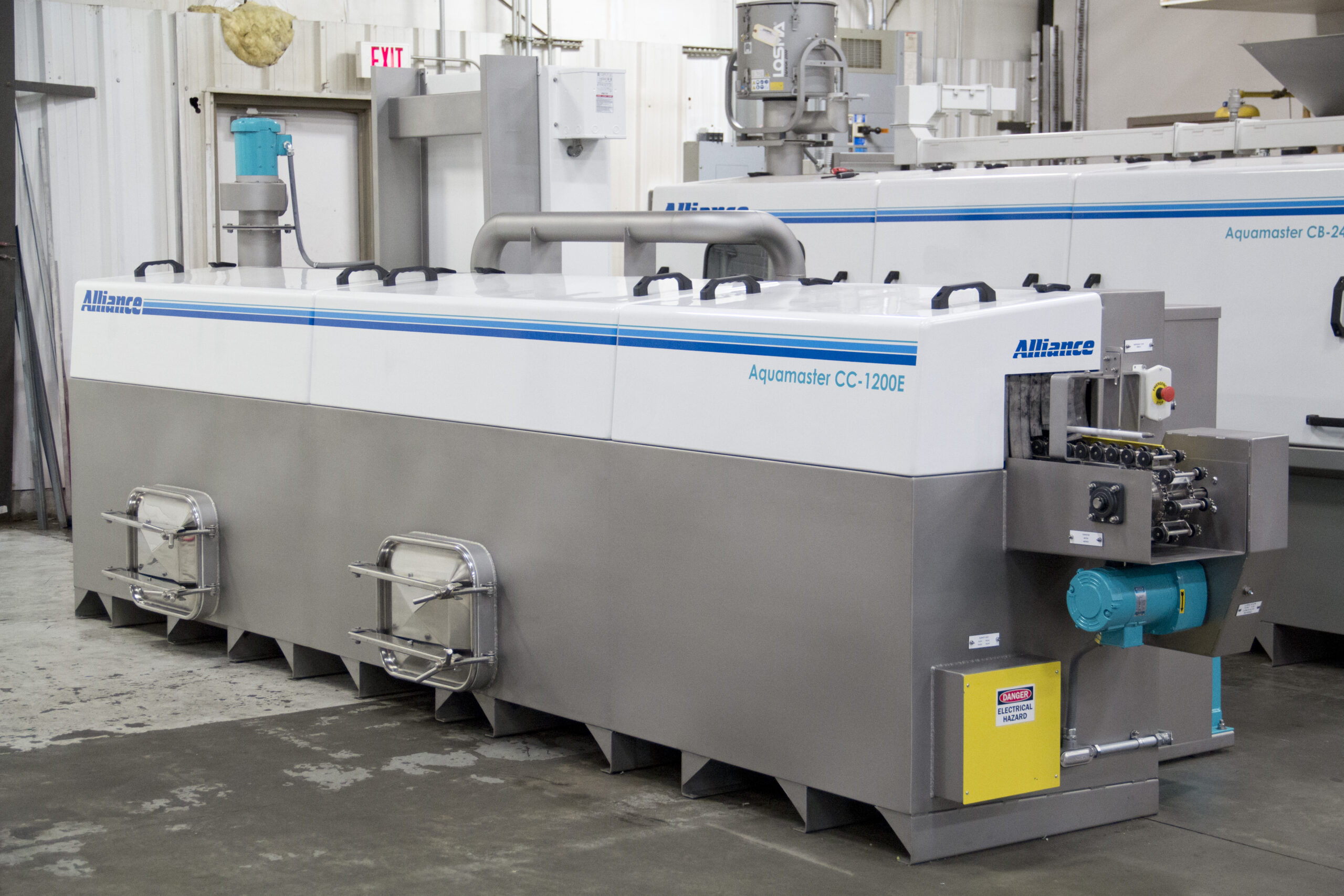
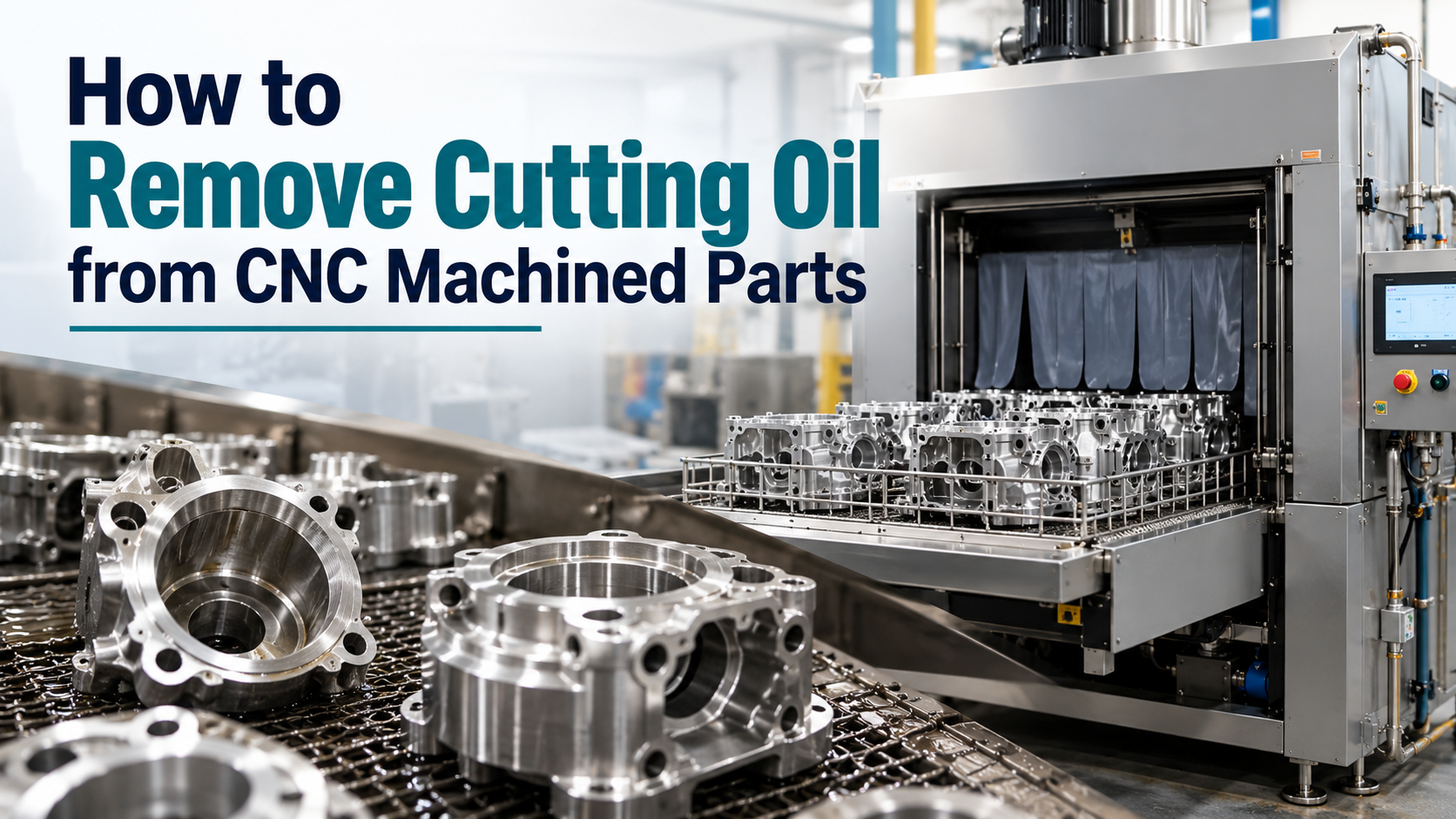
Choosing between a new and reconditioned parts washer is an important capital equipment decision. The right choice depends on your budget, production requirements, cleaning process, equipment risk tolerance, and long-term operating costs.
A reconditioned parts washer can reduce upfront investment and provide a faster payback when an existing machine configuration meets your needs. A new parts washer, however, can offer greater customization, newer components, warranty coverage, and improved efficiency for demanding or evolving applications.
Here’s how the two options compare.
New vs. Reconditioned Parts Washers: At a Glance
| Factor | New Parts Washer | Reconditioned Parts Washer |
| Upfront cost | Higher | Generally lower |
| Customization | High | Depends on equipment |
| Equipment history | New and known | Depends on documentation |
| Warranty | Typically available | Depends on provider |
| Availability | Built to specification | Depends on inventory |
| Technology | Latest available | Varies by machine and upgrades |
| ROI | Strong long-term potential | Potentially faster payback |
| Best for | Growing or specialized operations | Budget-conscious applications |
What Is the Difference Between New and Reconditioned Parts Washers?
A new industrial parts washer is engineered and manufactured for a specific application. Equipment can be configured around part size, contamination, production volume, cleanliness requirements, cycle time, automation, and drying needs.
A reconditioned parts washer is previously used equipment that has been inspected, cleaned, repaired, and potentially rebuilt before being offered for another application. The quality of reconditioning is important because not every used machine receives the same level of inspection or component replacement.
For manufacturers considering aqueous cleaning, either option may be appropriate depending on the parts, soils, throughput, temperature, chemistry, filtration, and drying requirements.
New vs. Reconditioned Parts Washer Cost
The most obvious difference is the initial purchase price.
A reconditioned parts washer generally requires less upfront capital than a comparable new machine. This can make it attractive when a manufacturer needs additional cleaning capacity but has a limited equipment budget or wants to avoid a larger capital expenditure.
A new parts washer typically requires a higher initial investment, but the equipment can be designed specifically for the application. Newer components and technology may also provide advantages in energy consumption, water usage, filtration, chemistry management, and maintenance over the equipment’s service life.
The lowest purchase price does not necessarily mean the lowest total cost of ownership. Buyers should consider the complete lifecycle cost, including installation, labor, maintenance, energy, water, chemistry, downtime, and expected equipment life.
Risk and Reliability
Risk is one of the biggest differences between new and reconditioned equipment.
New Parts Washer
A new machine generally provides:
- Manufacturer warranty options
- No unknown operating history
- Application-specific engineering
- Current components and technology
- Greater customization
- Equipment designed around expected production requirements
Reconditioned Parts Washer
A reconditioned machine can provide excellent value, but its risk depends heavily on the refurbishment process.
Important factors include:
- The depth of inspection and refurbishment
- Components replaced during rebuilding
- Previous operating conditions
- Remaining equipment life
- Ability to modify the machine for your application
- Testing and performance verification
Before purchasing, ask the supplier what refurbishment was performed and which components were replaced.
Parts Washer ROI: Which Option Pays Off Faster?
Parts washer ROI should be evaluated based on more than the purchase price.
A reconditioned machine can provide a faster payback when its lower acquisition cost delivers the required cleaning capacity without significant additional modification or maintenance. It can also be a practical way to extend equipment life rather than replacing a system that still has useful capacity.
A new machine may provide stronger long-term ROI when production volumes are increasing, parts are becoming more complex, or cleanliness requirements are changing. Application-specific engineering can help reduce the risk of under-capacity, excessive cycle times, or premature replacement.
A simple payback calculation is:
Payback Period = Total Equipment Investment ÷ Annual Savings
When evaluating the investment, consider labor, energy, water, cleaning chemistry, maintenance, downtime, production throughput, and expected service life.
When Should You Buy a New Parts Washer?
A new industrial parts washer may be the better choice when:
- Production volume is expected to increase
- Parts or contamination are becoming more complex
- Specific cleanliness standards must be met
- Automation or specialized drying is required
- Existing equipment cannot meet throughput requirements
- You need a highly customized cleaning process
- Long-term operating efficiency is a priority
New equipment provides the flexibility to engineer the cleaning system around your current and future requirements.
When Is a Reconditioned Parts Washer the Better Choice?
A reconditioned parts washer can be a strong option when:
- Capital preservation is important
- You need additional capacity quickly
- Your cleaning requirements are already well established
- An existing machine configuration fits your application
- Extending equipment life is preferable to replacement
- You can verify the machine’s refurbishment and condition
The key is to purchase from a supplier that can clearly explain the equipment’s history, refurbishment process, and current condition.
7 Questions to Ask Before Buying Reconditioned Equipment
Before purchasing a reconditioned parts washer, ask:
- What level of refurbishment was performed?
- Which components were replaced?
- What was the machine’s previous application?
- Has the equipment been tested after refurbishment?
- What remaining service life can reasonably be expected?
- Is a warranty available?
- Can the machine be adapted to my parts and cleaning process?
These questions can help you compare equipment based on actual value rather than purchase price alone.
How Alliance Manufacturing Supports Both Options
Alliance Manufacturing provides both new and reconditioned parts washer solutions, allowing manufacturers to select equipment based on their production requirements, budget, and risk tolerance.
Through its R3 – Recondition, Retool, Reuse program, Alliance can refurbish existing parts washers to extend their useful life and reduce the need for a completely new system. Its used equipment program also includes inspection, cleaning, and Level 1 or Level 2 refurbishment, with component replacement when needed.
For applications requiring a fully customized solution, Alliance’s new industrial parts washer systems can be engineered around specific parts, soils, throughput, and cleaning requirements.
New or Reconditioned: Which Is Right for You?
There is no universally better choice between a new and reconditioned parts washer.
A reconditioned parts washer may be the right investment when reducing upfront capital expenditure and extending equipment life are priorities. A new parts washer may provide greater value when your production requirements are changing, customization is important, or long-term operating efficiency is the priority.
The best decision comes from evaluating your parts, soils, throughput, cleanliness requirements, budget, and expected equipment lifecycle.
If you’re unsure which option fits your operation, consult an experienced parts washer manufacturer that can evaluate your application and recommend the most practical solution.