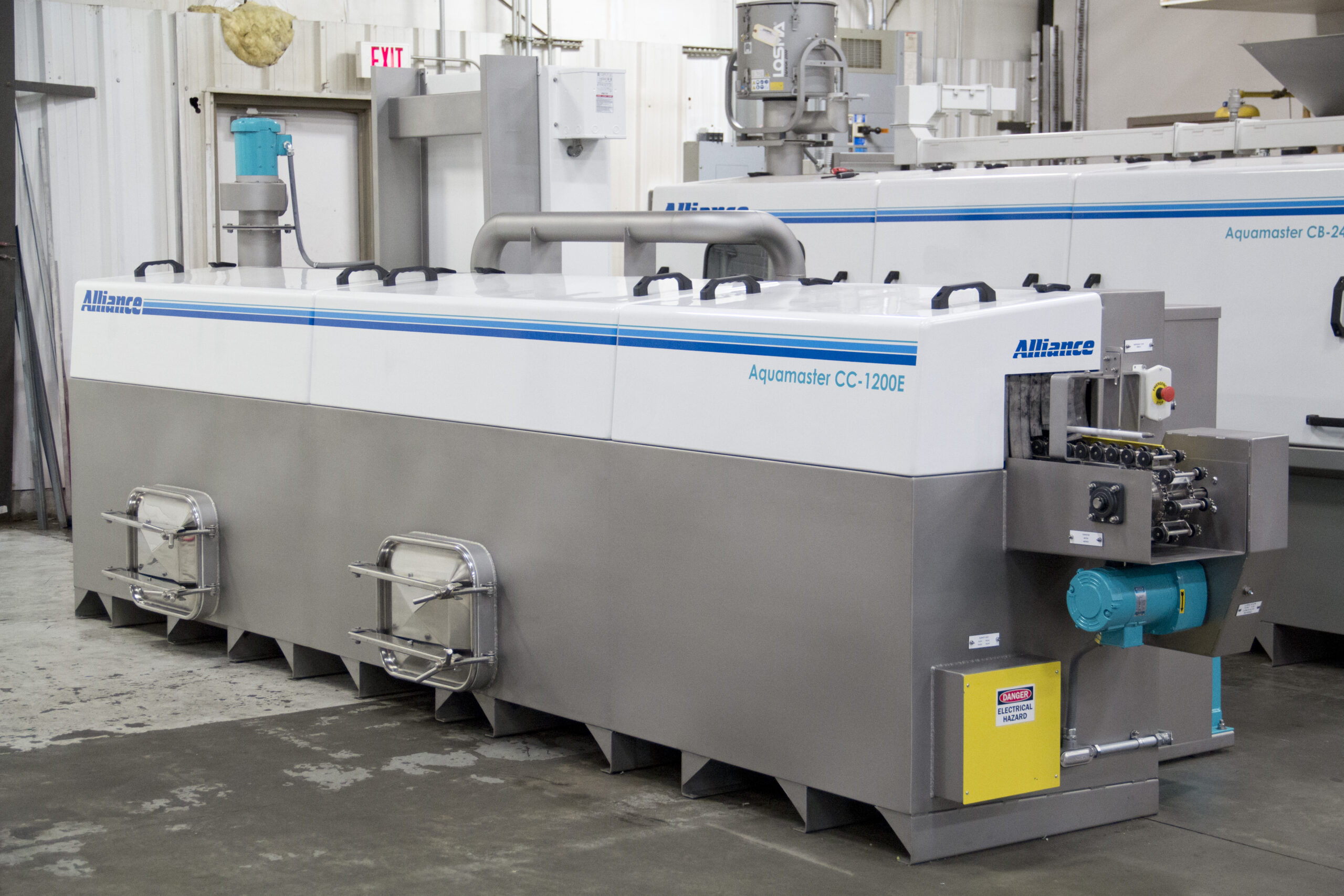
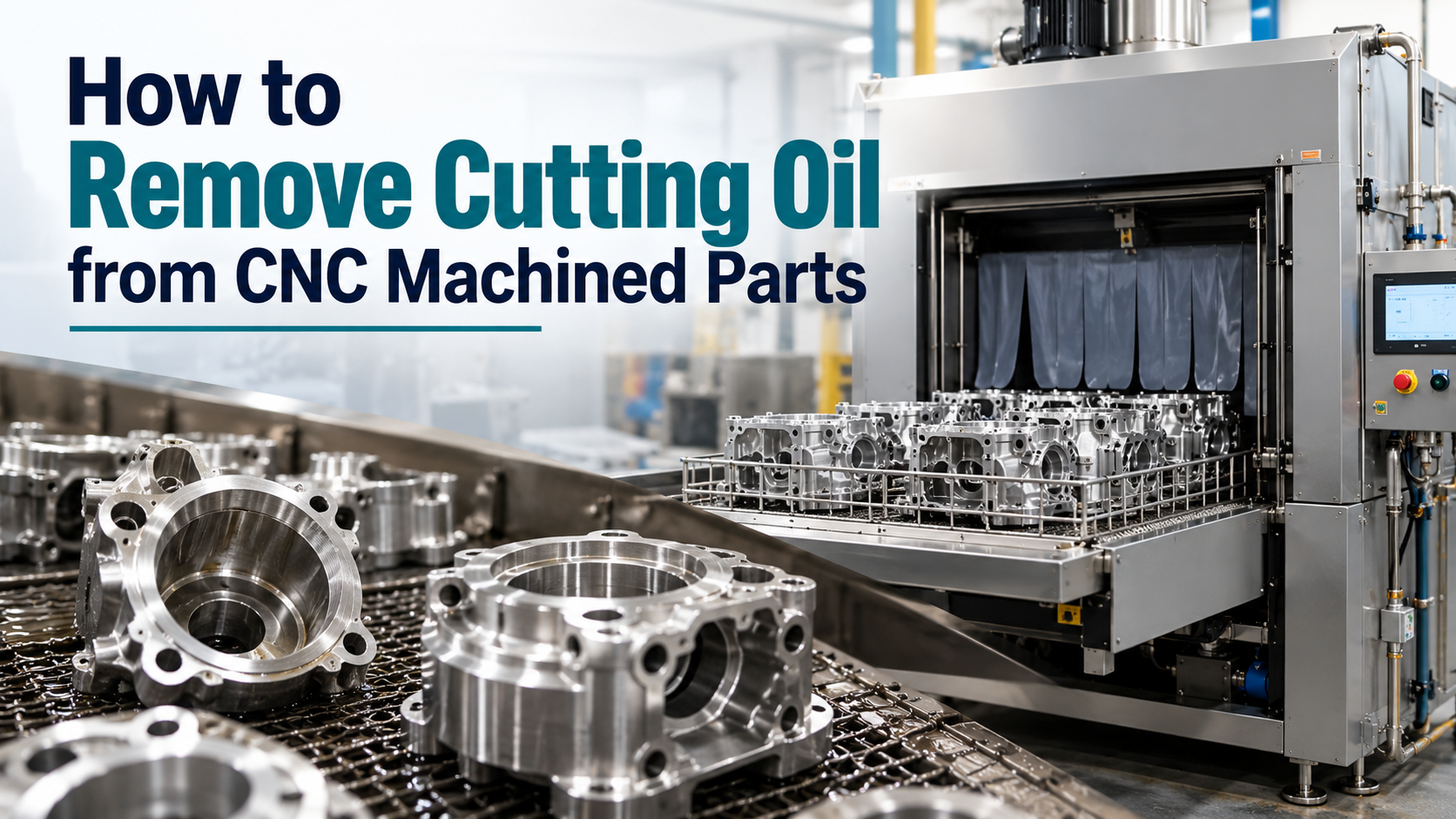
Choosing between an in-line PCB cleaning system and a batch PCB cleaning system is one of the most consequential capital equipment decisions an electronics manufacturer will make. The right choice affects throughput, flux and ionic residue removal, floor space, capital investment, and long-term operating cost. This guide breaks down how each PCB cleaning system works, where each one wins, and how to match your production volume to the right cleaning technology.
How In-Line PCB Cleaning Systems Work
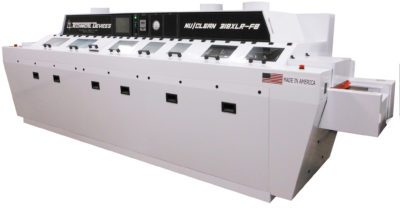
An in-line PCB cleaning system moves boards continuously through wash, rinse, and dry zones on a conveyor. Because cycle time is set by conveyor speed rather than a fixed batch load, in-line cleaning integrates directly with SMT and reflow lines, allowing boards to flow from soldering straight into cleaning without operator intervention. Boards typically travel horizontally, which lets cleaning solution dwell longer under low-standoff components and penetrate beneath dense packages a real advantage as component pitches shrink and no-clean flux residues become harder to remove.
Best suited for:
- High-volume, continuous production runs
- Facilities running SMT lines with consistent board designs
- Operations needing repeatable, monitorable cleanliness results (J-STD-001 compliance)
- Manufacturers prioritizing labor reduction and process consistency
Trade-offs: In-line systems require a larger equipment footprint, higher upfront capital investment, and plumbing/utility infrastructure. They’re also less forgiving of frequent product changeovers, since wash chemistry and conveyor speed are typically optimized for a defined range of board types.
How Batch PCB Cleaning Systems Work
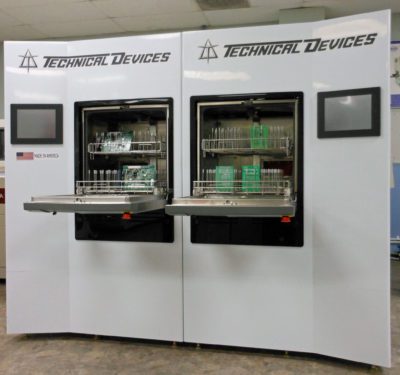
A batch PCB cleaning system loads a group of boards into a single chamber, where they’re washed, rinsed, and dried together in one cycle. Because each cycle is self-contained, batch cleaners offer far more flexibility to adjust chemistry, temperature, and dwell time for different board geometries making them a strong fit for contract manufacturers running mixed product lines, prototyping, and specialty or low-volume assemblies.
Best suited for:
- Low-to-mid production volumes or variable order sizes
- Facilities with limited floor space or capital budgets
- Contract manufacturers cleaning many different board designs
- Applications requiring flexible cleaning parameters per job
Trade-offs: Batch cleaning is slower per board at high volumes, and cleaning consistency depends heavily on how boards are racked and oriented in the chamber. Larger components can shadow smaller ones, and vertical loading can limit dwell time for solution to reach under-component areas factors that matter more as assemblies get denser.
Comparing In-Line and Batch Cleaning Side by Side
| Factor | In-Line Cleaning | Batch Cleaning |
|---|---|---|
| Production volume | High-volume, continuous runs | Low-to-mid volume, mixed jobs |
| Capital investment | Higher upfront cost | Lower initial cost |
| Footprint | Larger, integrated into the line | Smaller, standalone unit |
| Flexibility | Optimized for consistent designs | Easily adjusted per batch |
| Labor | Minimal handling, continuous flow | More operator involvement per cycle |
| Cleaning consistency | Highly repeatable, horizontal dwell | Depends on rack loading and orientation |
Neither system is universally “better” the right answer depends on your throughput requirements, board complexity, and how much production flexibility your business needs.
In-Line PCB Cleaning Systems
Batch PCB Cleaning Systems
Why Cleaning Technology Matters More Than Ever
As flux chemistries evolve and component density increases, under-board and under-component cleaning has become a critical quality factor, not just a cosmetic one. Ionic and flux residues left behind can cause electrochemical migration, dendritic growth, and long-term reliability failures issues that are far more expensive to fix in the field than to prevent on the line. This is why cleaning equipment design, not just the in-line versus batch decision, plays such a significant role in final board quality.
Alliance Manufacturing has engineered aqueous parts washing and PCB cleaning equipment since 1994, with more than 1,000 machines built for manufacturers across the electronics, automotive, and industrial sectors. Its Nu/Clean product line reflects both sides of this decision: the Nu/Clean in-line aqueous cleaning system, built around the patented Flood Box technology for high-impingement cleaning of dense, low-standoff assemblies, and the Nu/Clean AquaBatch, designed for manufacturers who need flexible, cost-effective batch cleaning without sacrificing thorough flux removal. Both platforms are built with stainless steel construction, full access for maintenance, and configurations engineered around the customer’s specific board designs and cleanliness requirements.
Making the Right Decision for Your Production Volume
If your operation runs high, consistent volumes on an SMT line and needs to keep pace with reflow output, an in-line PCB cleaning system will generally deliver the best combination of throughput, consistency, and long-term labor savings. If your production volume is lower, your board mix varies frequently, or you’re working with a limited capital budget or floor space, a batch PCB cleaning system offers the flexibility to adapt cleaning parameters job by job.
The most reliable way to decide is to evaluate your actual production data: boards per shift, component density, flux type, and available floor space. From there, a manufacturer experienced in both in-line and batch aqueous cleaning technology can help match equipment specifications to your real-world requirements rather than fitting your process to a machine that wasn’t designed for it.