An industrial parts washer is one of those machines that gets noticed only when it stops working and by then, you’ve usually lost a shift’s worth of throughput. A structured parts washer maintenance routine prevents most of that downtime and keeps cleaning results consistent batch after batch, which matters just as much as the repair cost avoided.
Why Parts Washer Maintenance Schedules Get Skipped (and Why That’s Costly)
Parts washers often run in the background of production, and maintenance gets deferred when the line is busy. The problem: small issues a partially clogged nozzle, a slightly degraded seal doesn’t usually cause an outright failure right away. They cause gradual cleanliness decline, which is harder to notice until parts start failing inspection or the machine breaks down entirely, often during a high-volume run when downtime is most expensive.
Daily Parts Washer Maintenance Checks
- Inspect spray nozzles for clogging or uneven spray pattern. A blocked nozzle reduces cleaning coverage on that zone of the basket and is one of the most common causes of inconsistent results.
- Check wash and rinse tank fluid levels and top off as needed to maintain proper spray pressure and coverage.
- Visually inspect bath condition as excessive oil sheen or particulate buildup signals it’s time for filtration or a bath change sooner than the scheduled interval.
- Confirm heater function if the cycle relies on a specific wash temperature, since even a small temperature drift can affect solvent performance.
Weekly Parts Washer Maintenance Checks
- Clean or replace filters in the wash and rinse circuits to prevent particulate recirculation back onto parts.
- Inspect door seals and gaskets for wear that could cause leaks, pressure loss, or temperature inconsistency inside the chamber.
- Check pump pressure against baseline specs. A drop often indicates impeller wear or a partial blockage somewhere in the circuit.
- Clear debris from sumps and strainers that collects loose chips and swarf, preventing it from cycling back into the wash bath.
Monthly Parts Washer Maintenance Checks
- Test solvent concentration to confirm it’s within the manufacturer’s recommended range dilution drifts over time as fresh water is added without rebalancing chemistry.
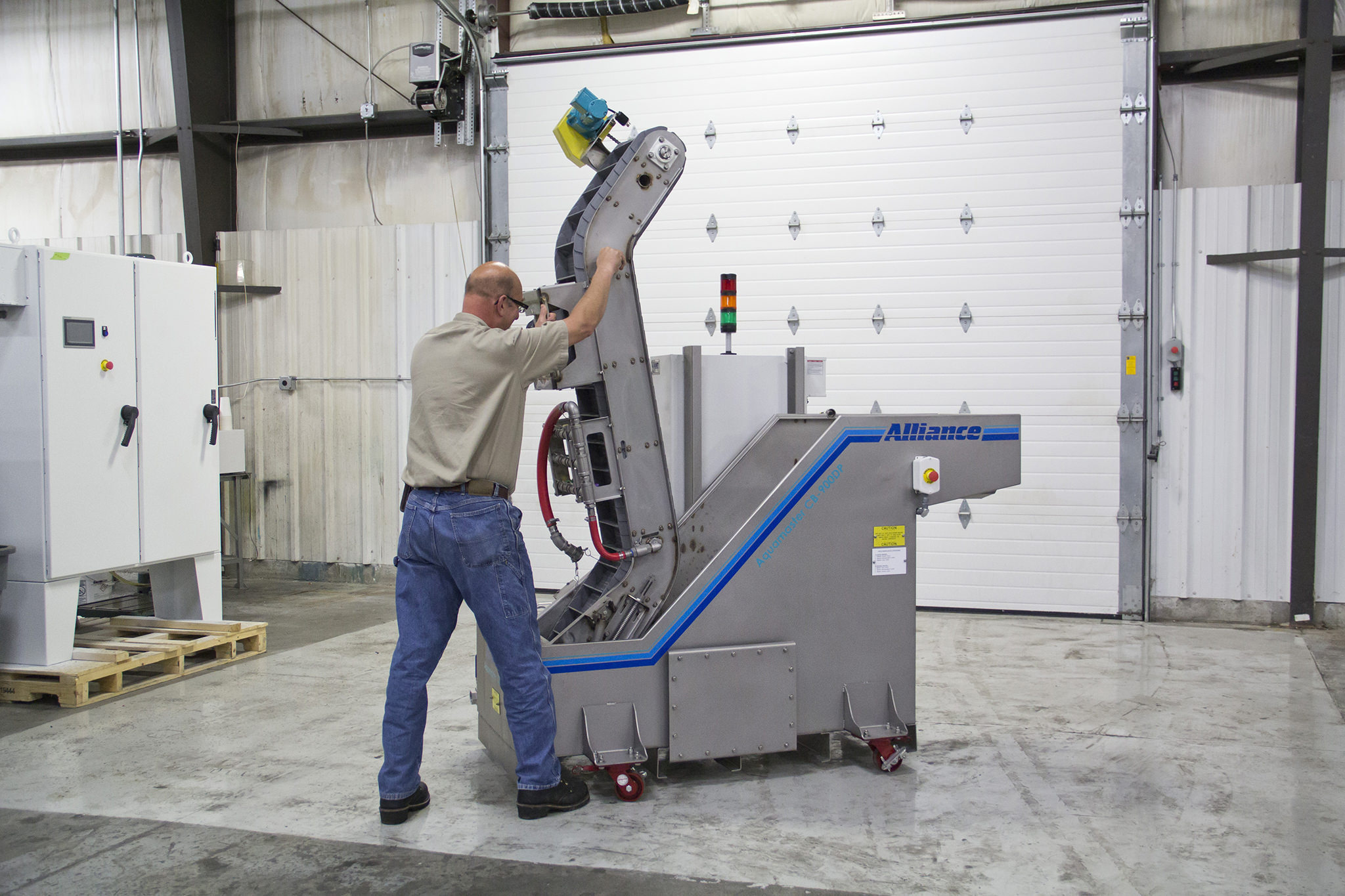
- Inspect conveyor or basket-handling mechanisms (for conveyorized systems) for wear, alignment, or lubrication needs.
- Calibrate temperature and timer controls to confirm cycle parameters match the programmed settings, since drift here can quietly degrade cleaning results over weeks.
- Check drain valves and plumbing for scale buildup or corrosion that could eventually cause a leak or blockage.
Quarterly and Annual Parts Washer Maintenance Checks
- Full bath drain and tank cleaning to remove accumulated sludge that filtration alone won’t catch.
- Inspect heating elements for scale buildup that reduces heating efficiency and increases energy costs over time.
- Review electrical connections and control panel for wear, especially in high-moisture environments where corrosion risk is elevated.
- Audit cycle performance against cleanliness test results to confirm the machine is still meeting your cleanliness standards, not just running on schedule without verification.
Signs Your Parts Washer Needs Attention Sooner Than Scheduled
- Increasing cycle times for the same load size
- Parts failing inspection more frequently with no change to the upstream process
- Unusual noise from pumps or motors during operation
- Visible residue, spotting, or water staining after a completed cycle
A Practical Example
A facility running a conveyorized parts washer noticed a slow rise in cleanliness rejections over several weeks with no obvious single cause. A root-cause review traced it to a gradual pump pressure drop from impeller wear something the weekly pressure check would have caught within days rather than weeks, had it been consistently logged. After tightening the weekly maintenance routine and adding a simple pressure log, similar drift was caught and corrected within one week on a subsequent occurrence, well before it affected part quality.
Building Parts Washer Maintenance Into Your Workflow
The most reliable approach is assigning specific checks to specific intervals and tracking them even a simple logbook or checklist posted near the machine improves compliance significantly compared to relying on memory. Pairing this with manufacturer-recommended service intervals for pumps, heaters, and seals will extend equipment life well beyond machines that are only serviced after something breaks.
The Payoff of Consistent Parts Washer Maintenance
A documented parts washer maintenance routine costs a fraction of the labor and downtime created by an unexpected failure mid-shift. More importantly, it protects the consistency of your cleaning results which, as covered in our piece on cleanliness inspection failures, is often where the real cost of poor maintenance shows up.