Customer Background
Manufacturer required an advanced inline aqueous cleaning system for printed circuit boards with complex, high-density components and low standoff areas. Needed reliable cleaning performance, extended wash dwell time, and efficient drying to support continuous electronics production.
Challenge
Traditional spray cleaning methods can struggle to penetrate beneath low standoff components and between densely populated PCB assemblies. Manufacturer required reduced chemistry loss, precise process monitoring, and consistent drying performance for sensitive electronic assemblies.
Solution
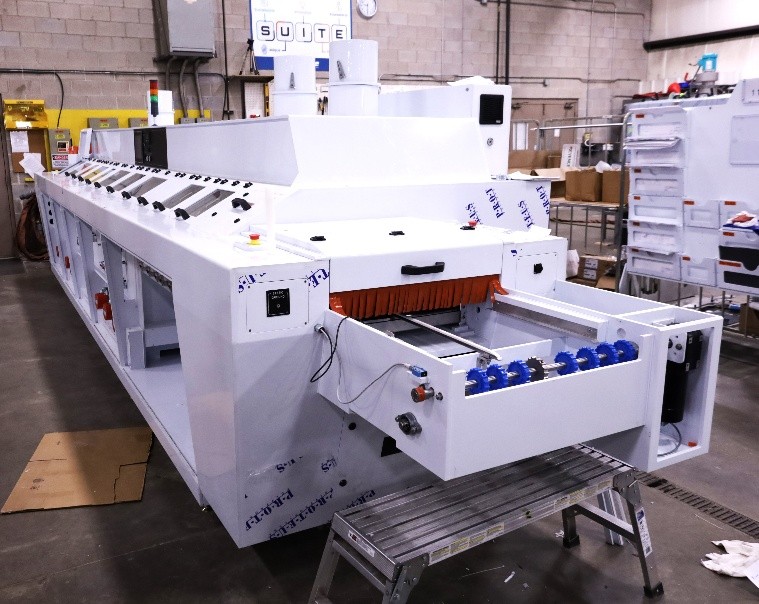
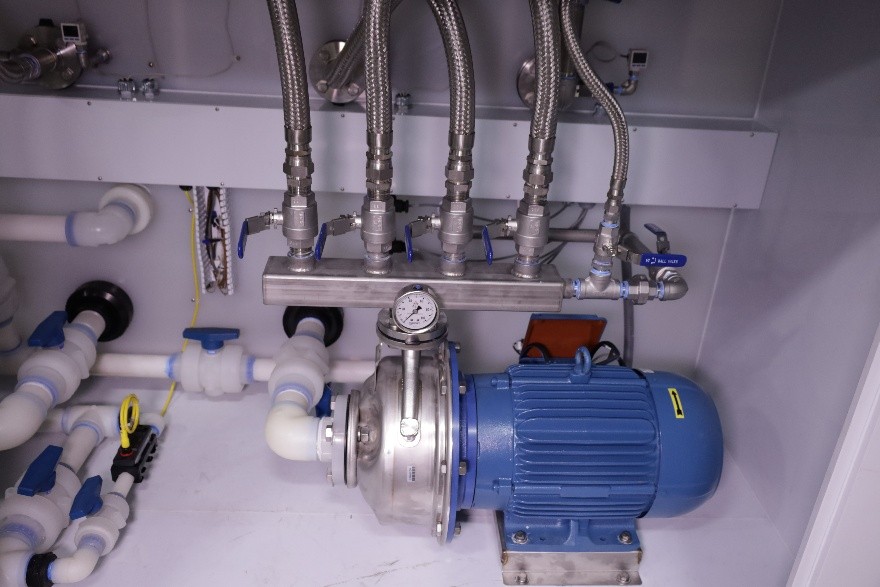
Alliance Manufacturing supplied a Nu/Clean 824 XLR-FB inline aqueous cleaning system with patented Flood Box™ technology. The system combined spray-in-air cleaning, full PCB submersion, heated wash and rinse stages, air knife drying, and IR thermal drying to improve cleaning penetration, process control, and drying efficiency for complex electronic assemblies.
Cleaning Method
The system utilized inline aqueous spray cleaning combined with Flood Box immersion cleaning, recirculating heated wash and rinse stages, anti-drag out air knives, and multi-stage heated drying. High-pressure spray bars, barrier water knives, and IR-assisted drying were used to clean and dry densely populated circuit boards while minimizing chemistry loss and moisture retention.