Machining an aluminum engine block can leave coolant, metal chips and other debris on exterior surfaces and within oil passages and machined features. Removing this contamination is especially important before downstream operations such as leak testing.
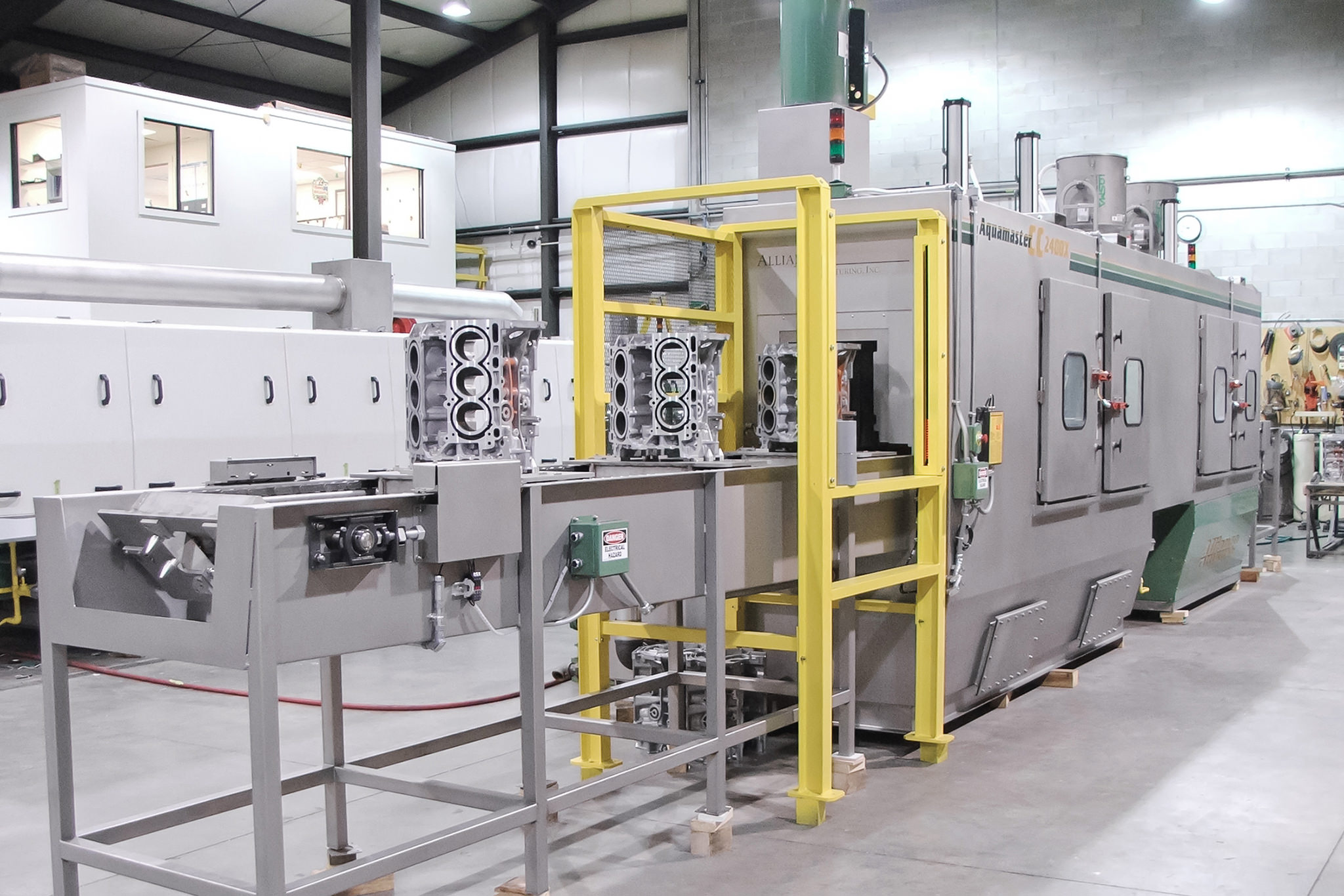
For this application, Alliance engineered an engine block cleaning machine for in-process cleaning of rough-machined V-6 engine blocks. The system combines indexing, precision fixturing, targeted spray cleaning and blowoff while maintaining a production rate of one engine block approximately every 35 seconds.
Customer Background
The customer is a global supplier of aluminum die-cast components specializing in powertrain and automotive applications. Its capabilities include product design, simulation, testing, rapid prototyping and production.
The customer required an automated engine block washer that could be integrated into its manufacturing process while meeting defined cleanliness and cycle-time requirements.
Challenge: Coolant and Chip Removal Before Leak Testing
The V-6 engine blocks required intermediate cleaning following rough machining and before leak testing.
Machining operations can leave coolant and metal chips on component surfaces and within passages and other complex features. These areas require particular attention because remaining contamination can interfere with subsequent manufacturing and inspection processes.
This application also had measurable cleanliness requirements. Pressurized oil passages could contain no more than 15 mg of contamination, while non-pressurized passages were limited to 40 mg.
The automotive engine block cleaning system therefore needed to:
- Remove machining coolant and chips
- Clean internal oil passages and complex features
- Meet defined particulate limits
- Dry critical leak-test areas
- Process approximately one part every 35 seconds
- Handle 60-lb. engine blocks
- Support automated loading and unloading
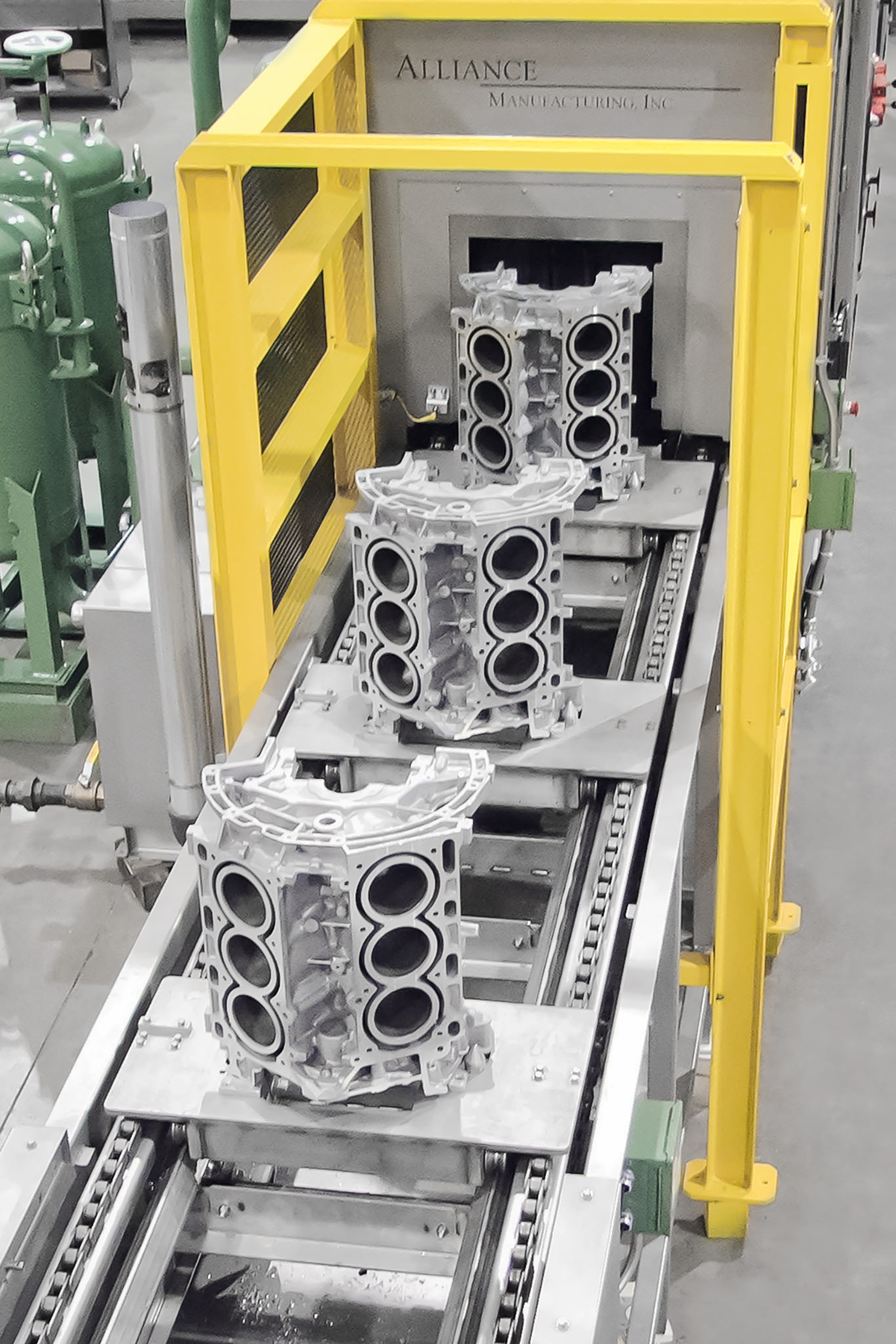
Solution: Indexing Engine Block Cleaning System
Alliance provided an Aquamaster CC-1800X indexing engine block cleaning system with dedicated wash and blowoff zones.
Heavy-duty stainless steel fixtures positioned on 42-inch centers hold one engine block per fixture. The fixtures provide repeatable positioning as each component indexes through the cleaning process.
Consistent positioning is particularly important for aluminum engine block cleaning because spray and blowoff need to reach specific surfaces, passages and features during a limited cycle time.
A servo-controlled indexing conveyor was configured for automated loading and unloading using pick-and-place equipment, supporting integration with the customer’s production process.
Targeted Spray Cleaning
Rather than relying only on general spray coverage, the washer incorporates pneumatically actuated manifolds positioned above designated fixture stop locations.
These manifolds lower into position to direct cleaning solution toward the leading and trailing surfaces and critical features of each engine block. Targeted spray positioning helps remove chips and coolant from areas that may be difficult to clean using broad spray coverage alone.
The combination of repeatable fixturing and strategically positioned spray manifolds creates a controlled in-process parts cleaning operation designed around the engine block geometry.
Blowoff and Leak-Test Preparation
After washing, the engine blocks move through the blowoff process to remove moisture from critical areas.
Complete drying of the entire component was not required. Instead, the system was designed to provide the necessary dryness in areas associated with the downstream leak test.
Matching the drying process to the actual production requirement avoids unnecessary processing while helping prepare each engine block for its next manufacturing operation.
Indexing and Cycle-Time Control
The system needed to process one engine block approximately every 35 seconds, making cycle-time control an important part of the equipment design.
Indexing allows each engine block to stop at predetermined locations for targeted washing and blowoff. Fixtures maintain repeatable positioning, while the servo-controlled conveyor coordinates component movement between process stages.
This combination provides controlled coolant and chip removal while supporting the production rate required by the manufacturing line.
Benefits of Automated Engine Block Cleaning
An automated engine component washer can provide several advantages in high-volume automotive manufacturing:
- Repeatable coolant and chip removal
- Targeted cleaning of passages and complex features
- Consistent part positioning
- Controlled cleaning cycle times
- Automated material handling
- Preparation for downstream inspection or leak testing
The appropriate cleaning process depends on engine block geometry, contamination, cleanliness specifications, cycle time and downstream manufacturing requirements.
Frequently Asked Questions
Need an Engine Block Cleaning Solution?
Alliance Manufacturing engineers engine block cleaning systems around component geometry, contamination, cleanliness specifications, production rate and downstream process requirements.