Large stainless steel cathode plates used in industrial processing can present unique cleaning challenges. Grit-blast residue, dust, fine particles and other soils can remain on the broad plate surfaces and must be removed before the plates proceed to the next stage of production.
For this application, Alliance engineered a cathode plate cleaning system to wash and dry large stainless steel cathode plates while meeting a defined particulate cleanliness requirement.
Customer Background
The customer is a consulting and automation specialist that designs and builds rugged equipment for mining/refining, robotics, manufacturing and other heavy industrial applications.
The company required an automated cathode plate washer that could integrate with its material-handling system while consistently cleaning large stainless steel cathode plates.
Challenge
Removing Grit and Fine Particles
The stainless steel cathode plates were contaminated with grit-blast residue, dust and light soils that appeared similar to an ink-like substance.
Cleaning these large, flat components presented two primary challenges. First, the broad stainless steel surfaces needed consistent cleaning coverage. Second, the process needed to satisfy a specific particulate requirement: the plates had to be visually clean with no remaining particles larger than 20 microns.
The industrial cathode cleaning process therefore needed to:
- Remove grit-blast residue and fine particles
- Clean large stainless steel plate surfaces consistently
- Meet the specified 20-micron particle requirement
- Integrate with the customer’s existing monorail system
- Maintain proper plate positioning through the washer
- Remove moisture after washing
Support a production requirement of 50 cathodes per 12-hour day
Solution
Conveyorized Cathode Cleaning Machine
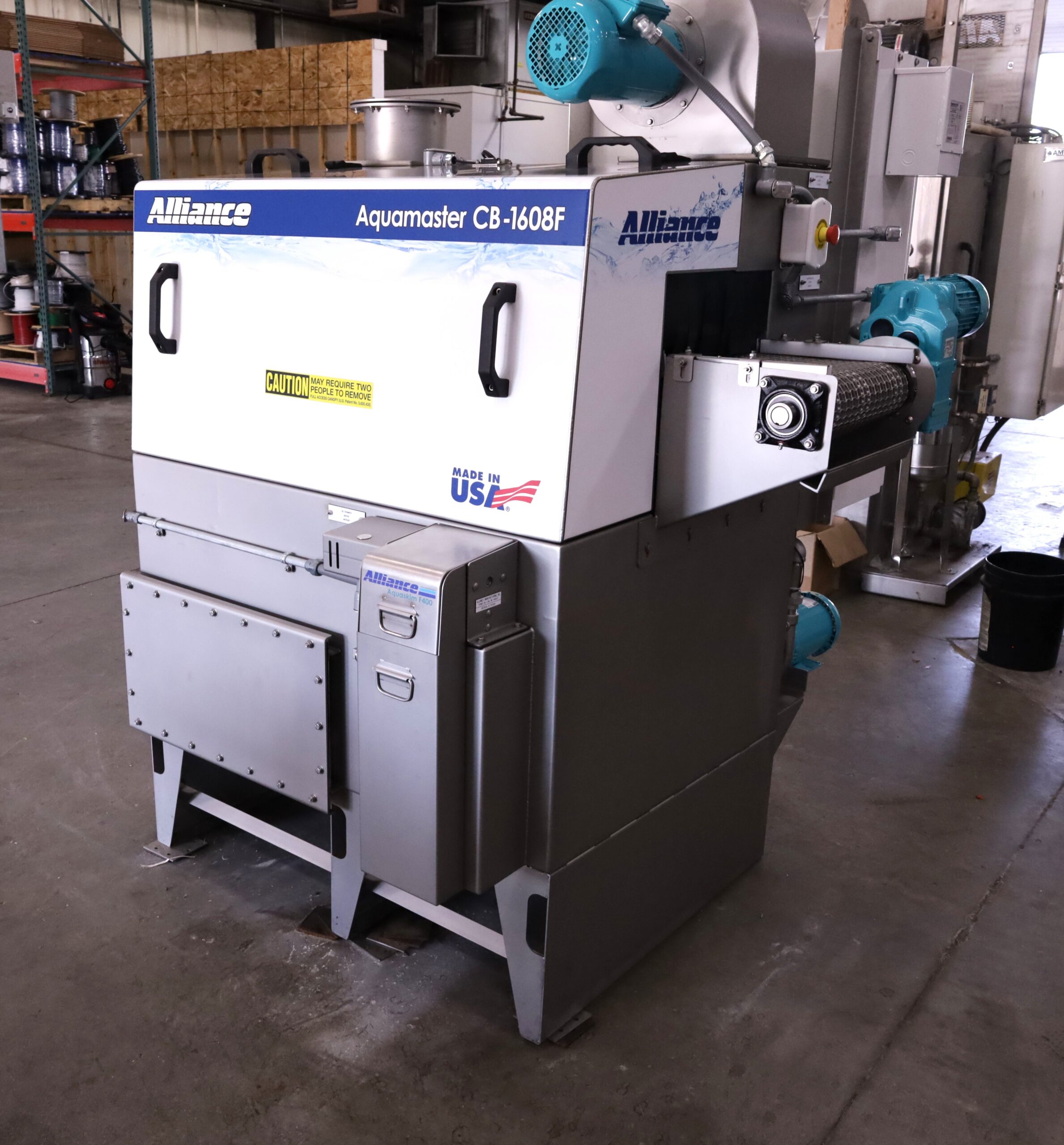
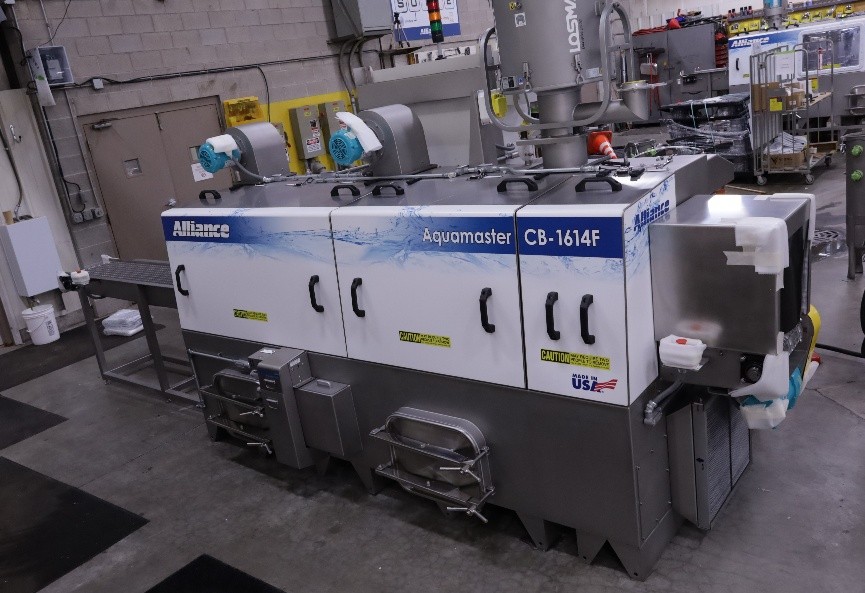
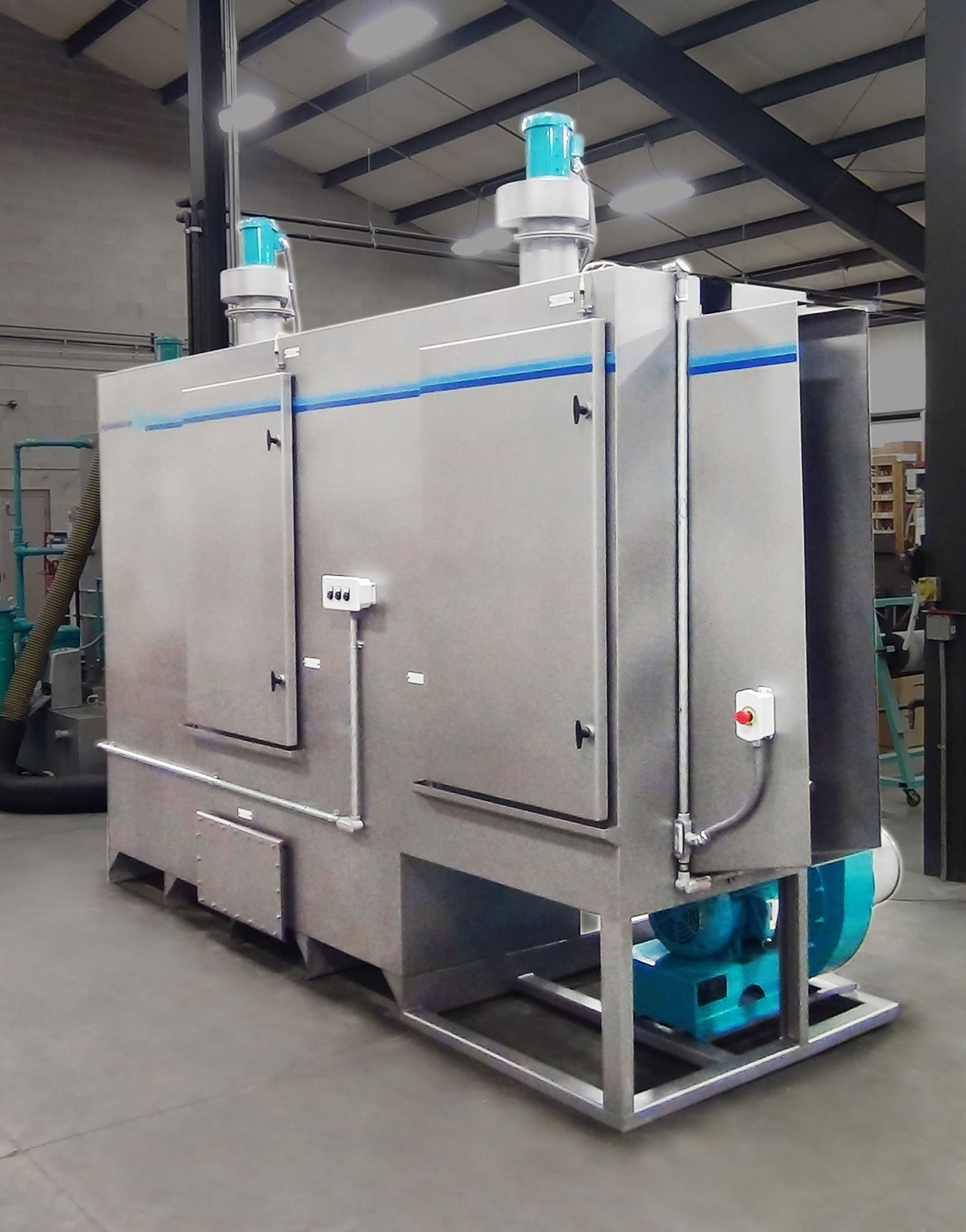
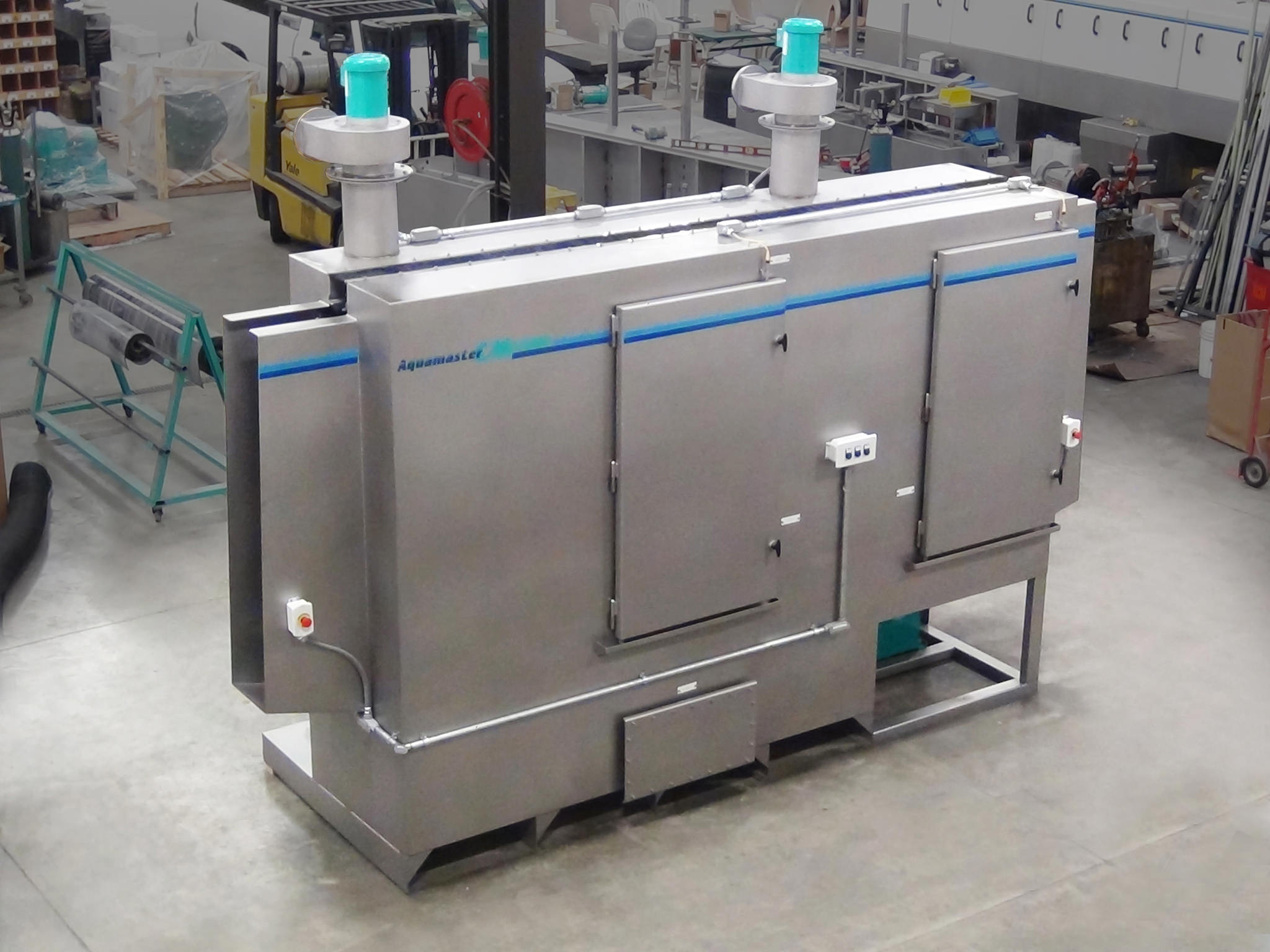
Alliance provided an Aquamaster CM-1200E conveyorized monorail cleaning system with wash and ambient blowoff modules.
Rather than supplying a separate conveyor, the cathode cleaning machine was engineered to integrate with the customer’s existing monorail and hanger system. The cathode plates travel through the silhouette opening of the washer while product guides keep the large plates centered throughout the cleaning process.
This configuration provides controlled movement through the wash and blowoff zones while allowing the customer’s existing material-handling equipment to remain part of the production process.
Cleaning Large Stainless Steel Cathode Plates
Large, flat components require adequate spray coverage across their exposed surfaces. The wash stage provides aqueous cleaning to remove grit-blast residue, dust and other light contamination before the cathode plates move into the drying section.
For this application, cleanliness was not based only on appearance. The specified particle-size limit provided a measurable requirement beyond simply achieving a visually clean surface.
This combination of defined cleanliness requirements and application-specific equipment design is particularly important when developing a metal plate cleaning system for industrial processing applications.
Ambient Blowoff and Drying
Following the wash stage, the cathode plates pass through an ambient blowoff zone.
High-velocity air knives positioned near the monorail silhouette opening remove moisture from the large plate surfaces. The system also incorporates dual exhaust fans with condensate return to help manage moisture generated during the cleaning process.
The customer’s goal was for the stainless steel cathode plates to exit the system 100% dry.
Monorail Design for Large Flat Parts
A conveyorized monorail configuration was well suited to this application because the large cathode plates could remain suspended as they moved continuously through the washer.
The customer supplied the monorail and hanger system, while Alliance engineered the washer around that existing material-handling arrangement. Product guides help maintain proper plate positioning through the cleaning and drying zones.
Alliance monorail cleaning systems can be engineered as standalone machines or integrated with existing conveyor systems depending on the application.
Benefits of Automated Cathode Plate Cleaning
An automated stainless steel cathode cleaning process can provide several advantages for industrial operations:
- Consistent cleaning of large plate surfaces
- Controlled removal of grit and particulate contamination
- Repeatable cleanliness requirements
- Reduced manual handling
- Integration with existing material-handling systems
- Automated washing and drying
- Consistent production flow
The appropriate cleaning process depends on plate dimensions, contamination, particle-size requirements, production rate, material handling and required dryness.
Frequently Asked Questions
Need an Industrial Plate Cleaning Solution?
Alliance Manufacturing engineers aqueous cleaning systems for large plates and other industrial components based on part geometry, contamination, cleanliness requirements, production rate and drying needs.