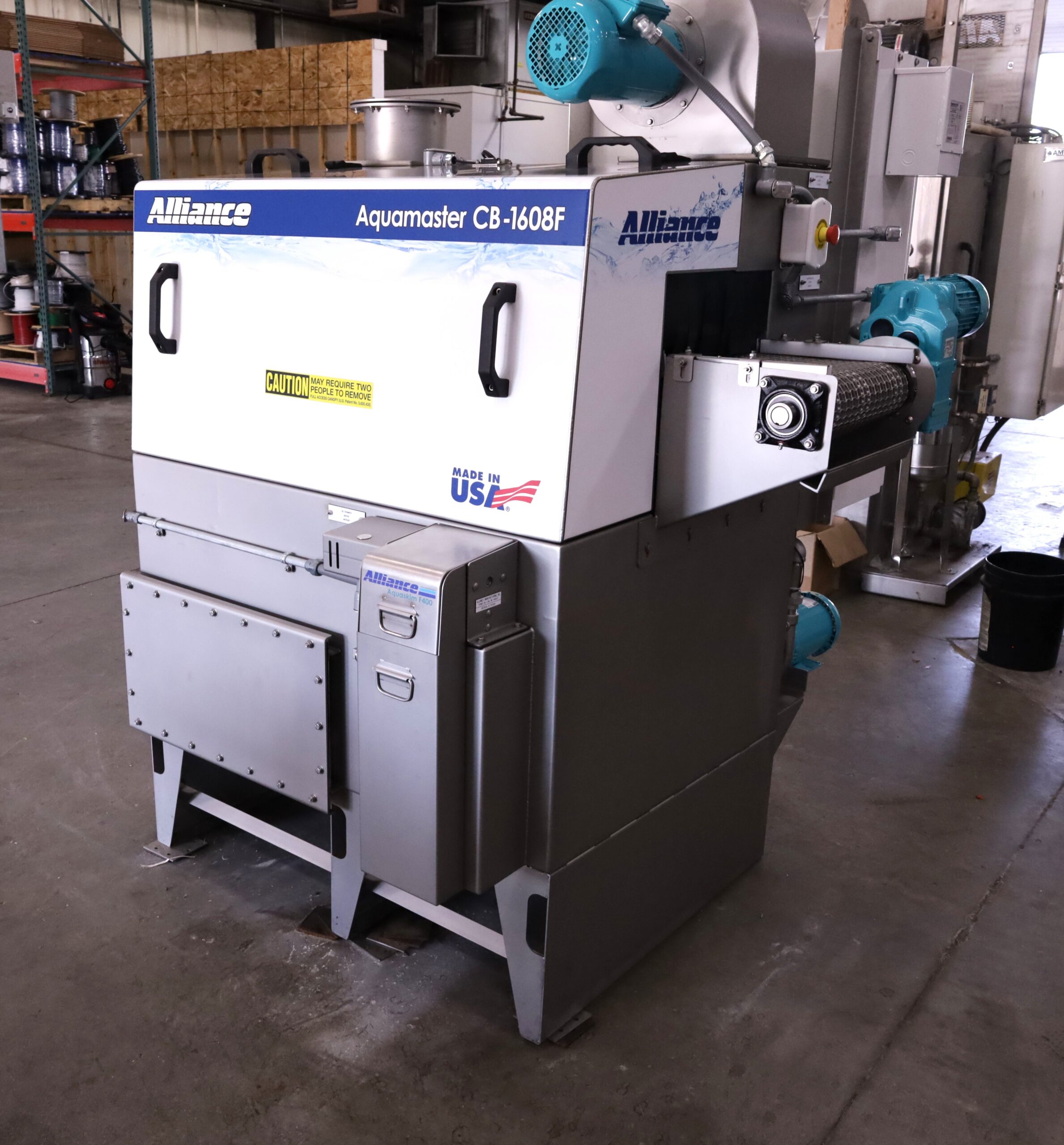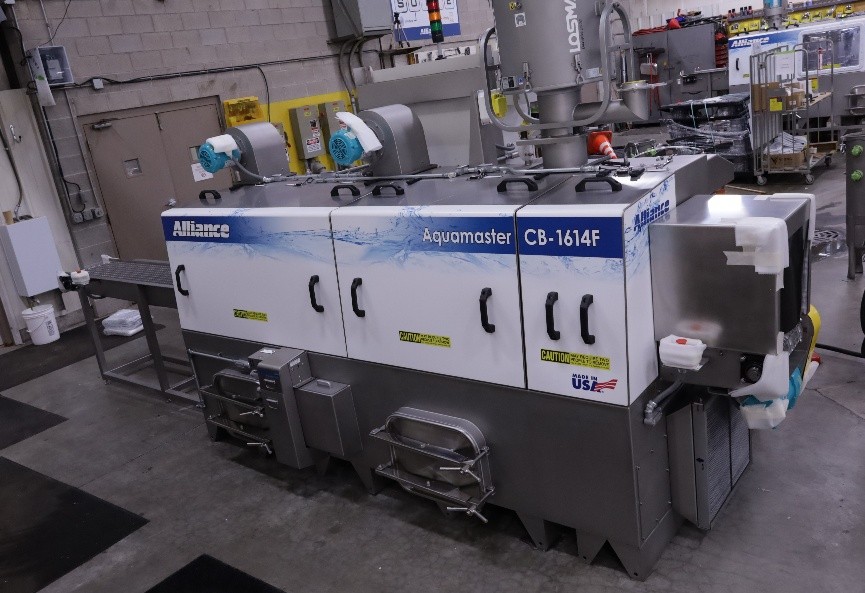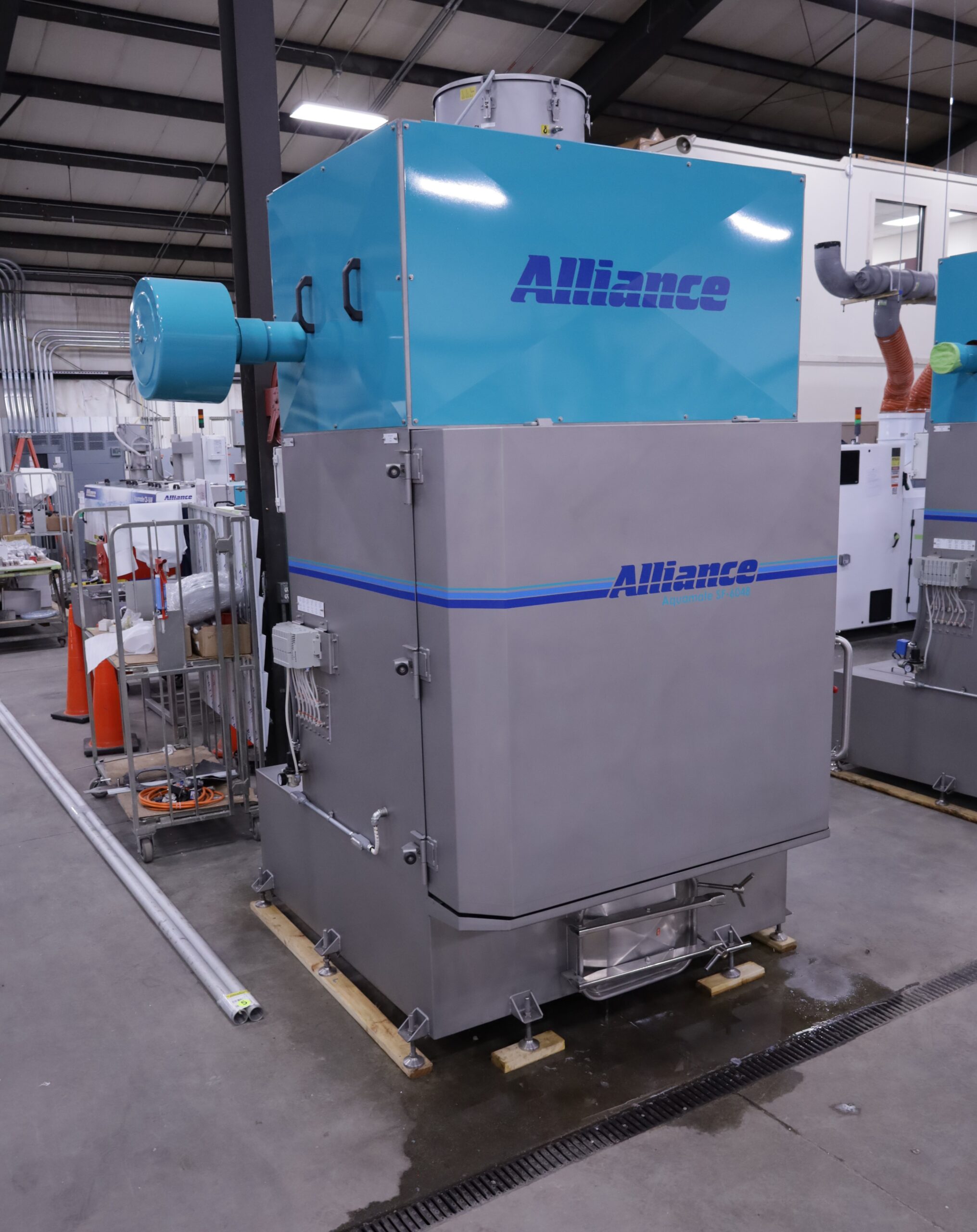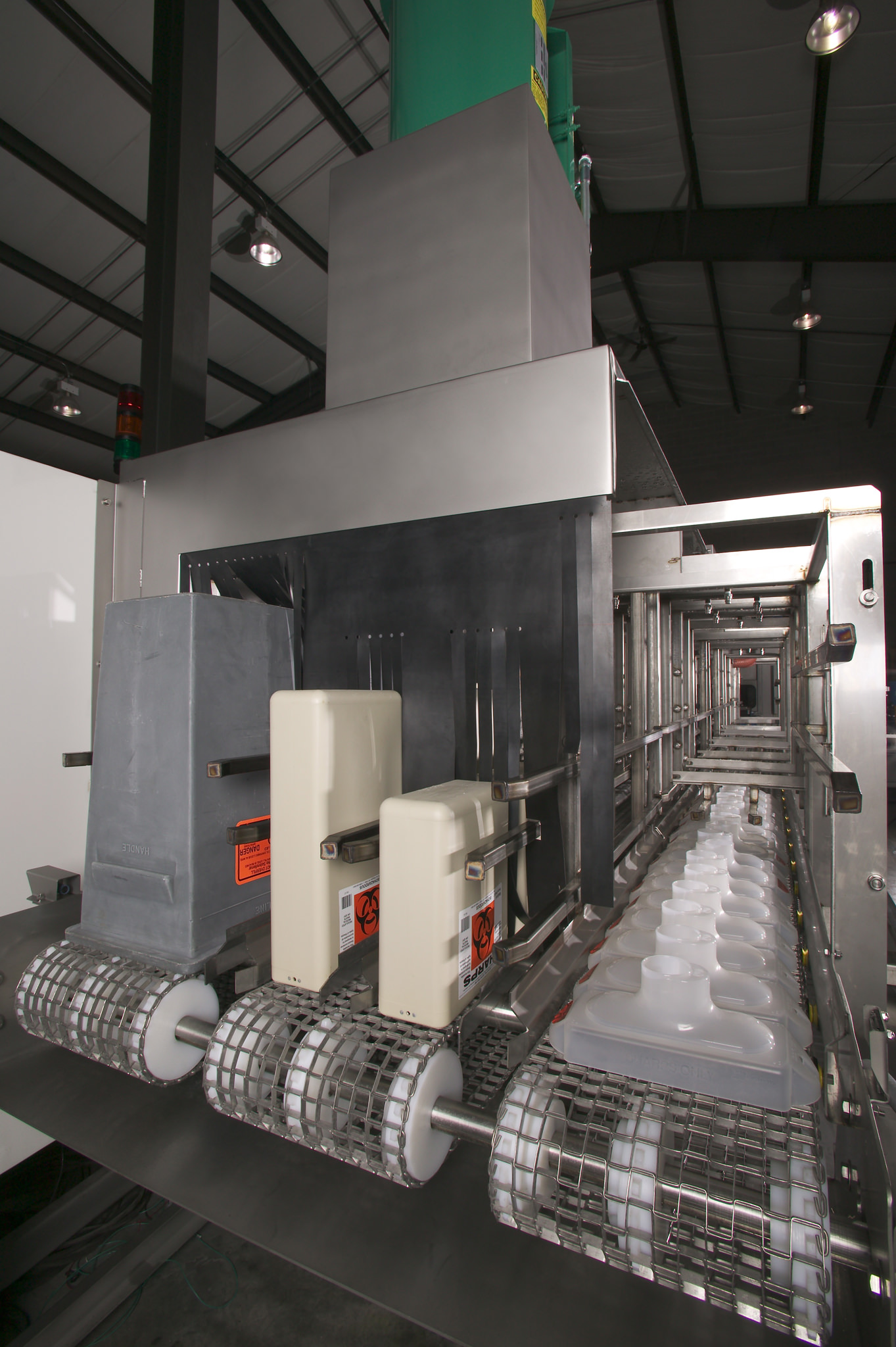
This project is a representative example of the automated medical waste container washers Alliance Manufacturing engineers to support biohazard waste removal and medical waste removal operations for hospitals, medical waste haulers, and infection-control service providers built to consistent medical device cleaning standards.
Customer Background
The customer is the largest provider of medical waste services in North America, delivering business and consulting services to more than 476,000 customers worldwide since 1989. The company operates multiple treatment/collection facilities and transfer sites throughout North America, offering medical waste management, biohazard waste removal, OSHA compliance consulting, pharmaceutical services, water management, and prescription medical waste compliance programs. Their focus is on improving regulatory compliance and reducing risk across the medical waste removal chain which made a validated, high-throughput medical waste container washer central to their own service standards.
Challenge
The customer required an automated system to clean and sanitize reusable medical waste containers and lids as part of its medical waste management operations.
The existing system was outdated and did not provide the required drying performance or repeatable sanitizing process. The replacement system needed to:
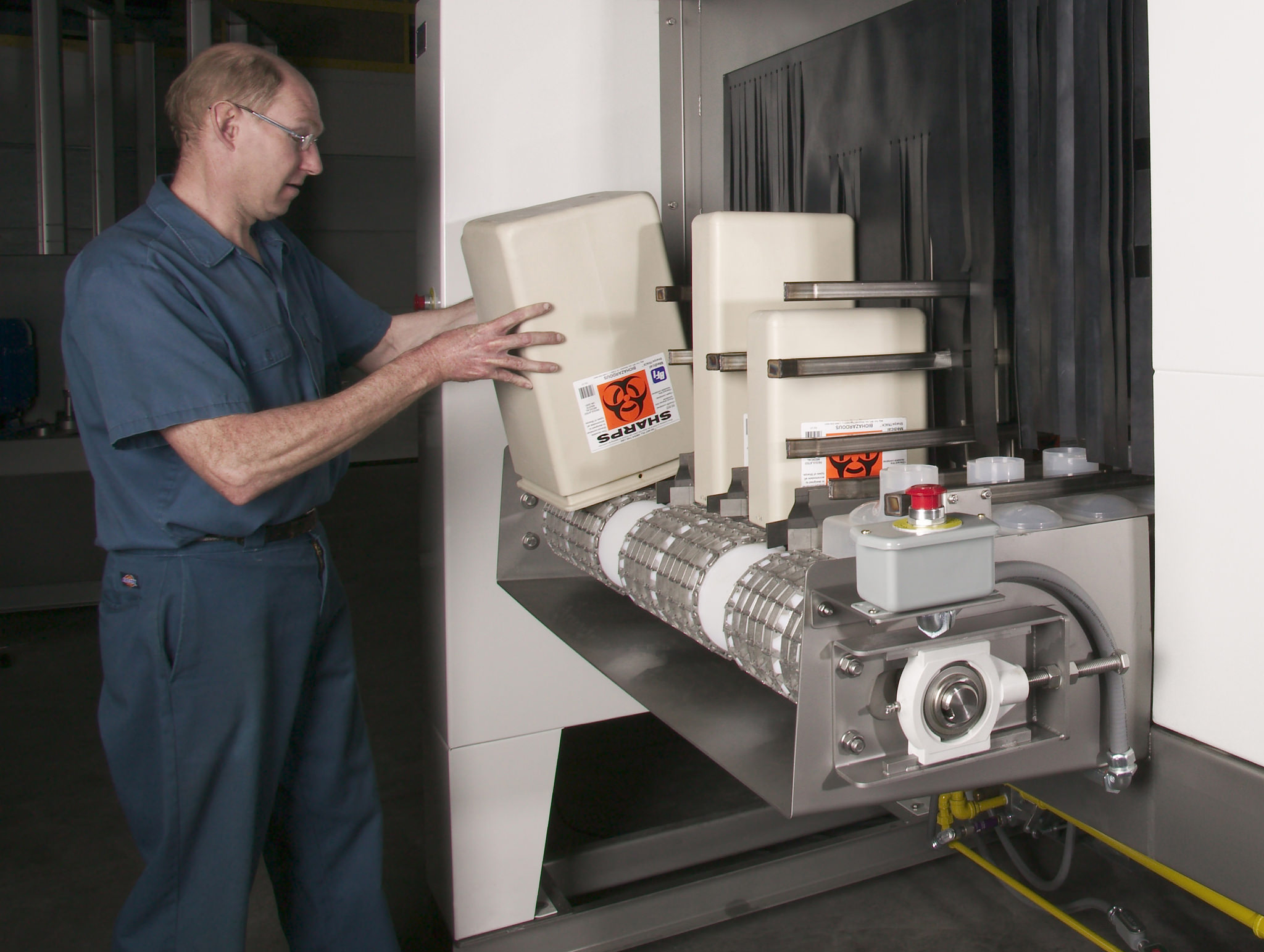
- Reduce direct operator contact with contaminated containers
- Remove visible biological and adhesive residue
- Provide a repeatable thermal sanitizing process
- Improve drying performance
- Process approximately 400 containers and lids per hour
- Accommodate multiple container sizes
Alliance designed the system around these application requirements
Solution
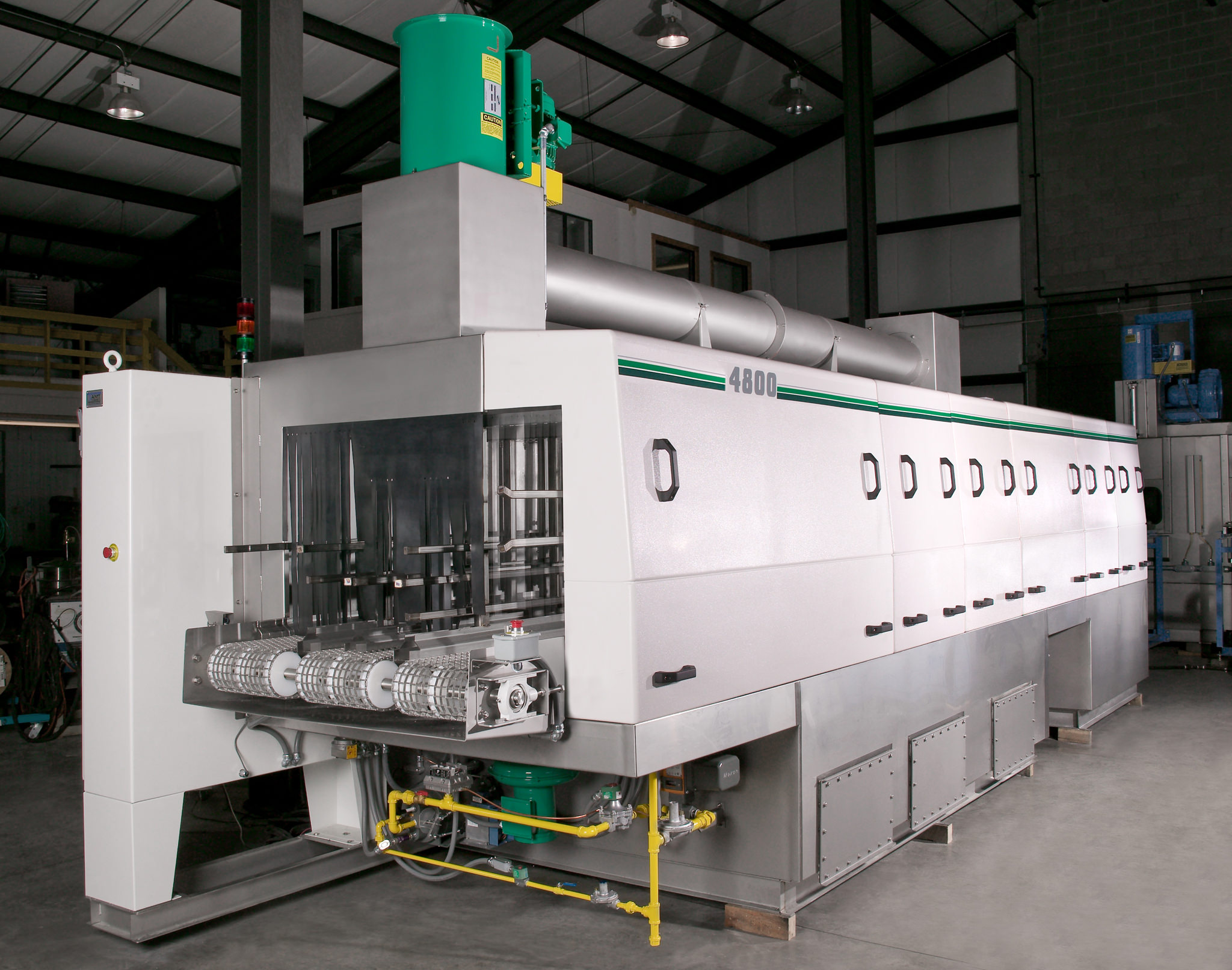
Alliance provided a modified Aquamaster CB-4800X conveyorized belt system with dedicated wash, rinse (sanitize), and heated blow-off zones, engineered specifically as a medical waste container washer rather than a standard industrial parts washer:
- Type-316 stainless steel construction, selected for corrosion resistance against the sanitizing chemistry required for medical waste applications.
- Three gas-fired burners for immersion and blow-off heat.
- 195°F minimum rinse/sanitize zone temperature, engineered to thermally sanitize containers in accordance with the customer’s FDA-related compliance requirements for reusable medical waste containers.
- Multiple-lane configuration with adjustable lane guides, accommodating multiple container sizes and their matching lids across all three lanes.
- Retractable lid holder on the outside lane to guide lids through the wash process independently of containers.
- Removable debris basket for coarse filtration, paired with a micro-filtration unit for finer particulate and debris removal.
- Pressure-differential monitors on the pump system to track filter loading and maintain consistent wash pressure supporting documentable, auditable cycle performance.
- CE-compliant design, allowing the same machine platform to be deployed at the customer’s European facility.
- Customer-specified paint colors and labeling to match their branding standards.
Cleaning and Disinfecting Medical Equipment: How the Cycle Works
Cleaning, sanitizing, and disinfecting are distinct steps, and effective cleaning and disinfecting of medical equipment depends on doing them in the right order:
| Step | What Happens in the CB-4800X | Purpose |
| Wash (Cleaning) | Hot detergent wash removes blood/protein residue and adhesive/tape debris | Physically cleans before sanitizing can be effective |
| Rinse/Sanitize (Disinfecting) | Thermal rinse held at 195°F minimum | Thermally sanitizes/disinfects containers without chemical residue |
| Heated Blow-Off | Forced heated air dries containers and lids | Leaves containers as dry as possible for immediate reuse and visual inspection |
Result
The modified CB-4800X met the customer’s 400-container-per-hour throughput target while delivering a documented, repeatable thermal sanitizing cycle across both wash and rinse zones. The heated blow-off zone resolved the drying problem that had limited their previous system, and the CE-compliant build let the customer standardize the same washing process at their European facility as well as across North America.
Why Automated Medical Waste Container Washing?
Automated washing can help medical waste processing operations:
- Reduce manual handling of contaminated containers
- Provide repeatable cleaning cycles
- Improve cleaning consistency
- Integrate washing, sanitizing, and drying into one process
- Support higher processing volumes
- Improve process monitoring and documentation
Specific regulatory and sanitation requirements should always be evaluated for the facility, waste stream, container type, and applicable jurisdiction.
Industries Using Medical Waste Container Washers
Alliance designs medical waste container washing systems for:
- Medical waste management companies
- Biohazard waste removal operations
- Hospitals and health systems
- Clinical and reference laboratories
- Pharmaceutical facilities
- Long-term care facilities
- Outpatient surgical facilities