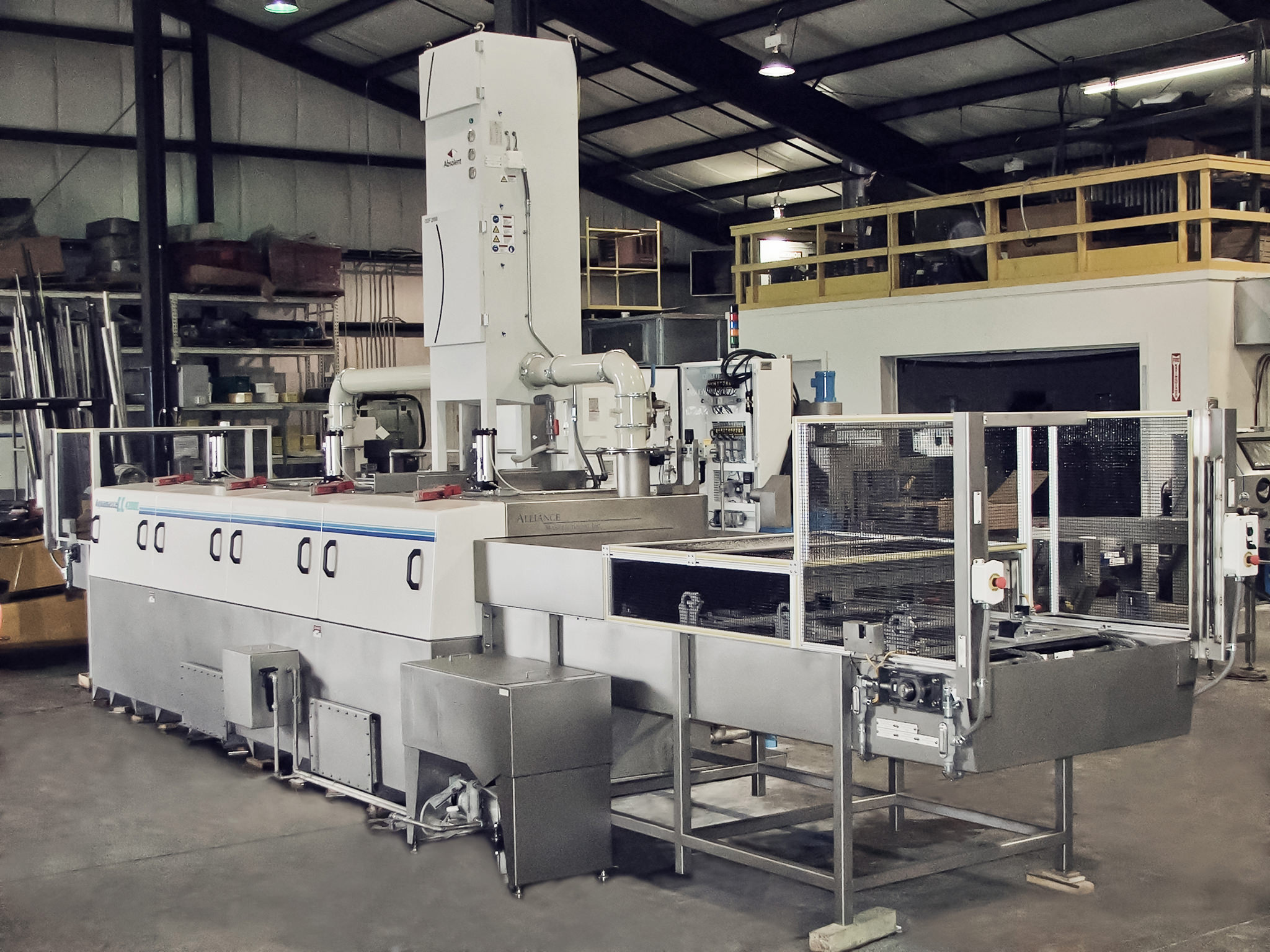
Alliance Manufacturing developed a customized aircraft crankshaft cleaning system for a leading manufacturer of piston aircraft engines. The system was engineered to remove machining coolant, oil, and chips while meeting strict particulate cleanliness requirements for both external surfaces and internal passages.
The automated aircraft engine parts washer also needed to completely dry crankshafts and support a production rate of 16 parts per hour.
Customer Background
The customer is a leading manufacturer of piston aircraft engines specializing in the engineering, manufacturing, assembly, testing, and support of aviation engine systems.
Aircraft engine manufacturing requires controlled cleaning processes to remove machining contamination before components move into subsequent production, inspection, or assembly operations. For this application, the crankshaft’s complex geometry and internal passages made both cleanliness and complete drying critical process requirements.
Challenge
Precision Aircraft Crankshaft Cleaning
The customer needed an aircraft engine cleaning machine capable of removing machining coolant, oil, and chips from crankshafts while meeting defined particulate cleanliness requirements.
Cleaning the exterior surfaces was only part of the challenge. Blind holes, through holes, oil passages, and other internal features had to meet cleanliness and dryness requirements comparable to the external surfaces.
Residual contamination within these areas could remain difficult to reach using a general spray process. Moisture also had to be removed from internal passages before the crankshafts left the cleaning system.
In addition to these requirements, the system needed to process 16 crankshafts per hour, making a controlled and repeatable automated process important to the application.
Solution
Automated Aircraft Engine Parts Washer
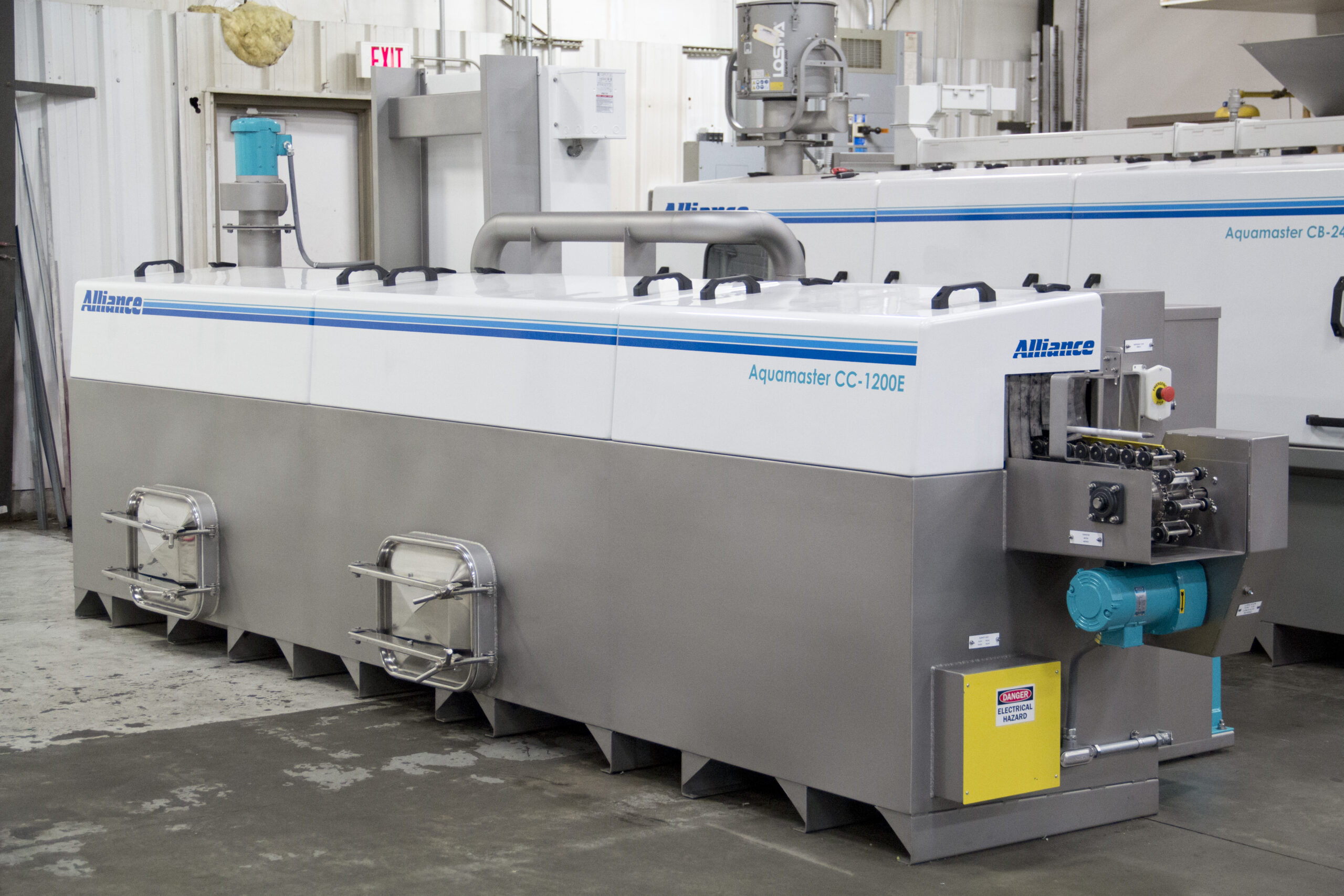
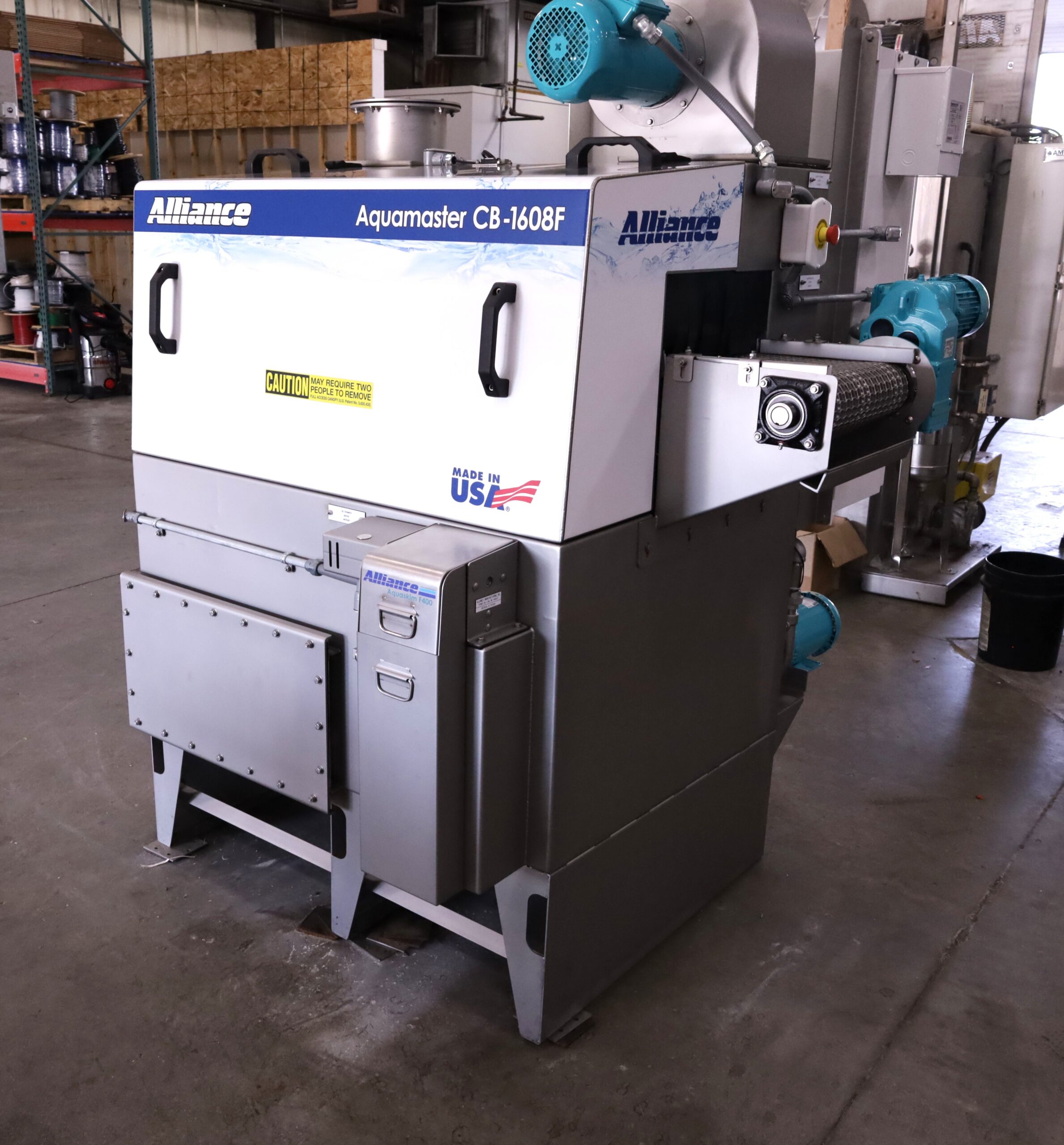
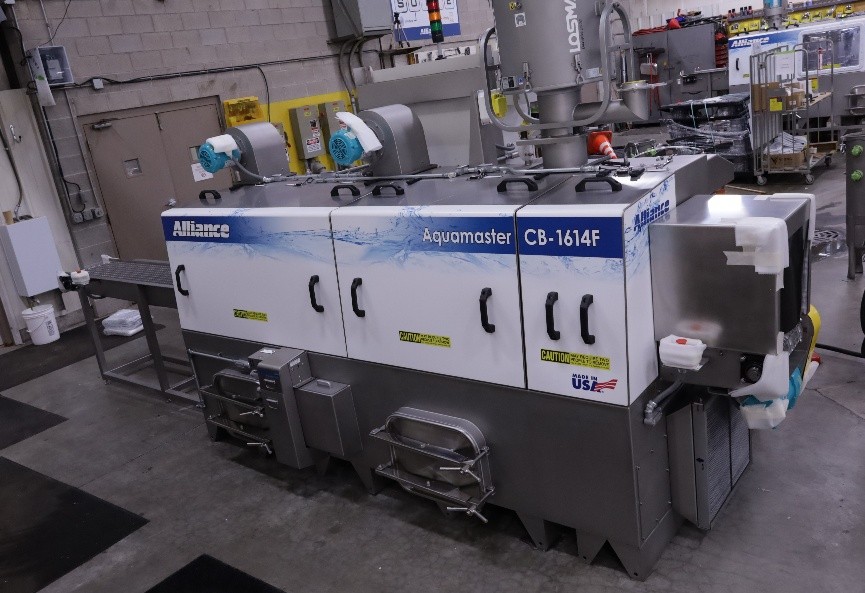
Alliance designed and provided a three-stage Aquamaster CI-4200E indexing conveyorized cleaning system for airplane crankshafts, incorporating wash, rinse, and heated blowoff stages.
The wash and rinse modules feature 250-gallon nominal tanks, three-position solution level controls, and pneumatic spray manifolds. The heated blowoff module uses high-velocity air knives above and below the conveyor for general drying, while strategically positioned compressed-air nozzles remove moisture from oil holes when crankshafts stop in their indexed positions. A pneumatic blowoff manifold lowers into position to dry horizontal holes and other hard-to-reach areas, helping achieve the customer’s requirement for 100% dry parts.
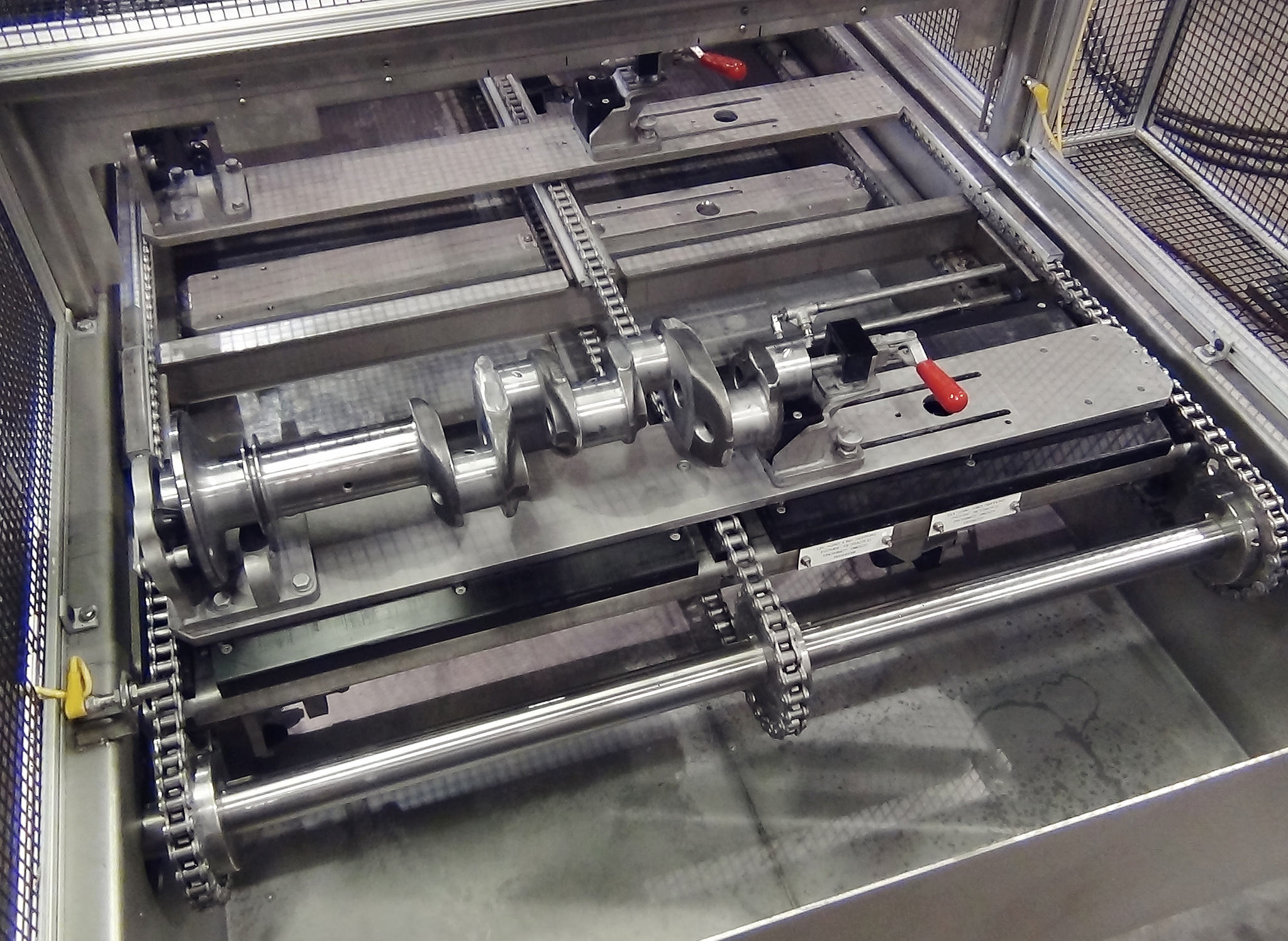
The indexing conveyor includes fixtures for manual loading and unloading, programmable index cycle times, and a laser sensor for proper part orientation. Alliance’s patented “FulAccess” lift-off canopy provides easy interior access and includes safety interlocks. The system also incorporates a customer-specified mist collection system, 80/20 mesh guarding, and light curtains at the load end.
Overall dimensions are 24′ 0″ long × 8′ 0″ wide × 4′ 9″ high, with a 42″ wide × 9″ high product opening.
Indexing for Repeatable Cleaning
The indexing conveyor uses dedicated part fixtures for manual loading and unloading of different aircraft crankshaft configurations.
Index cycle time can be programmed according to production requirements, while a laser sensor helps verify proper crankshaft orientation during loading. This allows the aircraft crankshaft cleaning process to consistently position critical features relative to the cleaning and drying manifolds.
The system also incorporates Alliance’s Full-Access lift-off canopy segments for maintenance access. Safety sensors disable the machine if the canopy is removed during operation. Additional features include mist collection, mesh guarding, and light curtains at the load end.
Application Result
The customized system combines precision washing, rinsing, targeted internal-passage drying, and automated indexing within one aircraft engine parts washer.
By designing the cleaning and drying processes around the crankshaft geometry, Alliance was able to address external surfaces, oil passages, blind holes, through holes, and other difficult-to-reach areas while supporting the required production rate.
The application demonstrates how an engineered aircraft engine cleaning machine can provide repeatable cleaning when aerospace components have defined particulate, internal-passage, and dryness requirements.
Frequently Asked Questions
Need an Aircraft Engine Parts Washer?
Alliance Manufacturing engineers aqueous cleaning systems around component geometry, contamination, cleanliness requirements, drying requirements, and production goals.
Contact Alliance Manufacturing to discuss your aircraft engine component cleaning application. Or