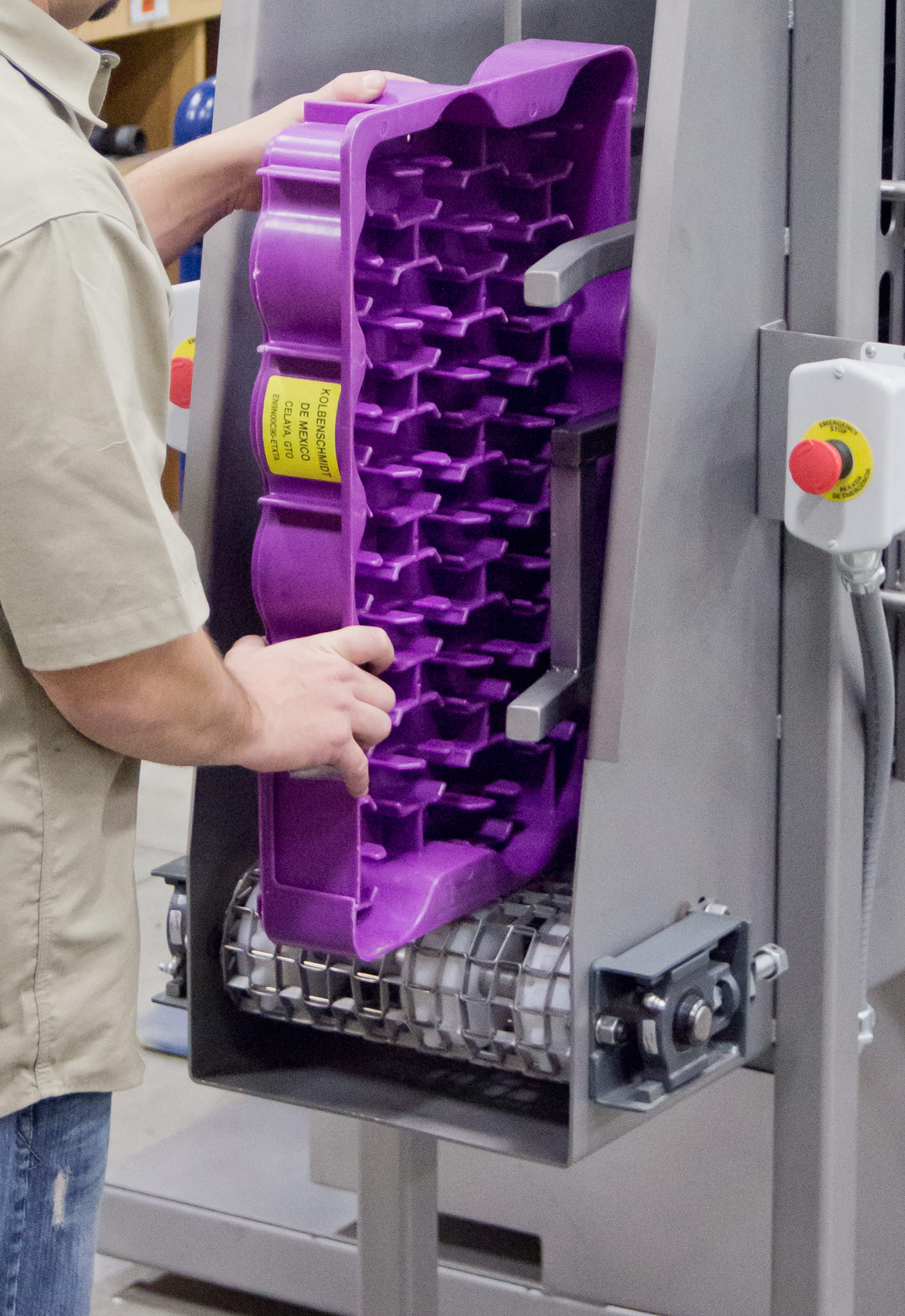
Alliance Manufacturing engineered an industrial tray washing system for an automotive component manufacturer that needed to continuously clean reusable plastic trays used to transport aluminum-alloy pistons through production.
Customer Background
A leading global manufacturer of pistons for both gasoline and diesel engines for use in the automotive, agricultural, industrial, recreational, marine, and heavy equipment industries. The company is based out of Wisconsin, and is a joint venture of two companies in Germany and Japan. U.S. plants are located in Wisconsin and Indiana. There are also plants located in Germany, Japan, Mexico, Brazil, France, China, India, and the Czech Republic. Pistons are made from various aluminum alloys, which are melted in the company’s foundry. The company houses the entire machining and finishing operations for their products.
Challenge
The customer’s plastic trays accumulated soluble coolant, oils, dirt, and particulate as they moved between machining, finishing, staging, and shipping operations.
Dirty trays created a risk of transferring contamination back onto freshly processed components. The system therefore needed to provide consistent washing and drying while keeping pace with continuous production.
The application also required flexibility because the customer used different plastic tray sizes.
Solution
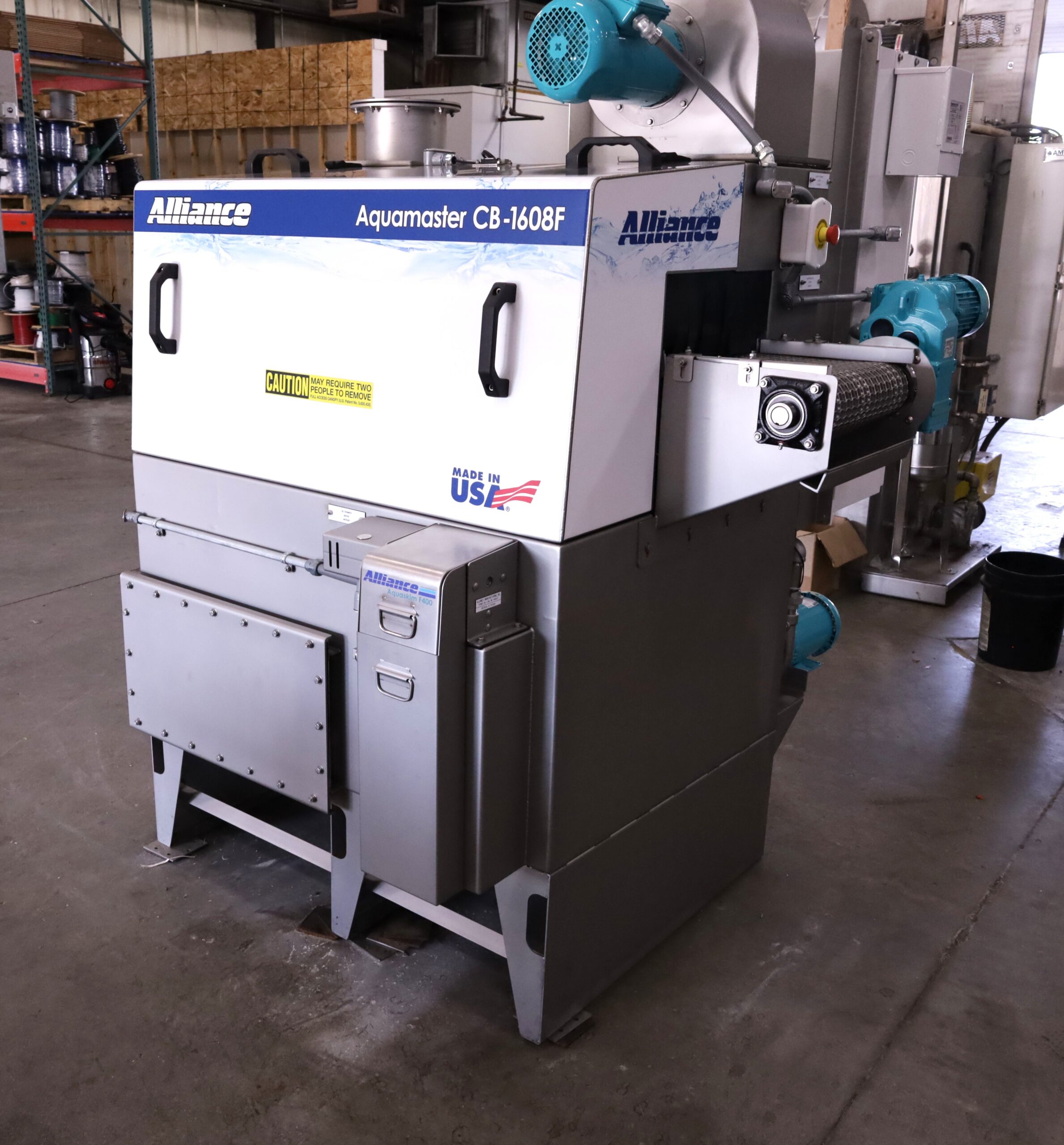
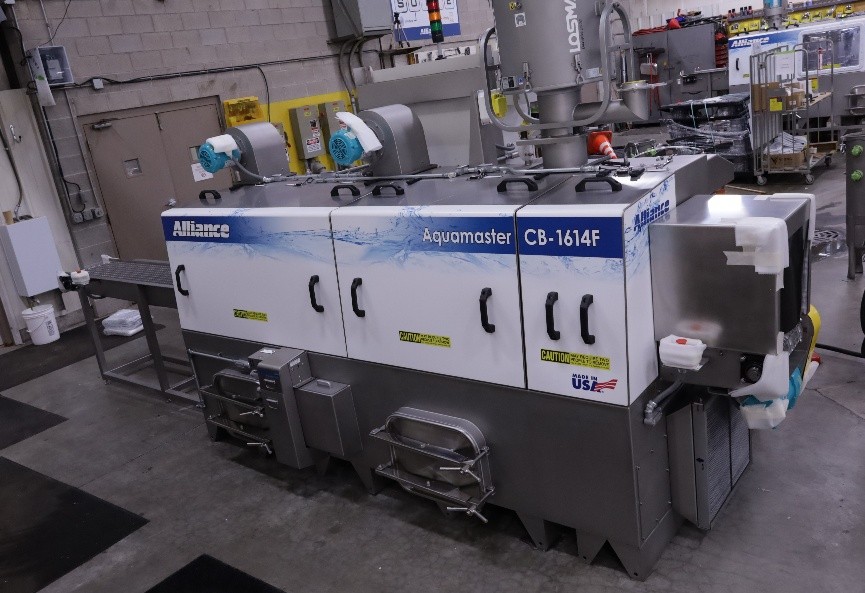
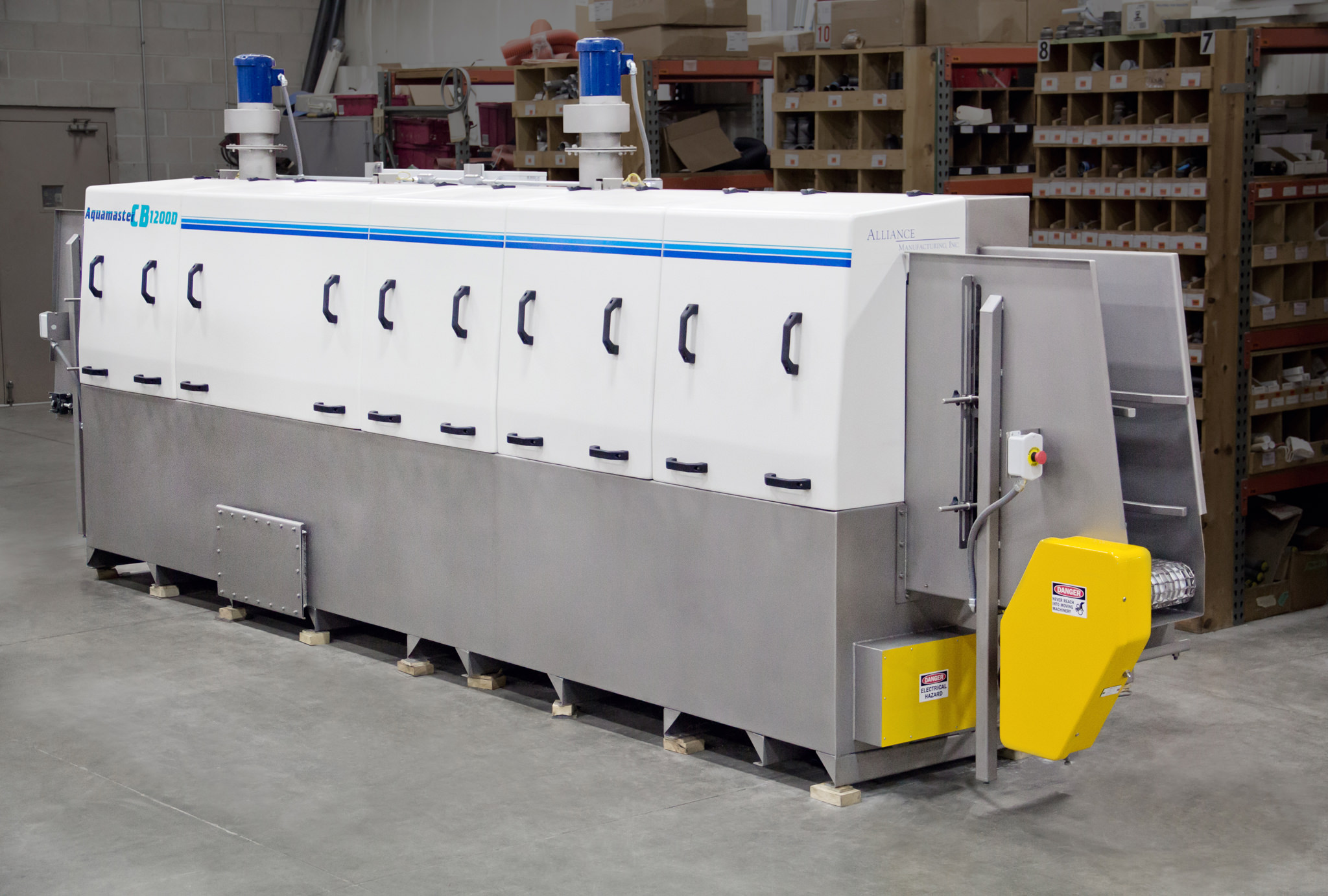
Alliance engineered an Aquamaster CB-1200D industrial tray washer with dedicated washing and two-stage drying zones.
The system included:
- Adjustable-width side guides for varying tray sizes
- A 200-gallon wash tank with a 5-foot spray zone
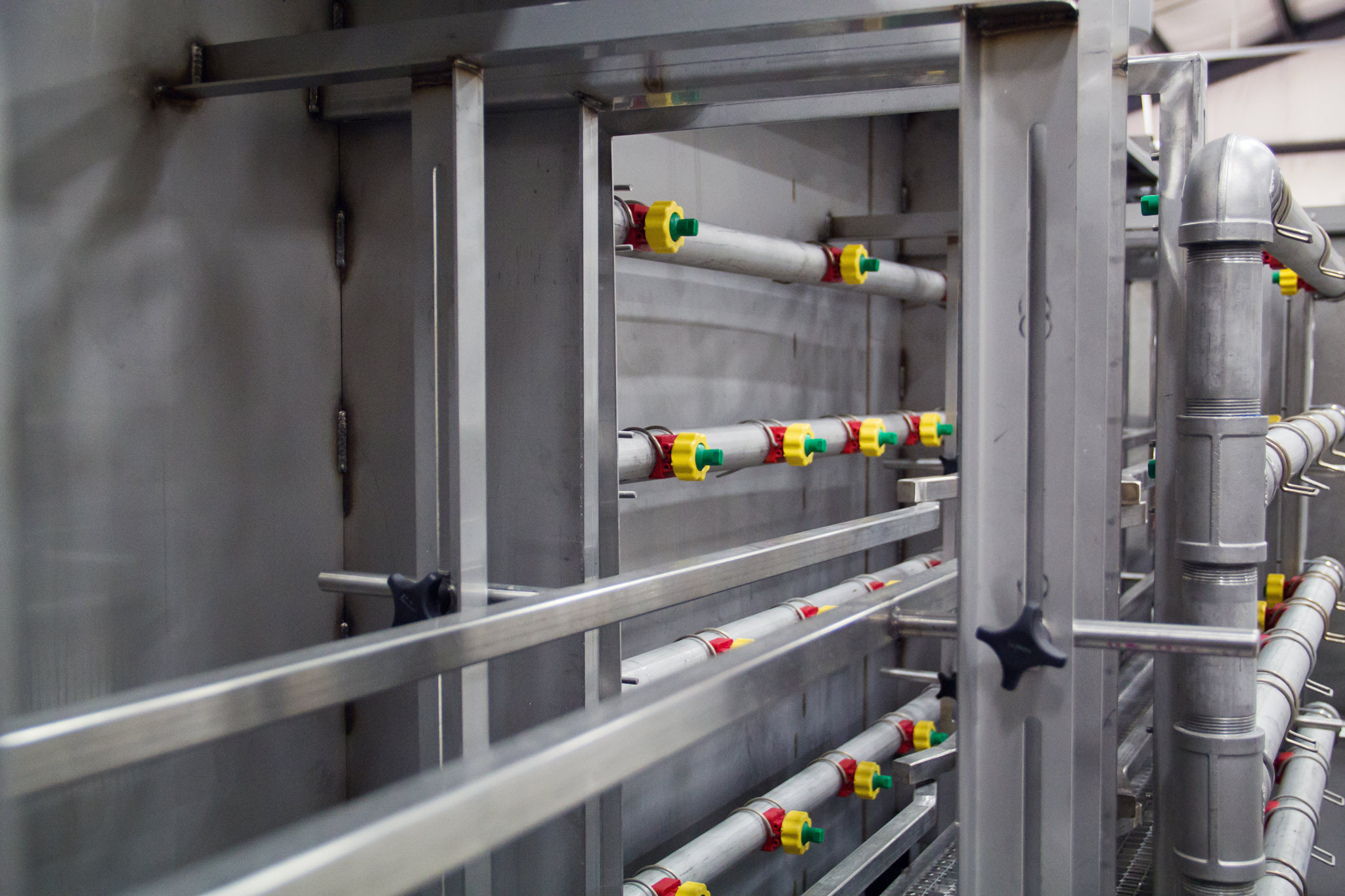
- Quick-release spray nozzles positioned along both sides of the conveyor
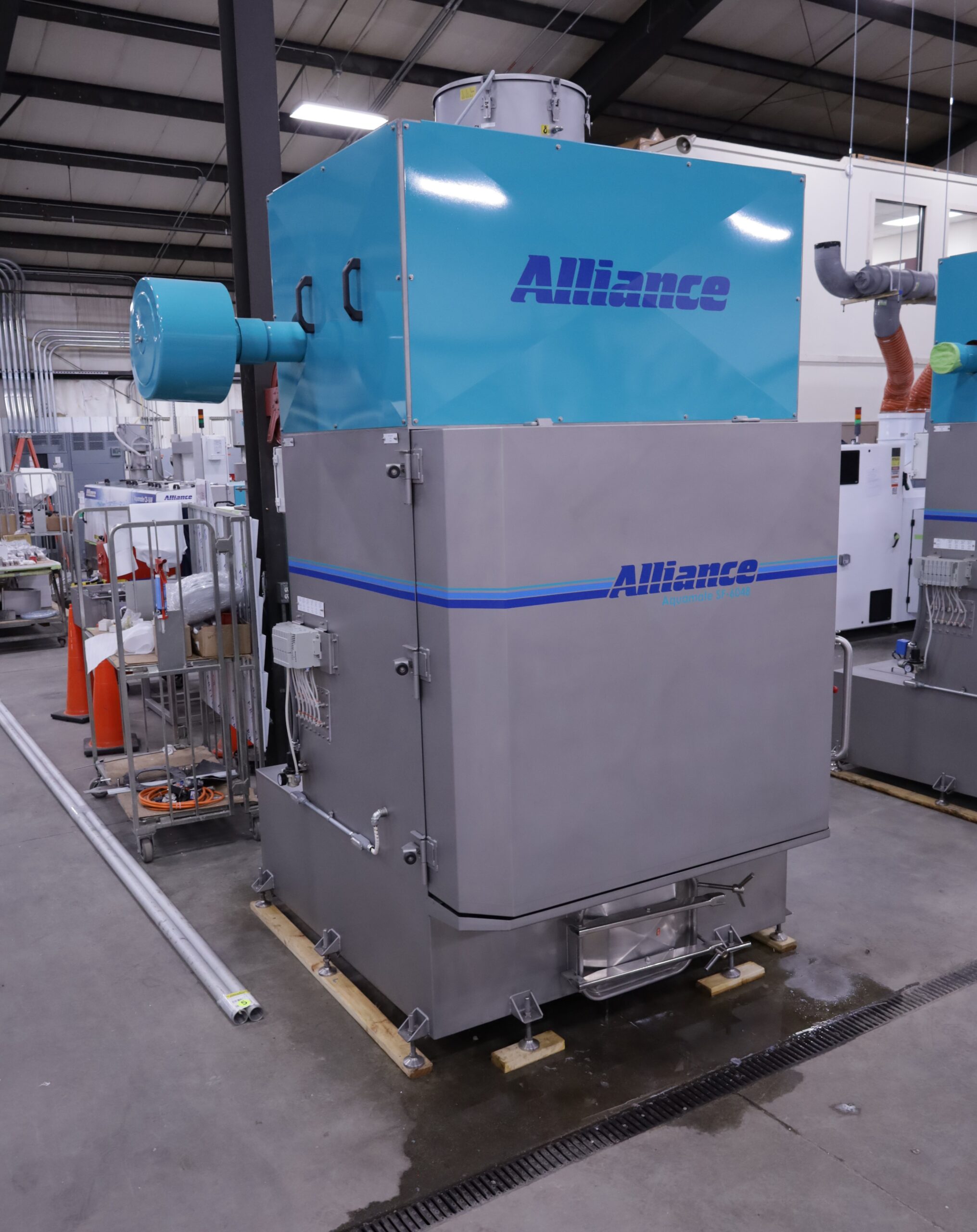
- Ambient and heated air-knife blow-off
- Micro-filtration with a contamination sensor
- Belt-type oil skimmer
- Chemical injection and automatic solution heating
- Product sensor for tray-flow synchronization
- Removable canopy sections for maintenance access
The adjustable side guides accommodated the customer’s range of plastic tray sizes, while the two-stage blow-off process targeted approximately 95% dryness at machine exit.
Why Conveyorized Tray Washing?
For continuous automotive production, conveyorized washing allows trays to move through the cleaning process without creating a separate manual cleaning bottleneck.
In this application, the inline system provided:
- Consistent cleaning: Every tray follows the same wash and drying process.
- Higher throughput: Automated processing keeps pace with continuous production.
- Reduced manual labor: Washing and drying are performed automatically.
- Better contamination control: Filtration and oil removal help prevent contaminants from recirculating.
- Improved tray life: Controlled cleaning reduces the wear associated with repeated manual scrubbing.
Preventing Cross-Contamination
Reusable trays can carry residual oil, coolant, and particulate from one production cycle to the next. The washer was configured to address this through dedicated wash and drying zones, micro-filtration, and an oil skimmer.
The filtration system removes particulate from the wash solution, while the belt-type oil skimmer removes floating oil before it can recirculate onto trays.
Results and Operational Benefits
The project did not include a formal ROI study, so Alliance does not assign a specific payback figure. However, the system was designed to provide measurable operational benefits through:
- Reduced manual tray-cleaning labor
- More consistent tray cleanliness
- Reduced risk of contamination transfer
- Longer wash-solution life through filtration and oil removal
- Improved reusable tray management
- Automated drying before trays return to production
Industrial Tray Washer Applications
Industrial tray and dunnage washers can be configured for:
- Automotive component manufacturing
- Agricultural and heavy equipment manufacturing
- Marine and recreational vehicle manufacturing
- General industrial manufacturing
- Operations using reusable plastic dunnage