Customer Background
Customer required a custom aqueous cleaning system for crankcase halves with demanding cleanliness requirements for internal oil-wetted surfaces, machined passages, and bearing journals. The system also needed to support a 10-minute production cycle while removing machining coolant and chips from complex internal features.
Challenge
The original fixture design created operator reach and center of gravity concerns during loading and unloading while still requiring precise flushing of internal oil passages, blind holes, and bearing journal areas. The redesign took care of these concerns. Customer also needed a system capable of removing free-moving chips without damaging machined surfaces or compromising cleanliness standards.
Solution
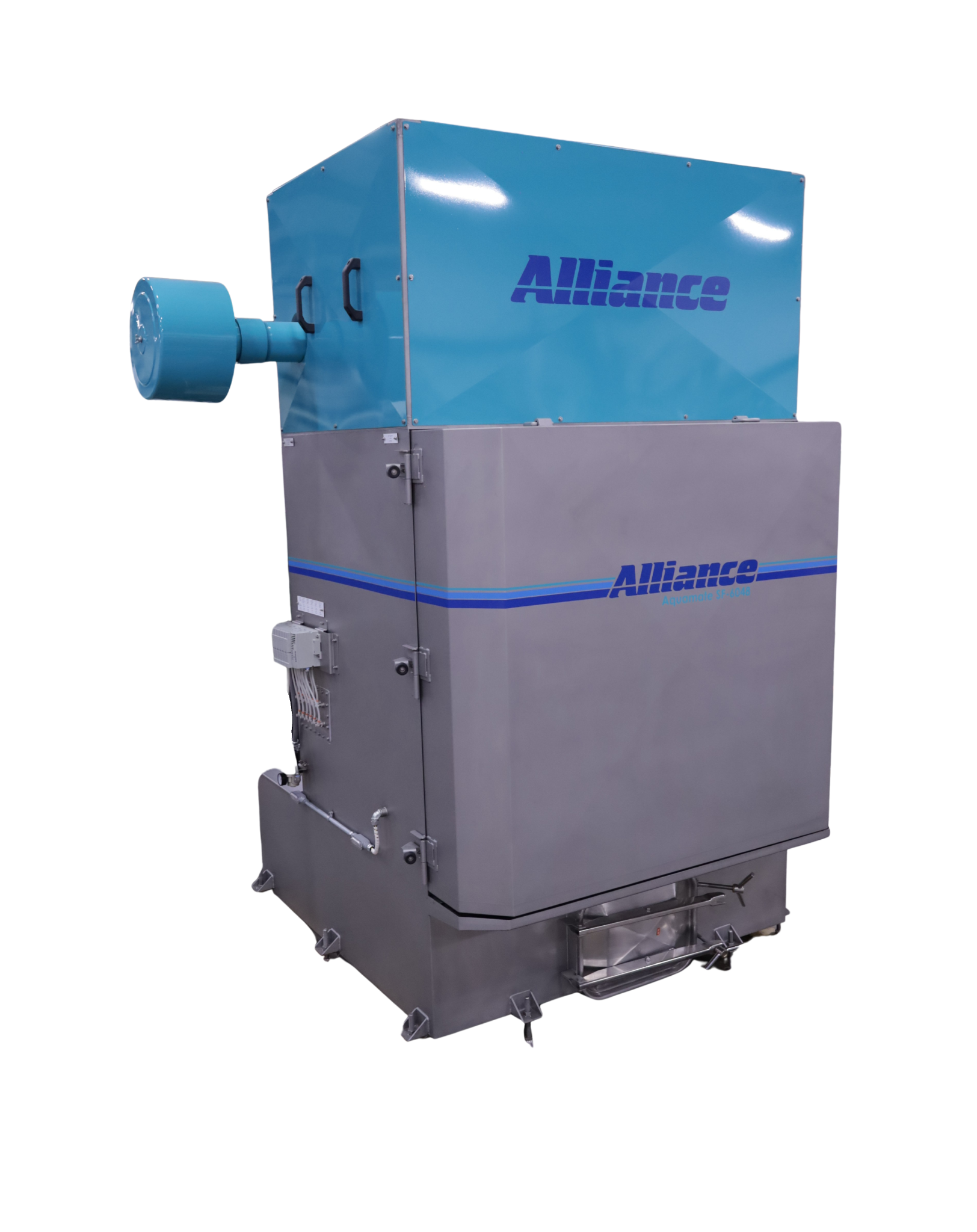
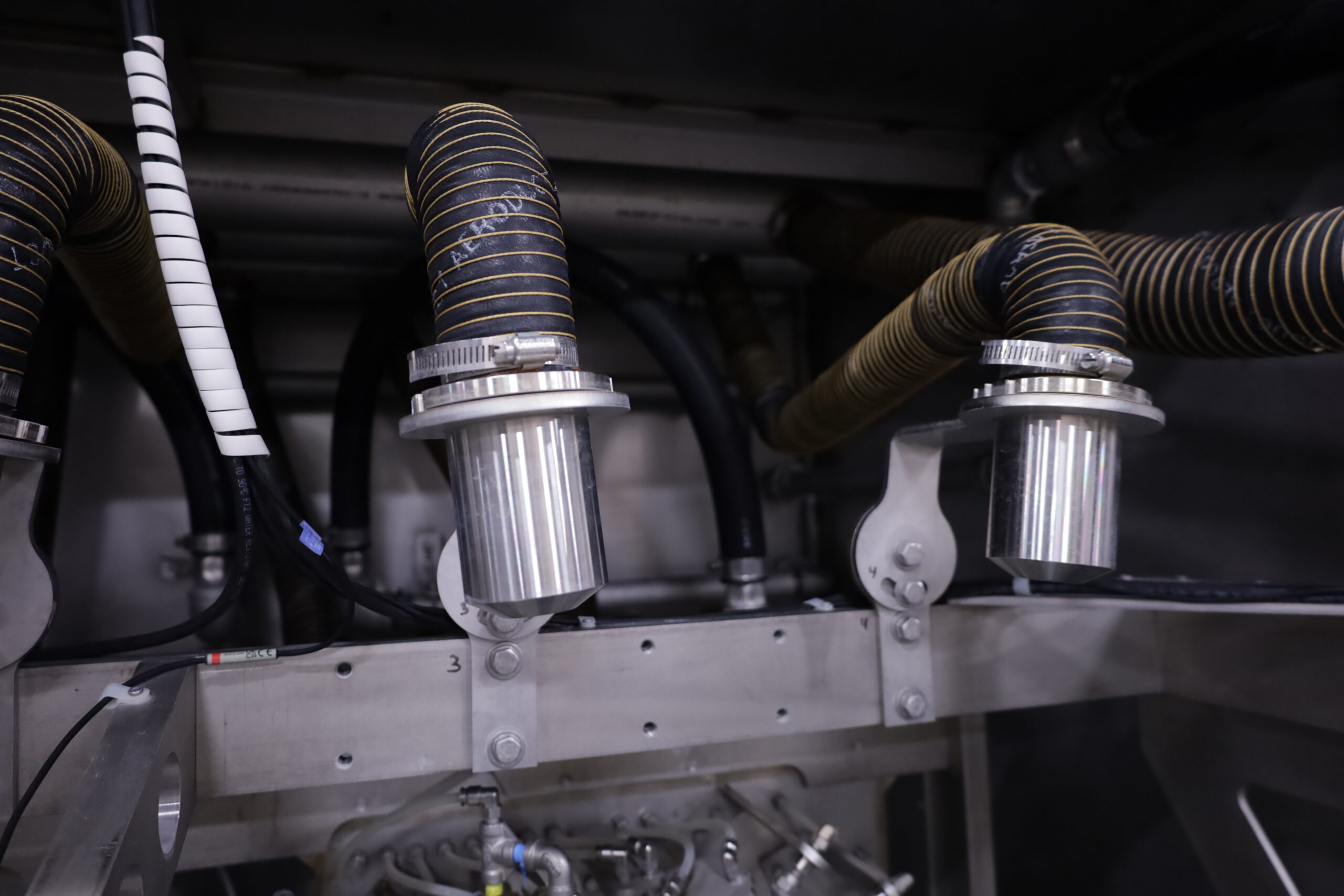
Alliance designed an Aquamate SF-6048 dual stationary part fixture, front-loading aqueous parts washer for the application. The fixture was redesigned to lower the parts and fixture height, reduce the center of gravity, and improve operator accessibility. Rear spray manifolds and probes were reconfigured to move away from the parts during loading and unloading, while maintaining high-volume flushing performance for critical internal passages and bearing journals.
Cleaning Method
Parts first pass through an intermediate blowoff zone to reduce moisture carryout. Heated wash and rinse stages then remove machining chips, fines, and coolant residue using upper and lower spray nozzles. A second blowoff stage strips excess solution before the final ambient blowoff zone dries the parts for unloading.