
What Manufacturers Need to Know About Toxic Parts Washers Solvents, 2026 Regulations, and Safer Alternatives
Parts cleaning remains a critical operation across manufacturing, machining, and precision industries. Historically, many companies relied on petroleum-based and chlorinated parts washer solvents due to their effectiveness and familiarity. However, as the industry enters 2026, these traditional solvents are increasingly viewed as high-risk, non-compliant, and unsustainable. In this post, we look at 2026 Toxic Parts Washers Solvents & Alternatives.
With EPA enforcement of TSCA risk management rules now fully underway, manufacturers must evaluate toxic parts washers solvents and transition to eco-friendly parts cleaning solutions and parts washer solvent alternatives that meet modern environmental, health, and safety standards.
These parts washer solvent fluids are effective but continue to raise serious concerns for environmental, economic and health hazards. Companies are realizing the range of serious health issues and illnesses they are causing for workers along with the legal and financial risks associated with the business and making the switch to safer solutions for their needs.
Here is a guideline of the solvents to avoid, their issues, and better parts washer solvent alternatives.
Parts Cleaning Solvents to Avoid in 2026
Industrial parts washers—including cold cleaning tanks, vapor degreasers, and automated conveyor systems—have historically used aggressive chemical solvents to remove oils, grease, and machining residue. Many of these solvents are now restricted, banned, or heavily regulated entering 2026 due to documented health and environmental risks.
Solvents Restricted or Phased Out Under TSCA
- Trichloroethylene (TCE)
As of late 2025, most industrial and commercial uses of TCE—including vapor degreasing and general parts cleaning—are prohibited under EPA’s TSCA final rule. 2026 marks the first full year of enforcement, making continued use a major compliance risk. - Perchloroethylene (PCE)
PCE remains subject to strict use limitations, exposure controls, and compliance documentation requirements. Many industrial degreasing applications are no longer viable without significant engineering controls. - Methylene Chloride (DCM)
Distribution and use for most industrial solvent applications are prohibited, with 2026 focused on enforcement and inspections related to remaining exemptions.
These actions stem from EPA determinations that these solvents pose unreasonable risk to workers, even with personal protective equipment.
2026 Regulatory Landscape for Parts Washing Solvents
EPA TSCA Enforcement in 2026
By 2026, EPA’s TSCA Section 6 risk management rules for chlorinated solvents are no longer transitional—they are actively enforced. Manufacturers using restricted solvents now face:
- Increased inspections
- Mandatory compliance documentation
- Higher penalties for violations
- Greater liability for worker exposure
Facilities that delayed solvent replacement in 2024–2025 are now under pressure to adopt VOC-compliant cleaning systems and safer alternatives.
State-Level Reinforcement
In addition to federal TSCA rules, several states continue to align air quality and worker safety regulations with EPA guidance, further limiting solvent availability and use in industrial parts washers.
Why Traditional Petroleum and Chlorinated Solvents Are No Longer Viable
While traditional solvents were once favored for aggressive cleaning power, they present significant disadvantages in 2026:
- Worker health risks (cancer, neurological damage, respiratory illness)
- High VOC emissions contributing to air quality violations
- Hazardous waste generation and disposal costs
- Fire and explosion risks
- Regulatory non-compliance and long-term liability
As enforcement tightens, these drawbacks outweigh perceived cost savings, accelerating the shift toward non-toxic degreasing solutions.
Aqueous Parts Cleaning Solutions
Aqueous parts washers have become a primary replacement for many solvent-based systems. These water-based systems use detergents, heat, agitation, and filtration to clean parts effectively while eliminating hazardous solvent vapors.
Benefits of Aqueous Parts Washers
- Low or zero VOC emissions
- Reduced hazardous waste
- Improved worker safety
- Compatibility with automated production environments
While aqueous cleaning works well for many applications, some precision components still require alternative solutions.
Advanced Parts Washer Solvent Alternatives for 2026
For applications where aqueous cleaning is not ideal, manufacturers are adopting next-generation parts washer solvent alternatives that balance performance and compliance:
- Modified alcohol solvents with low toxicity
- Low-VOC hydrocarbon blends
- Bio-based and biodegradable solvents
- Closed-loop solvent systems that minimize exposure and emissions
These alternatives are designed to meet 2026 regulatory requirements while delivering consistent, high-quality cleaning results.
Vacuum Vapor Degreasing Systems
Vacuum vapor degreasing systems represent one of the most effective solutions for precision cleaning in 2026. Unlike open solvent tanks, these systems operate in a sealed environment using safer solvents and controlled pressure.
Key Advantages
- Extremely low VOC emissions
- Minimal solvent consumption
- Improved operator safety
- Excellent drying and cleanliness performance
Vacuum systems are increasingly selected as long-term, compliant solutions for high-precision industrial cleaning.
Industries Benefiting from Safer Cleaning Technologies
Modern, compliant cleaning systems are widely used in:
- Automotive manufacturing
- Aerospace and defense
- Medical device production
- Industrial machining and fabrication
These industries benefit from improved safety, regulatory compliance, and consistent part quality.
Safe Effective Solvents for Parts Washing and Degreasing
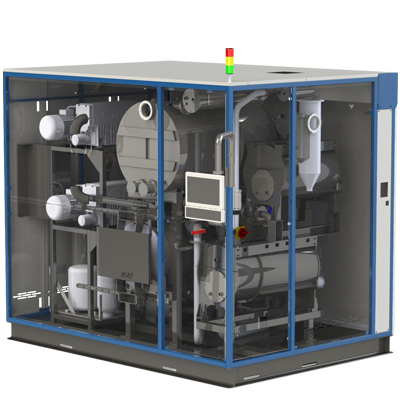 Alliance has established itself as a premier supplier of eco-friendly cleaning methods throughout the last 25 years.
Thinking ahead, Alliance formed an exclusive distributor relationship with ILSA, a manufacturer of vapor degreasers based in Italy, which many companies in the US cannot yet access.
What makes ILSA degreaser equipment different is they use safe parts washer solvent alternatives for cleaning precision parts that are highly efficient, last longer, VOC compliant, and have many other benefits. With their partnership, Alliance Manufacturing is now able to provide a great alternative to toxic solvents in addition to aqueous solvents and equipment.
Vacuum Vapor Degreasing Systems
Vacuum vapor degreasers are better than conventional open-top vapor degreasing equipment due to their precise cleaning and eco-friendliness.
Without water or scrubbing, the technique employs solvents to remove impurities from manufactured parts. Vacuum or pressure is used for cleaning and drying, and parts are finished by removing any remaining solvent. Typical processes include:
● Wash
● Secondary wash
● Rust inhibition (optional)
● Vacuum dry
These closed-system parts washers are perfect for applications requiring stringent hygiene requirements for cleaning and drying. Benefits include low VOCs, reduced solvent consumption, minimal waste, low odors, low corrosion, enhanced drying, compact footprint, operator safety, and highly effective cleaning for challenging parts.
Solvents Used by Alliance
Alliance is the top choice of all customers because we use safe parts washer solvent alternatives such as modified alcohols and aliphatic hydrocarbons to clean precision parts. Since modified alcohol is naturally inflammable and the air-free vacuum washing chamber prevents sparks from igniting, there is no fire risk. In addition, the wash cycle prevents bubbles from developing when parts are washed under a vacuum.
After the cleaning procedure, the drying cycle completely dries the parts in a shorter time, removing the need for hot air drying and additional drying operations. Moreover, we have the only contained system that can run Honeywell Solstice, a NASA-approved solvent. Solstice is an employee-safe cleaner that is highly effective, contains no volatile organic compounds, and has a high sustainability rating with a Global Warming Potential of less than 1.
Industry Applications:
Using their safe efficient parts cleaner solvents, ISLA’s vacuum degreasing systems have been effective in several industries including aerospace, automotive, and medical industries. Some of these applications include:
● Precision machining
● Turning and screw machining
● Hydraulic components
● Micromechanical components
This system can also easily remove coolants, chips, and other manufacturing dirt. Metal and various plastic components can also be cleaned and dried using vacuum degreasing.
Conclusion
As manufacturers move fully into 2026, continued use of toxic parts washers solvents—including TCE, PCE, and methylene chloride—poses significant compliance, safety, and financial risks. With EPA TSCA rules now firmly enforced, transitioning to eco-friendly parts cleaning solutions, aqueous systems, and VOC-compliant solvent alternatives is no longer optional.
Proactively upgrading parts cleaning processes helps protect workers, ensure regulatory compliance, and position operations for long-term sustainability.
If you are in need of spare parts, please visit our Parts & Service page.